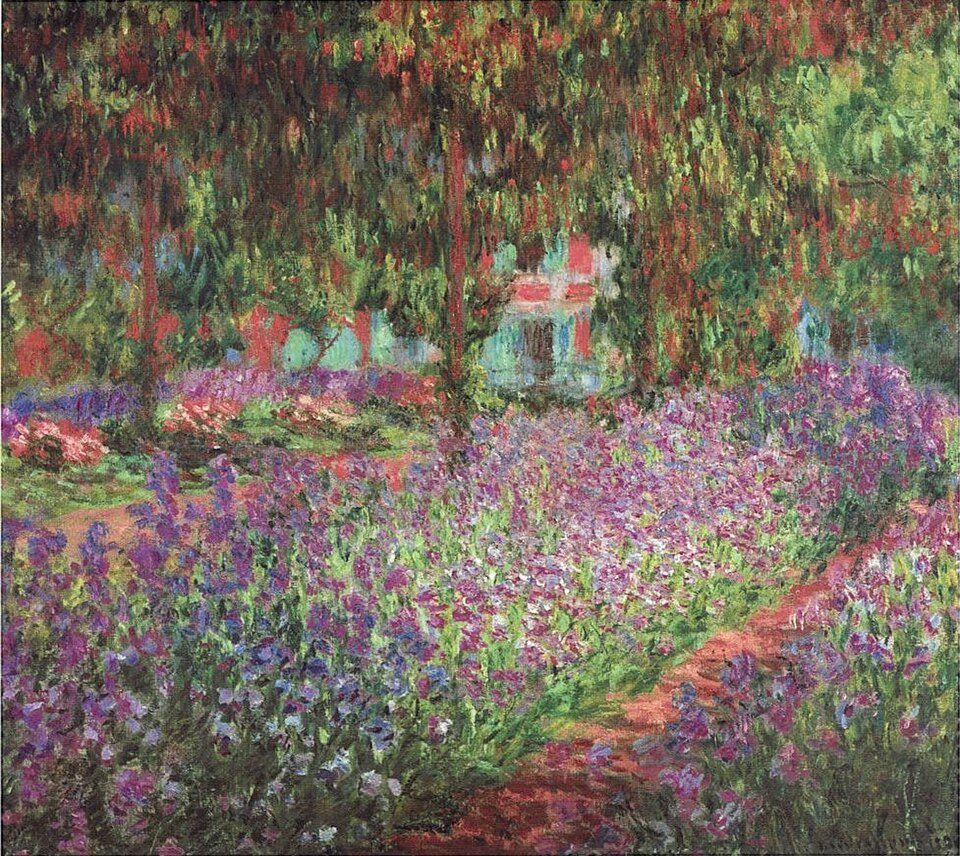
Claude Monet, The artist's garden at Giverny, 1900. Wikimedia Commons. · PD
O jardim do artista em Giverny
Ficha técnica
A história
Em 1883 Monet alugou uma casa em Giverny, a noroeste de Paris, e passou os anos seguintes transformando o terreno num jardim que virou tema e ateliê ao mesmo tempo. Por volta de 1900 ele pintou esta alameda central, coberta pelas capuchinhas que se espalham pelo chão e pelas roseiras que formam arcos ao fundo. Não é um jardim casual. Cada canteiro foi plantado pensando em como a luz cairia sobre ele. Monet chegou a empregar vários jardineiros e desviou um braço de rio para alimentar o famoso lago das ninfeias, mais adiante. A casa rosada aparece de relance entre a folhagem, no fim do caminho.