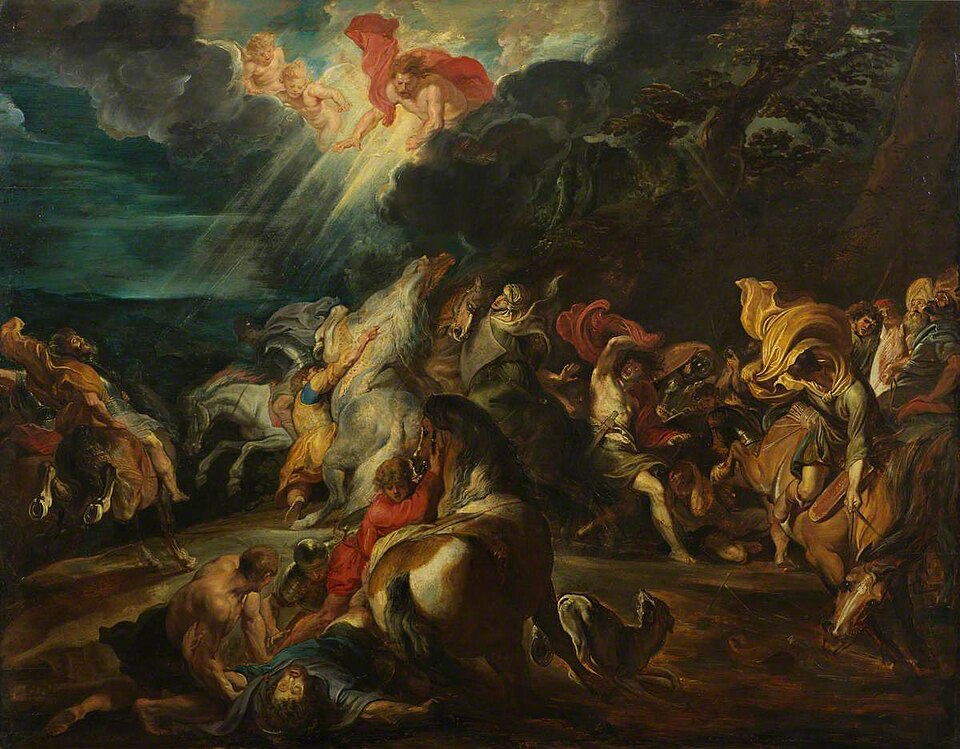
Peter Paul Rubens, The Conversion of Saint Paul, 1614. Wikimedia Commons. · PD
A conversão de São Paulo
Ficha técnica
A história
By the mid-1610s Rubens had been home in Antwerp for a few years, back from a long stay in Italy, and the Catholic church there was rebuilding after decades of religious war had stripped its interiors bare. Demand for big, dramatic altarpieces was enormous, and Rubens ran a workshop fast enough to meet it. This is one of his working sketches for the moment when Saul, riding to Damascus to hunt down Christians, is thrown from his horse by a blinding light and becomes the apostle Paul. Rubens set it at night so the flash from heaven does all the work, scattering men and animals. You can see how quickly he laid it in, the rearing horses and tumbling bodies caught in loose, rapid strokes. Recent study of the panel shows he reworked the tangle of figures several times before he was satisfied.