Annibale Carracci · PD
A Fuga para o Egito
Ficha técnica
A história
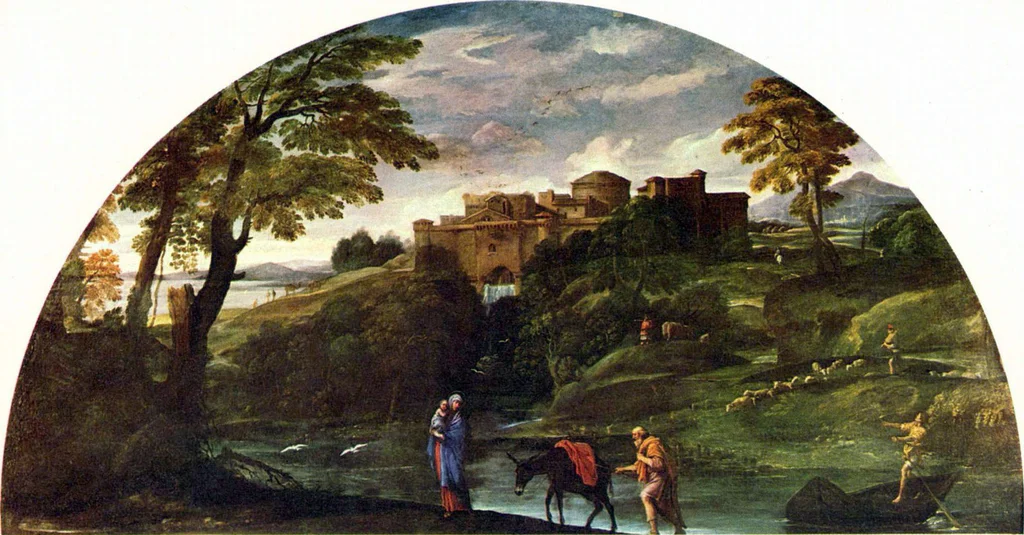
Por volta de 1603, em Roma, Annibale Carracci pintou uma série de seis quadros em meia-lua para a capela do palácio do cardeal Pietro Aldobrandini, e este era a peça central. A fuga da Sagrada Família para o Egito aparece ali minúscula: Maria com o Menino sobre o jumento, José ao lado e um barqueiro que os leva para a outra margem. Quase toda a tela é ocupada pela própria paisagem, construída com cuidado em planos que vão do rio às colinas e a uma cidade murada, com uma torre redonda no alto. Foi aqui que nasceu a paisagem ideal, que Poussin e Claude Lorrain transformariam, poucas décadas depois, num gênero de pintura por direito próprio. À beira d'água, o barqueiro toca seu pequeno rebanho barranco acima.