Culturawiki · CC-BY-SA-4.0
O Quattrocento em Roma e em Veneza
Ficha técnica
A história
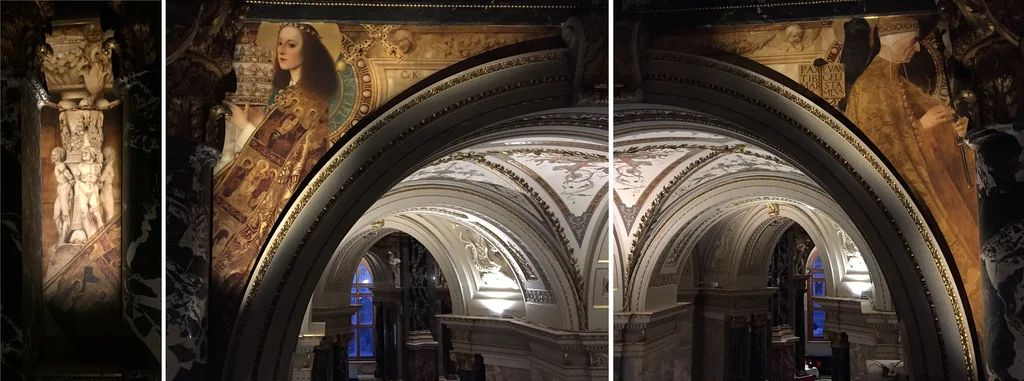
No alto da grande escadaria do Kunsthistorisches Museum, este campo representa o Quattrocento, o século XV, e faz isso com duas cidades ao mesmo tempo. Klimt o pintou em 1891, com o irmão Ernst e com Franz Matsch, que decoraram com ele os tímpanos entre os arcos e os espaços entre as colunas. A Roma papal do início do Renascimento é uma figura de santo envolta num esplêndido traje pontifical, ao lado de uma jovem morena e delicada que segura a tiara papal. Veneza é um doge no tímpano da direita, e o rosto dele vem de um quadro famoso, o retrato do doge Leonardo Loredan de Giovanni Bellini, hoje em Londres. Ele usa o gorro ducal, posto só na coroação e nas procissões solenes, segura um cetro, e atrás da cabeça aparece o leão de São Marcos. Até a pia de água benta pintada entre as colunas tem um modelo, uma do início do Renascimento na catedral de Siena.