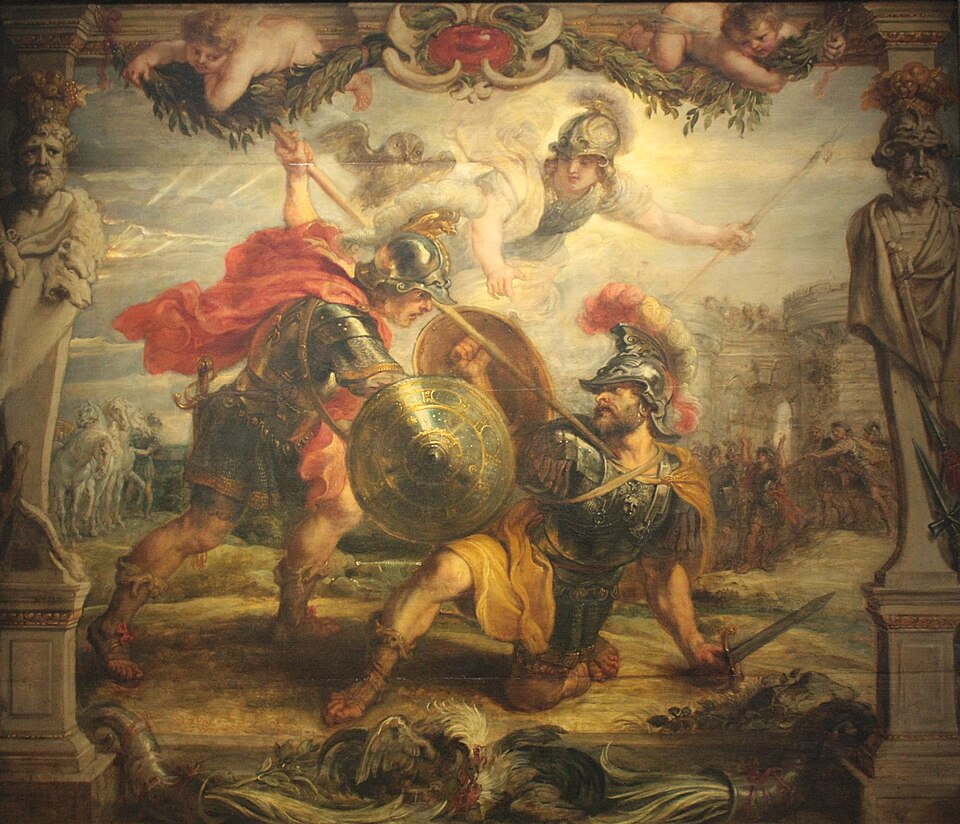
Peter Paul Rubens, Achilles Vanquishes Hector, 1630. Wikimedia Commons. · PD
Ахилл побеждает Гектора
Сведения
История
Around 1630 Rubens took on a private project rather than a royal one: eight scenes from the life of Achilles, meant to be turned into tapestries. This is one of them, the moment Achilles runs Hector through outside the walls of Troy while the goddess Athena hovers behind him. What looks like a finished painting was really a working step. Rubens first made small oil sketches, then larger panels like this to fix the colour and the poses, and weavers used full-size copies to guide the wool and silk on the loom. The commission probably came through his father-in-law Daniel Fourment, an Antwerp tapestry dealer. The heavy sculptural border framing the figures is a clue to that purpose, painted to imitate the carved surround a woven hanging would need.