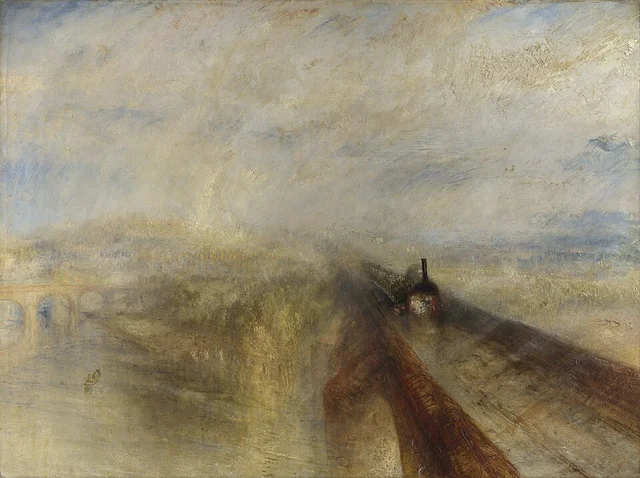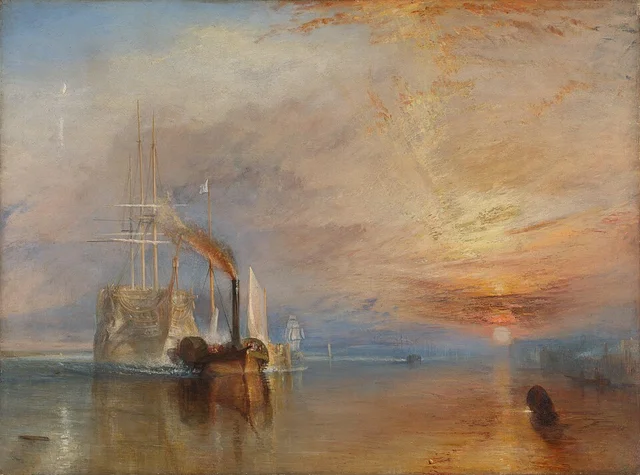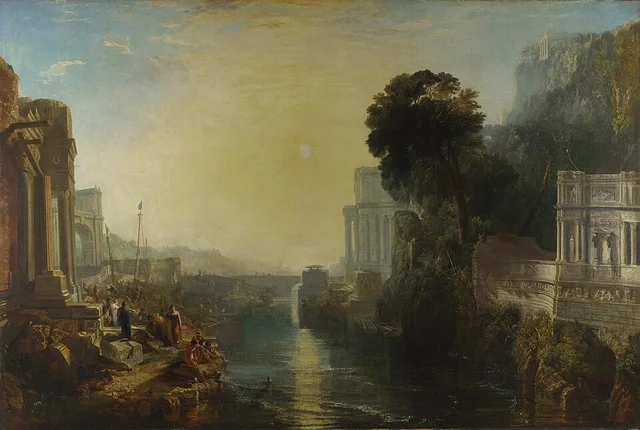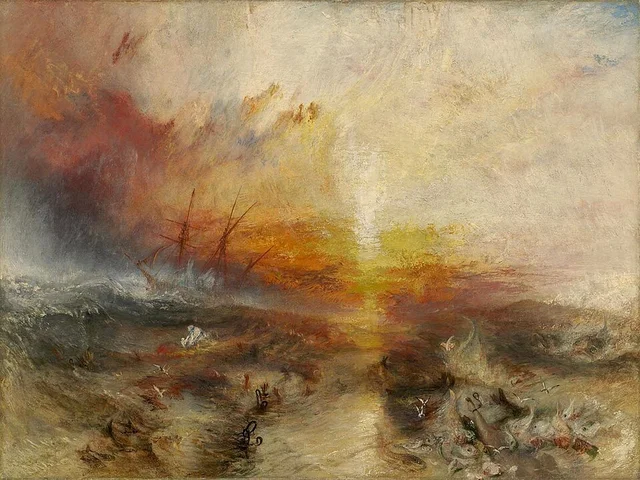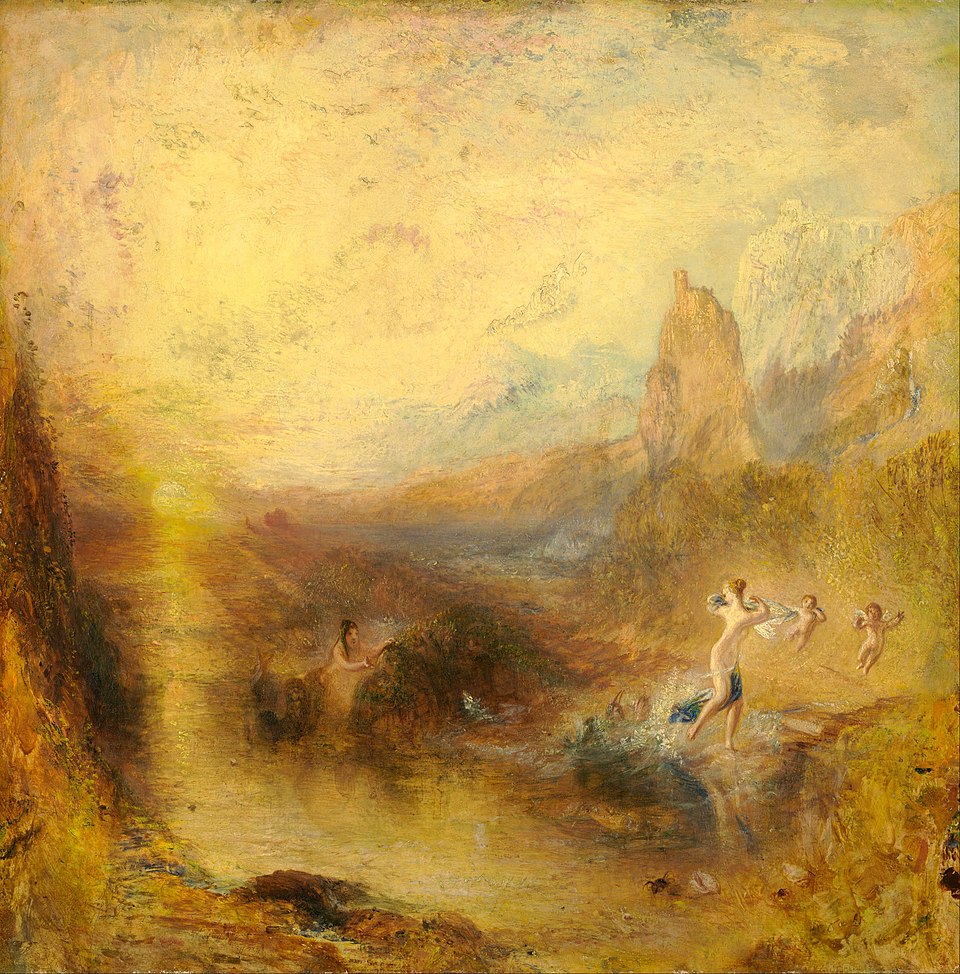
J. M. W. Turner, Glaucus and Scylla, 1841. Wikimedia Commons. · PD
Главк и Сцилла
Сведения
История
Turner showed this at the Royal Academy in 1841, when he was in his mid-60s and his painting was dissolving into light in a way many of his contemporaries found baffling. The subject comes from Ovid: the sea god Glaucus loves the nymph Scylla, who wants nothing to do with him, and here she turns and runs from his outstretched arms along a glowing stretch of coast. What holds the eye is not really the story. The figures are small and half-formed, the cupids barely there, and most of the panel is taken up by a haze of gold and blue where sea and sky run into each other. Turner had painted this same myth as a young man, around 1810, in a far tidier and more detailed way, and reworked it almost completely to arrive at this.