Culturawiki · CC-BY-SA-4.0
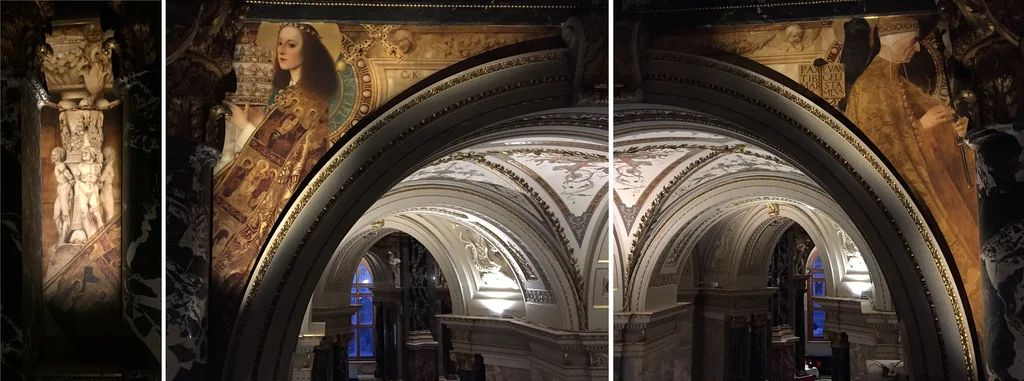
Кватроченто в Риме и Венеции
Сведения
История
Наверху, над парадной лестницей Художественно-исторического музея, это поле изображает кватроченто, XV век, причём сразу в двух городах. Климт написал его в 1891 году вместе с братом Эрнстом и Францем Мачем, с которыми расписывал паруса над арками и промежутки между колоннами. Папский Рим раннего Возрождения представлен фигурой святого в пышном понтификальном облачении, рядом с которой хрупкая темноволосая женщина держит папскую тиару. Венецию представляет дож в правом парусе, и лицо его взято с известной картины, портрета дожа Леонардо Лоредана работы Джованни Беллини, который теперь в Лондоне. На нём шапка дожа, которую надевали только при коронации и в торжественных процессиях, в руке скипетр, а за головой виден лев святого Марка. Даже чаша со святой водой между колоннами написана по образцу, по раннеренессансной чаше из Сиенского собора.