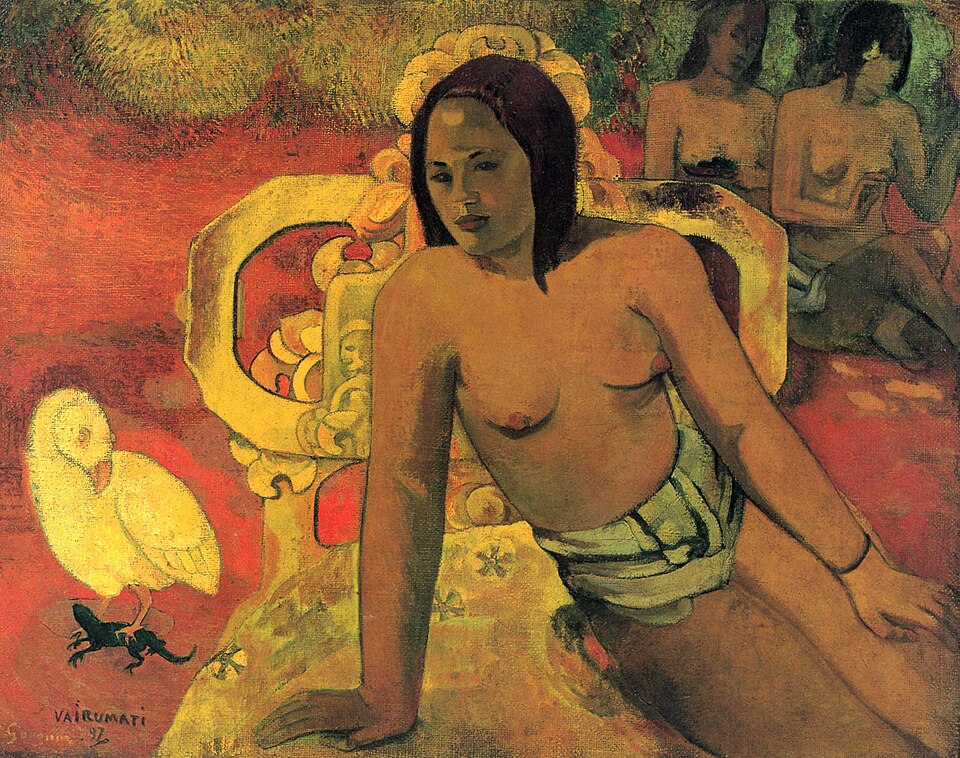
Paul Gauguin, Vairumati, 1897. Wikimedia Commons. · PD
瓦伊鲁玛蒂
作品信息
故事
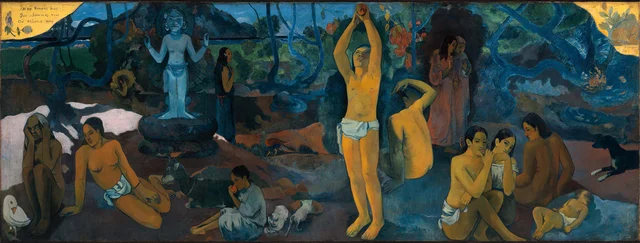
Gauguin painted Vairumati in 1897, during a bleak stretch of his second stay in Tahiti. He was ill, deep in debt, and had just learned that his favorite daughter, Aline, had died back in Europe. In that same period he was at work on the enormous canvas that asks where we come from and where we are going. Vairumati herself is a figure from Tahitian myth, a goddess remembered as the first mother of the island's people. Gauguin poses her seated and still, and behind her he sets a white bird holding a lizard in its claws, an image he used privately to stand for the emptiness of idle words. He did not invent her pose from life. He borrowed it from photographs he owned of the carved stone friezes at Borobudur, the great Buddhist temple in Java.