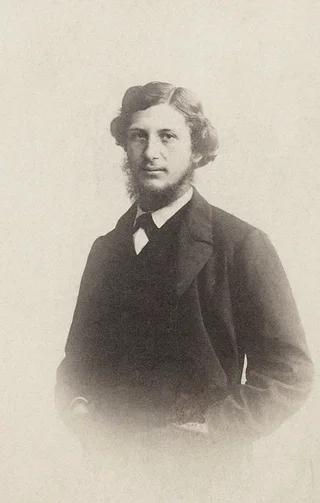
Frédéric Bazille
1841–1870 · Frankreich · Impressionismus
Die Geschichte
Im Sommer 1870 zog Frankreich gegen Preußen in den Krieg, und Frédéric Bazille, 28 Jahre alt und schon eine der verlässlichsten Gestalten unter den jungen Malern um Claude Monet, trat binnen Wochen nach der Kriegserklärung einem Zuaven-Infanterieregiment bei.
Das zurückliegende Jahrzehnt hatte er still damit verbracht, diese Generation überhaupt möglich zu machen. Als Sohn einer wohlhabenden Weinhändlerfamilie aus Montpellier ausgebildet, der die Medizin für die Malerei aufgab, teilte Bazille sein Pariser Atelier mit Monet und Pierre-Auguste Renoir, kaufte ihre Leinwände, als es kaum ein anderer tat, und bezahlte mehr als einmal Monets Miete. Mit weit über 1,80 Metern Körpergröße, für die Zeit ungewöhnlich groß, tauchte er auch als Modell in den Bildern seiner Freunde auf, wann immer sie eine hochgewachsene Gestalt in einer Menge brauchten. Sein eigenes ehrgeizigstes Werk, 'Familientreffen', ein Gruppenbildnis seiner auf einer Terrasse versammelten Verwandten, wurde 1868 im Pariser Salon gezeigt und ist bis heute sein bekanntestes Gemälde.
Am 28. November 1870, in der Schlacht von Beaune-la-Rolande, wurde sein Kommandeur verwundet, und Bazille übernahm den Angriff selbst. Er wurde zweimal getroffen und starb auf dem Feld. Keine der acht impressionistischen Ausstellungen, die in den Jahren danach folgten, zeigte je ein Werk von ihm.
Werke
15 Werke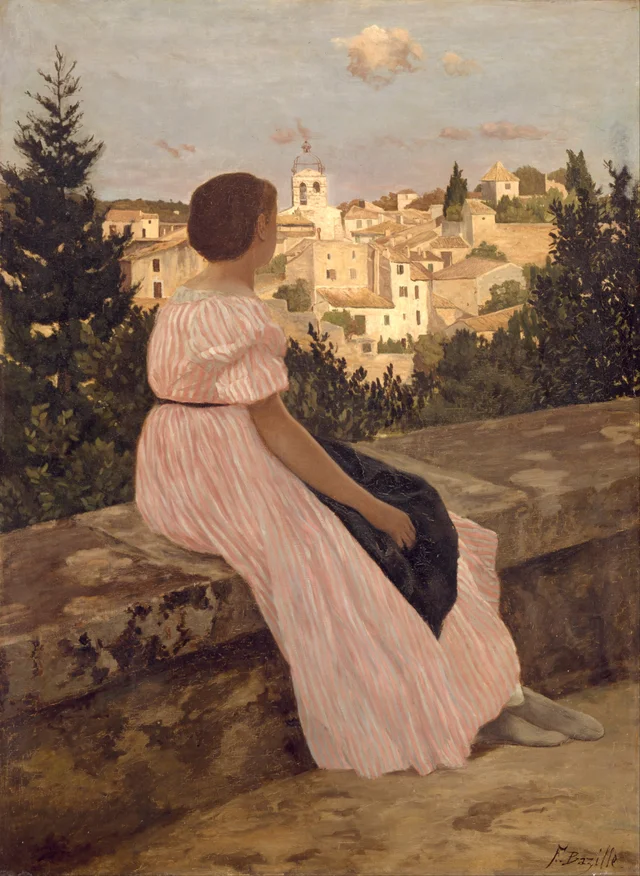 Das rosa KleidFrédéric Bazille, 1864
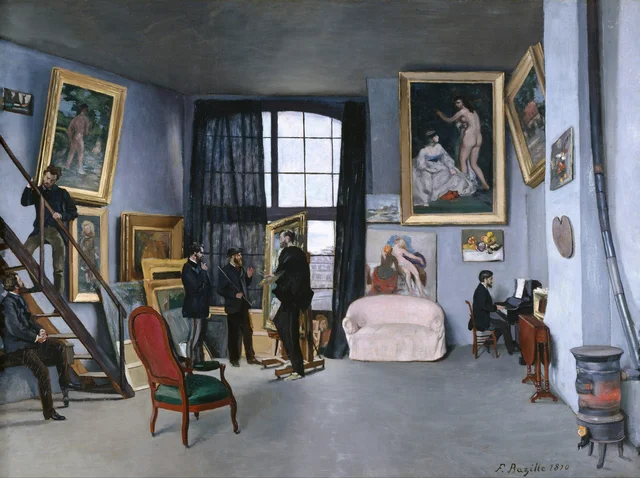 Bazilles AtelierFrédéric Bazille, 1870
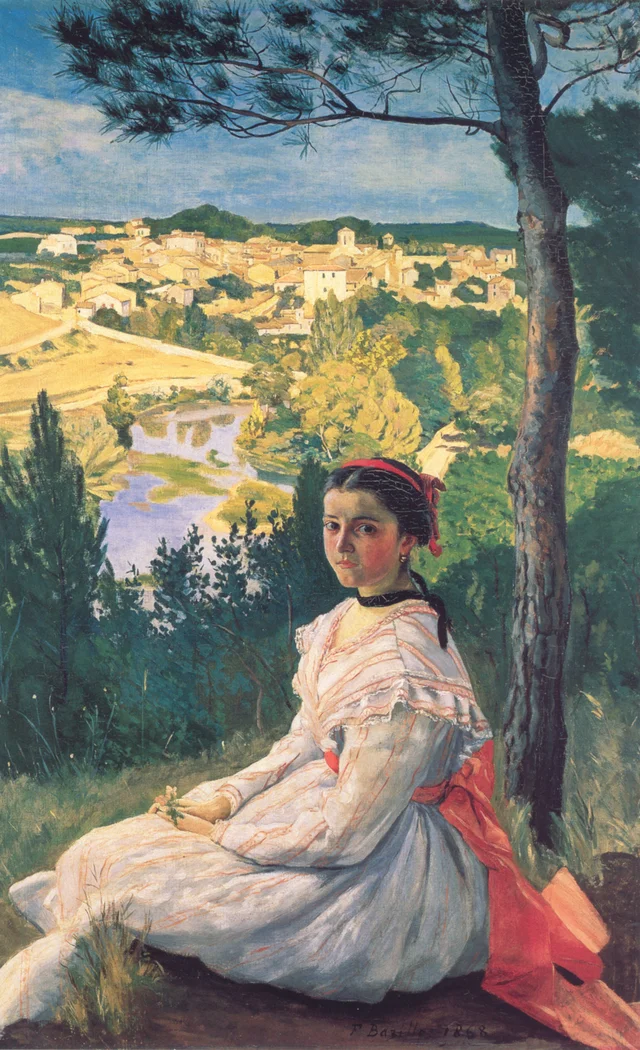 Blick auf das DorfFrédéric Bazille, 1868
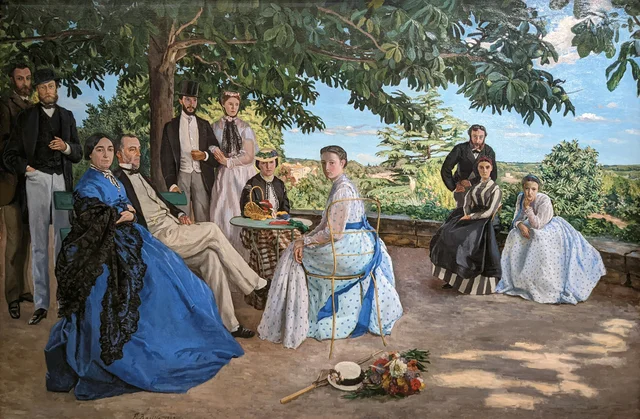 FamilientreffenFrédéric Bazille, 1867
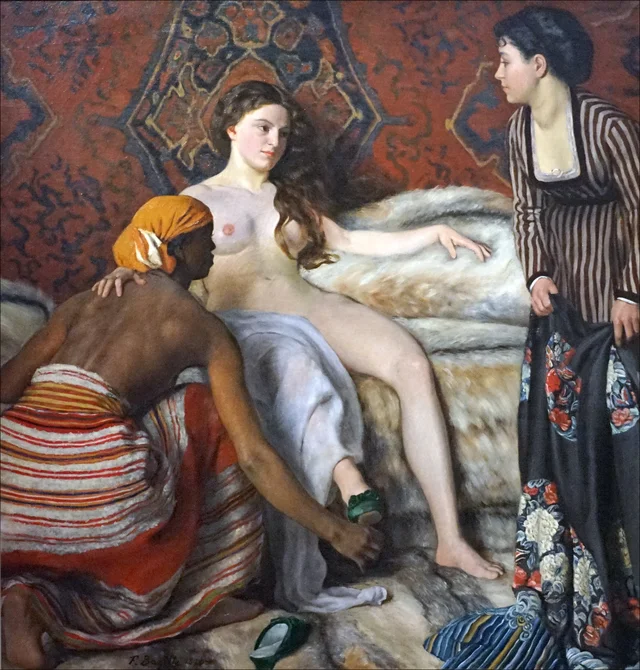 Die ToiletteFrédéric Bazille, 1870
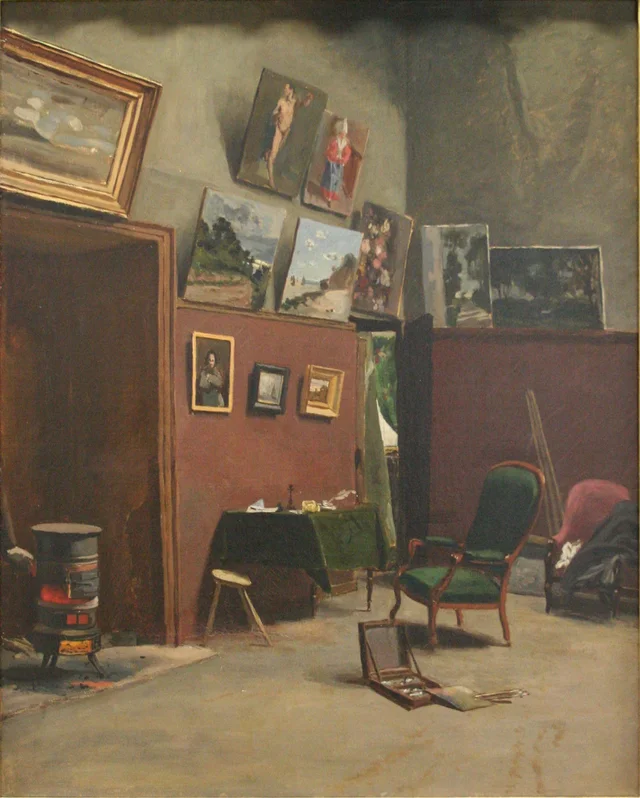 Atelier in der Rue de FurstembergFrédéric Bazille, 1865
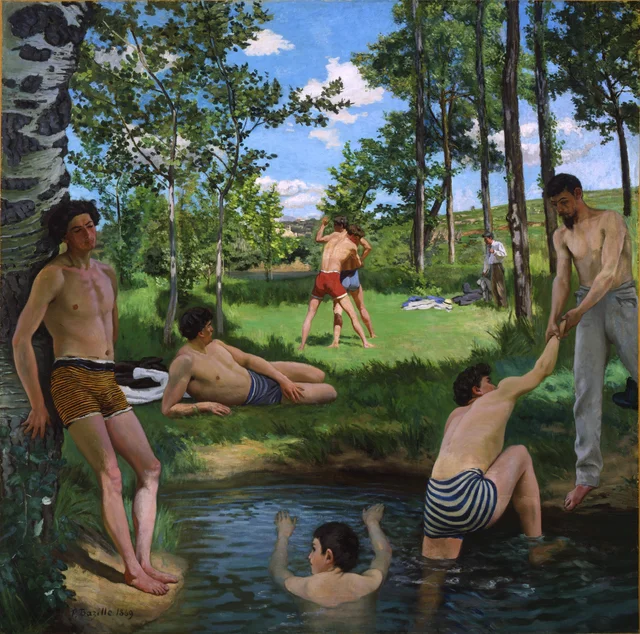 SommerszeneFrédéric Bazille, 1869
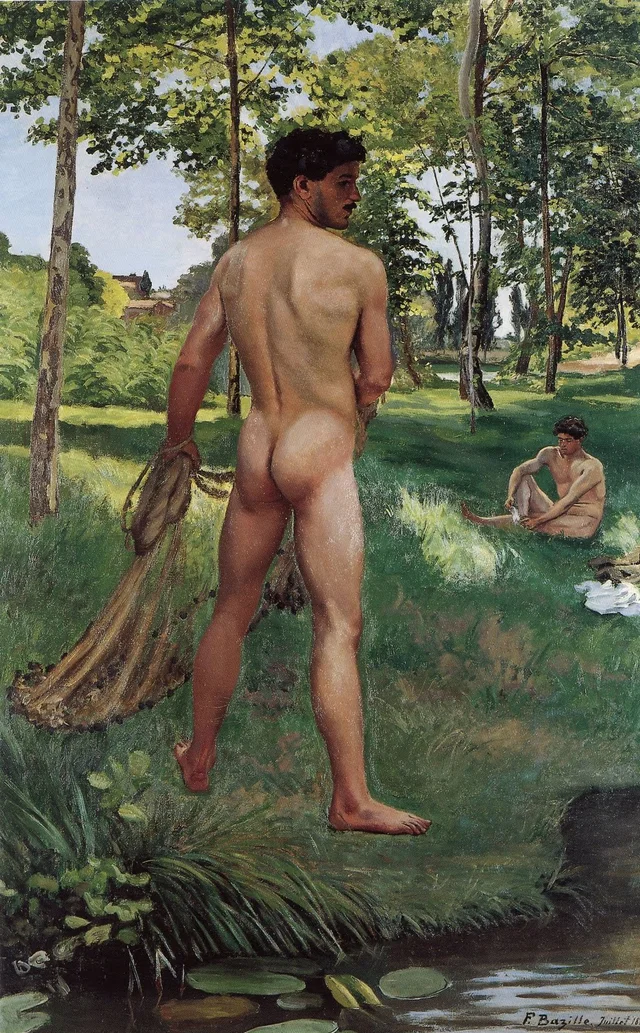 Fischer mit NetzFrédéric Bazille, 1868
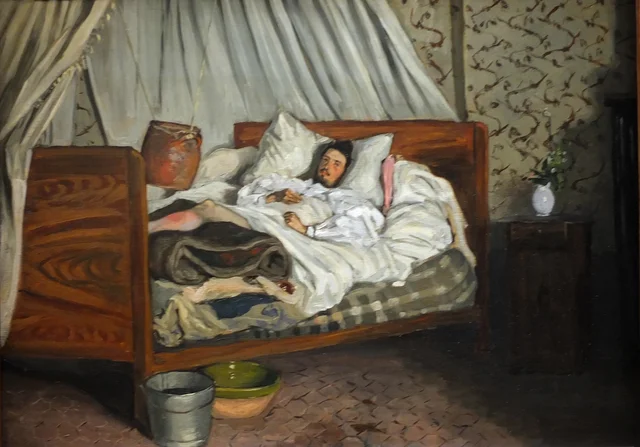 Das improvisierte FeldlazarettFrédéric Bazille, 1865
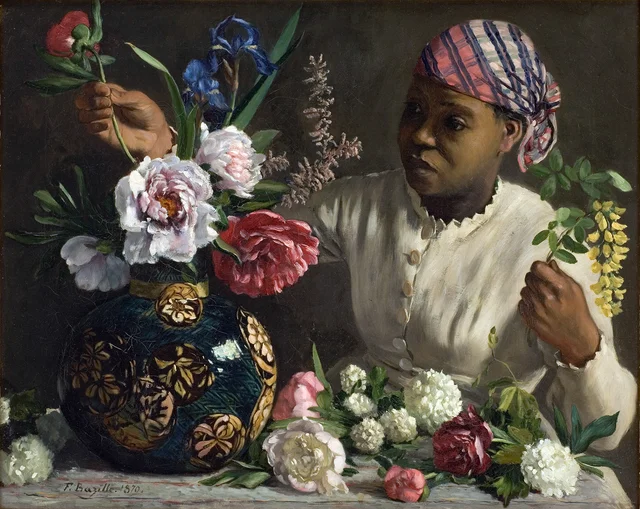 Schwarze Frau mit PfingstrosenFrédéric Bazille, 1870
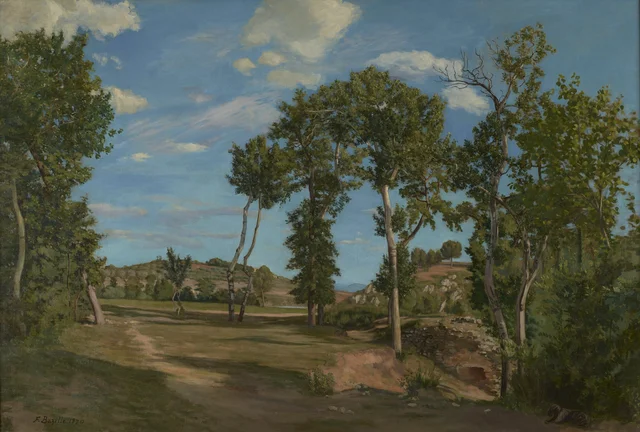 Landschaft am Fluss LezFrédéric Bazille, 1870
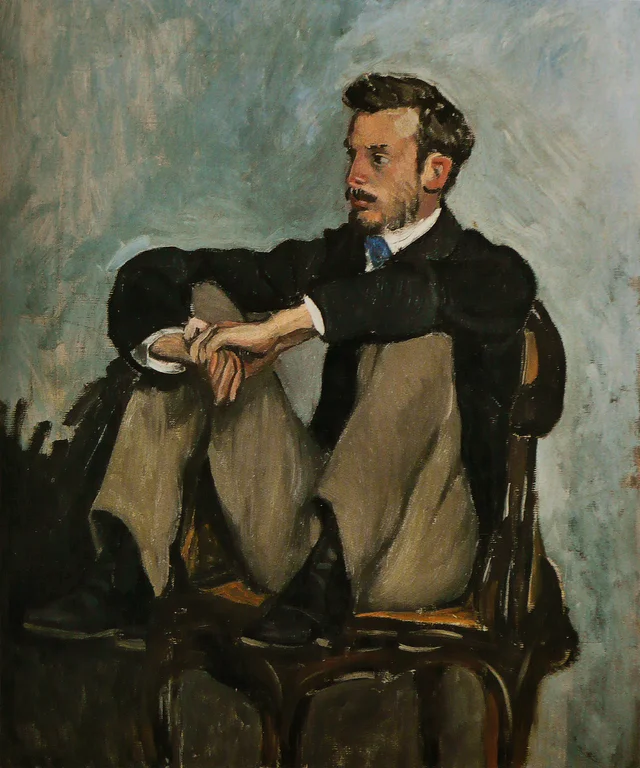 Auguste RenoirFrédéric Bazille, 1867
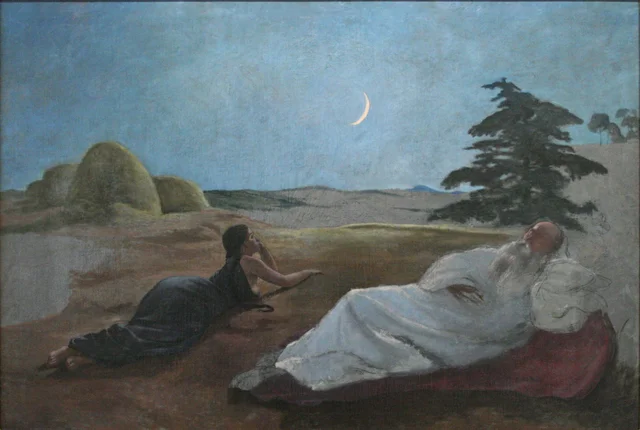 Ruth und BoasFrédéric Bazille, 1870
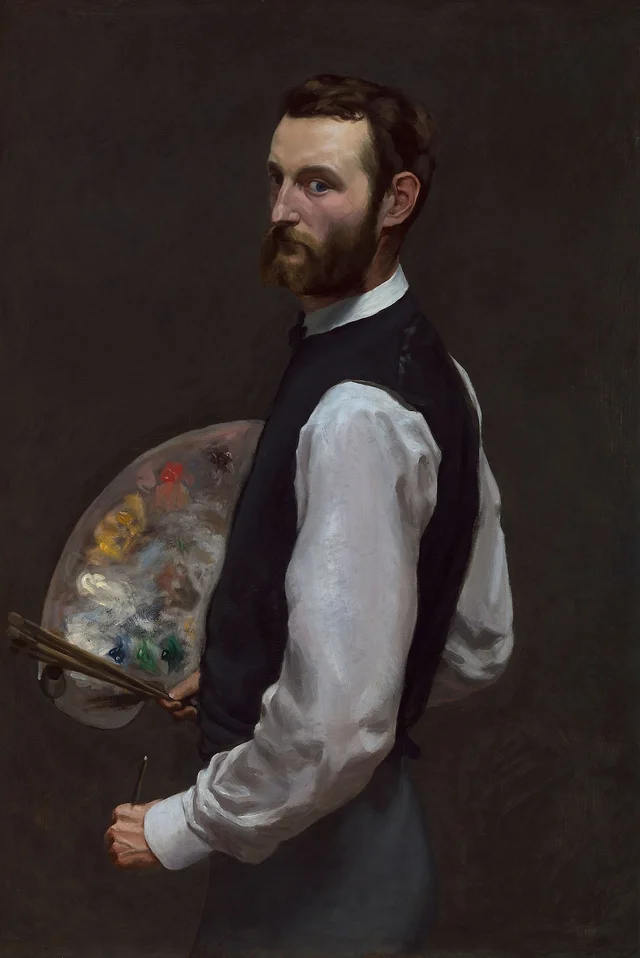 SelbstbildnisFrédéric Bazille, 1865
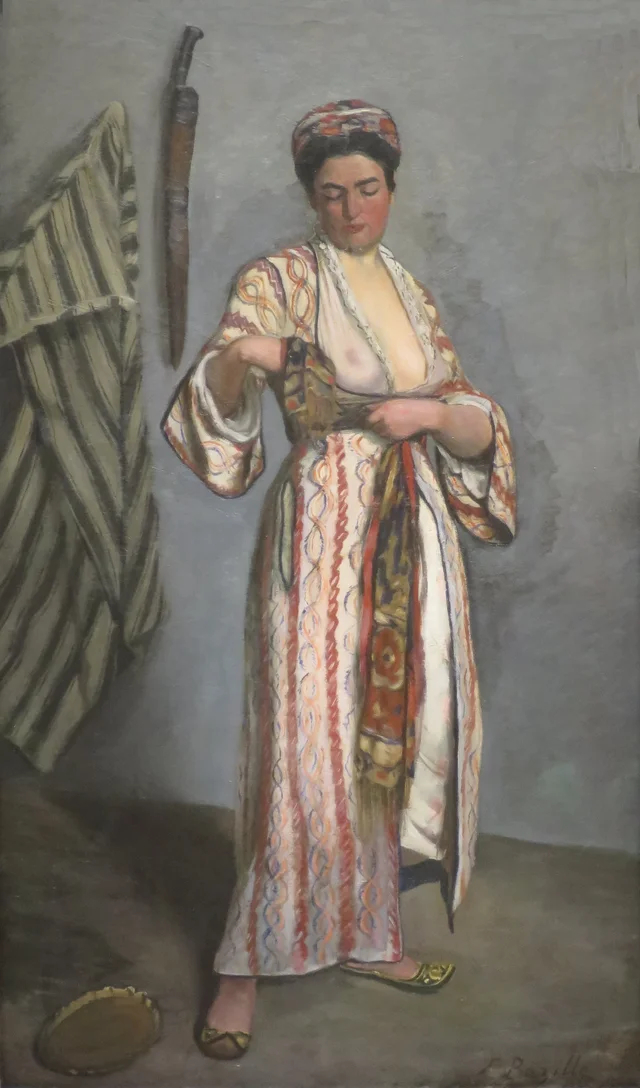 Frau im maurischen KostümFrédéric Bazille, 1869