Marc Chagall
1887–1985 · Frankreich · Expressionismus
Die Geschichte
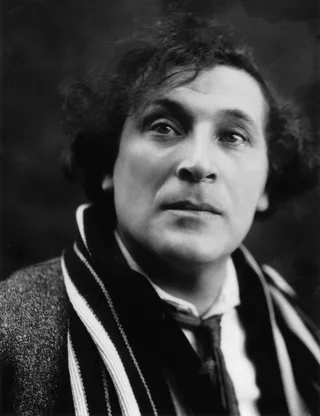
Marc Chagall verbrachte sein ganzes langes Leben damit, ein kleines jüdisches Städtchen zu malen, das er als junger Mann verlassen hatte. Geboren wurde er 1887 in der Nähe von Witebsk, damals ein Winkel des Russischen Reiches, in eine gedrängte, arme, tief religiöse Welt aus Holzhäusern, Geigenspielern und Markttieren. Als er in Paris zum modernen und später zum berühmten Maler wurde, tauchte diese Stadt immer wieder in seinen Bildern auf, oft ganz wörtlich — Liebespaare, Kühe und Dächer, schwerelos durch den Himmel treibend.
Die Geliebte in so vielen dieser Bilder war Bella Rosenfeld, die Tochter eines Juweliers aus Witebsk, die er 1915 heiratete. In Bildern wie "Geburtstag" malte er die beiden, wie sie mitten im Kuss vom Boden abheben, und zu diesem Bild des Fliegens kehrte er sein ganzes Leben lang zurück. Es war seine private Sprache für Glück, und sie hielt sich, auch als das Jahrhundert um ihn herum finster wurde.
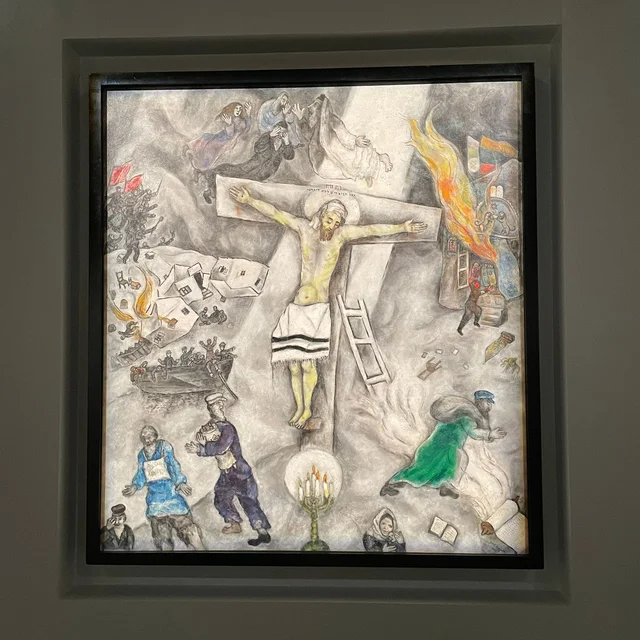
Chagall war Jude, und das zur denkbar schlechtesten Zeit, um in Europa Jude zu sein. Er hatte das revolutionäre Russland bereits verlassen, als die Nationalsozialisten kamen, und 1941 floh er aus dem besetzten Frankreich nach New York, einen Schritt vor den Deportationen, die die meisten Menschen der Welt ermorden sollten, in der er aufgewachsen war. Bella starb dort 1944. Er kehrte nach dem Krieg nach Frankreich zurück, heiratete erneut und wurde 97 Jahre alt; seine letzten Jahrzehnte verbrachte er damit, Glasfenster für Kirchen und Synagogen zu gestalten, von Reims bis Jerusalem, deren tiefes Blau voller derselben schwebenden Dorfgestalten war.