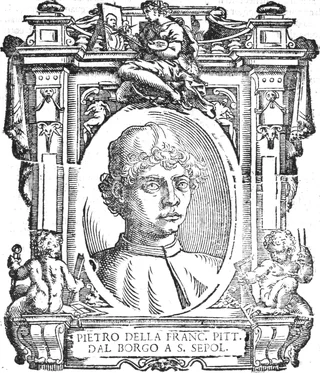
Piero della Francesca
1415–1492 · Republik Florenz · Frührenaissance
Die Geschichte
Mitte des 15. Jahrhunderts wetteiferten Maler in ganz Italien darum, herauszufinden, wie sich eine flache Tafel wie ein wirklicher, messbarer Raum wirken ließ, aufbauend auf den Regeln, die der Architekt Filippo Brunelleschi eine Generation zuvor in Florenz entwickelt hatte. Piero della Francesca, der aus dem kleinen toskanischen Ort Borgo Sansepolcro heraus arbeitete, trieb das Problem weiter voran als fast jeder andere. Er war zugleich ein praktizierender Mathematiker und legte seine Methode in den 1470er-Jahren in einer Abhandlung namens De Prospectiva Pingendi nieder, in der er geometrische Beweise eigenhändig durcharbeitete, um zu zeigen, wie sich Perspektive korrekt konstruieren ließ.
Diese doppelte Ausbildung zeigt sich in Gemälden wie Die Geißelung Christi und den Fresken, die er für den Hof Federico da Montefeltros schuf, des einäugigen Herzogs von Urbino, wo Architektur, Licht und Figuren in einem einzigen, präzise berechneten Raum zusammenfinden.
Über Pieros späte Jahre ist wenig überliefert. Giorgio Vasari, der Biograf italienischer Künstler des 16. Jahrhunderts, behauptete, er sei vor seinem Tod 1492 erblindet, und lange Zeit danach erinnerte man sich an Piero vor allem als Mathematiker, dessen Ideen andere Maler übernahmen, ohne ihm viel Anerkennung zu zollen. Seine Gemälde wurden erst im 19. und 20. Jahrhundert richtig neu zugeordnet und gefeiert, als Historiker entwirrten, welche Fresken und Tafeln tatsächlich von ihm stammten.
Weitere Artikel
Werke
26 Werke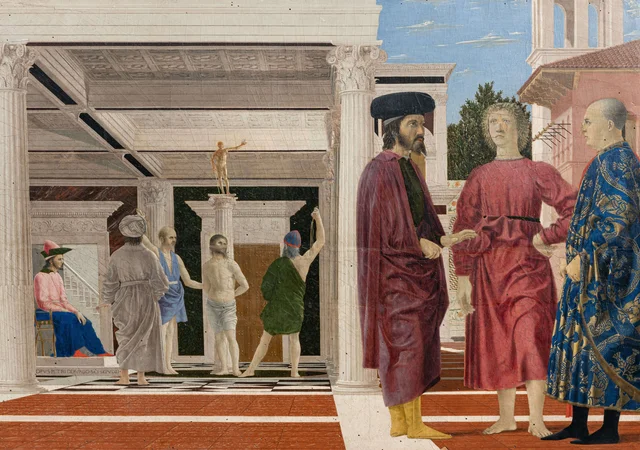 Die Geißelung ChristiPiero della Francesca, 1459
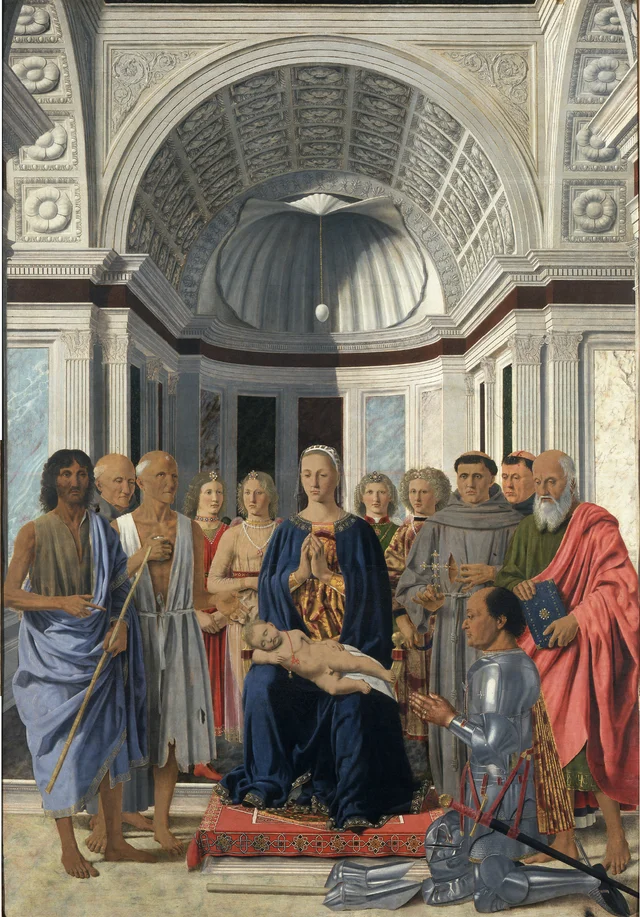 Brera-MadonnaPiero della Francesca, 1472
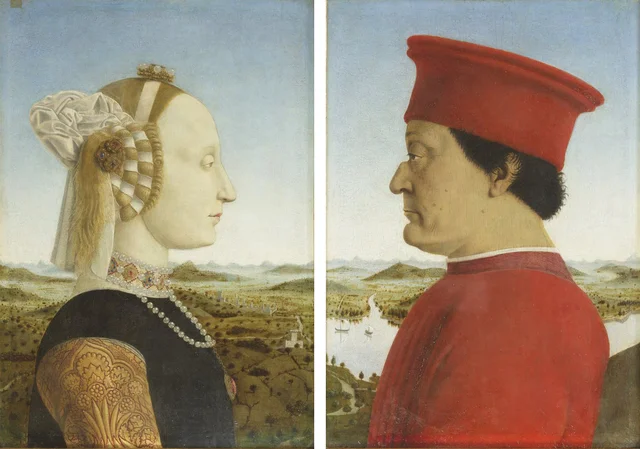 Diptychon von Federico da Montefeltro und Battista SforzaPiero della Francesca, 1474
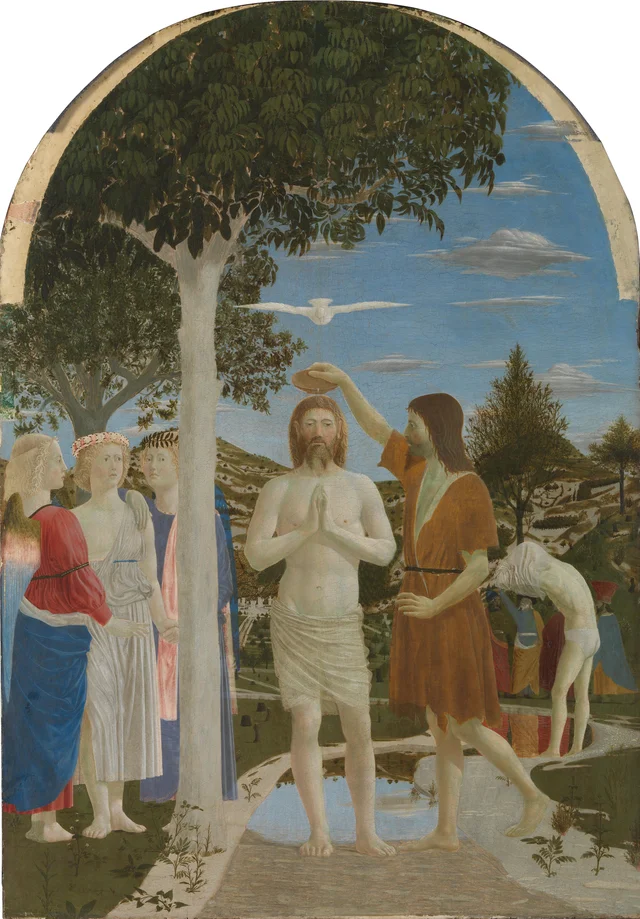 Die Taufe ChristiPiero della Francesca, 1448
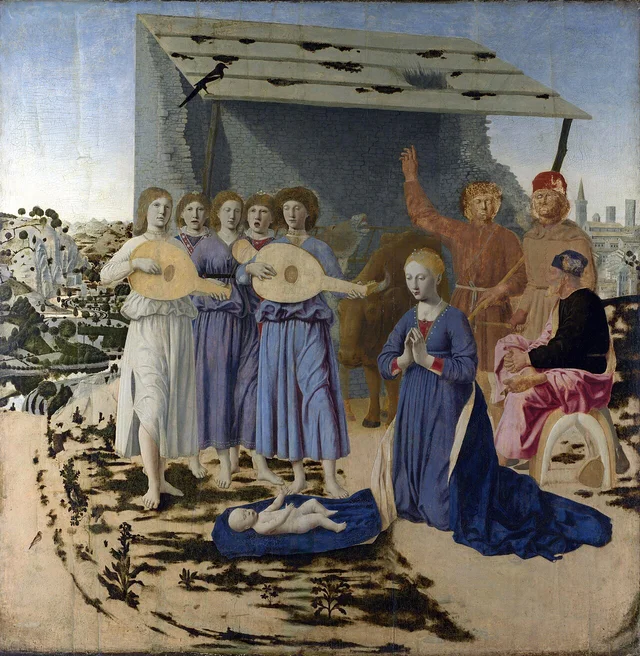 Die Geburt ChristiPiero della Francesca, 1480
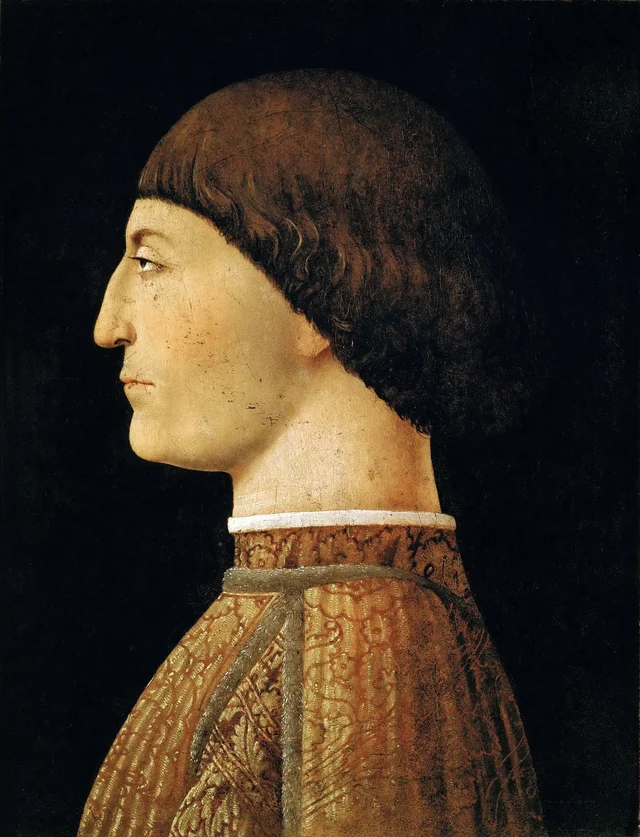 Bildnis des Sigismondo Pandolfo MalatestaPiero della Francesca, 1450
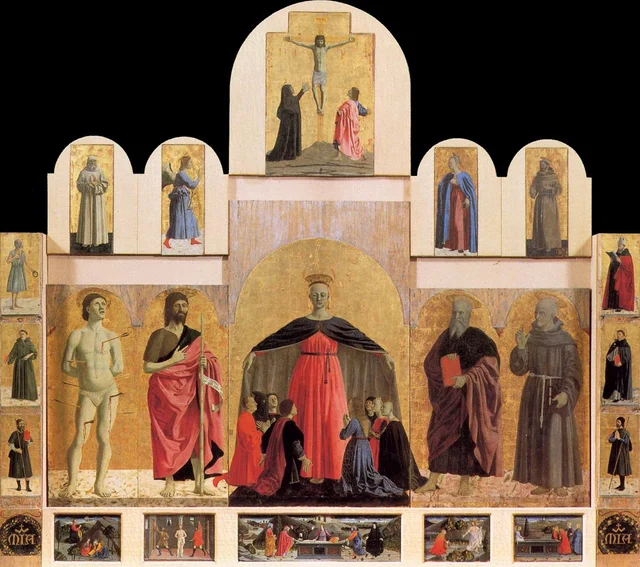 Polyptychon der BarmherzigkeitPiero della Francesca, 1460
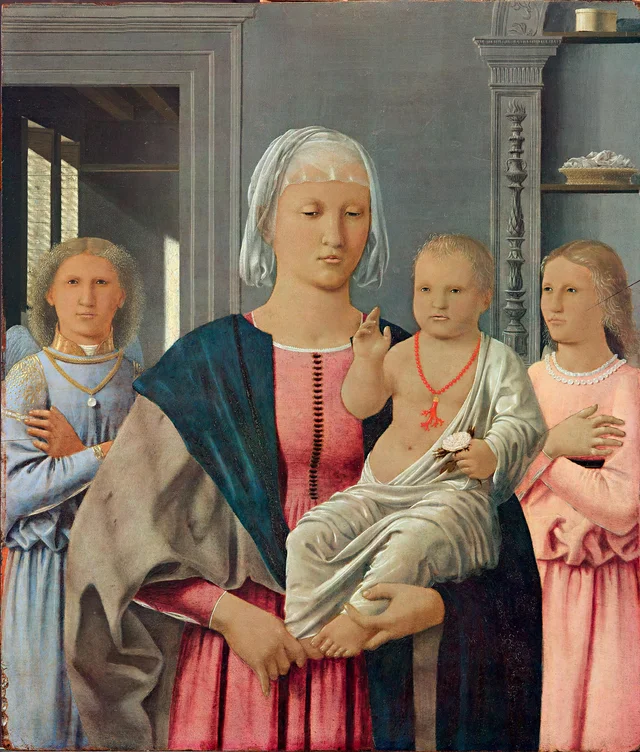 Madonna von SenigalliaPiero della Francesca, 1476
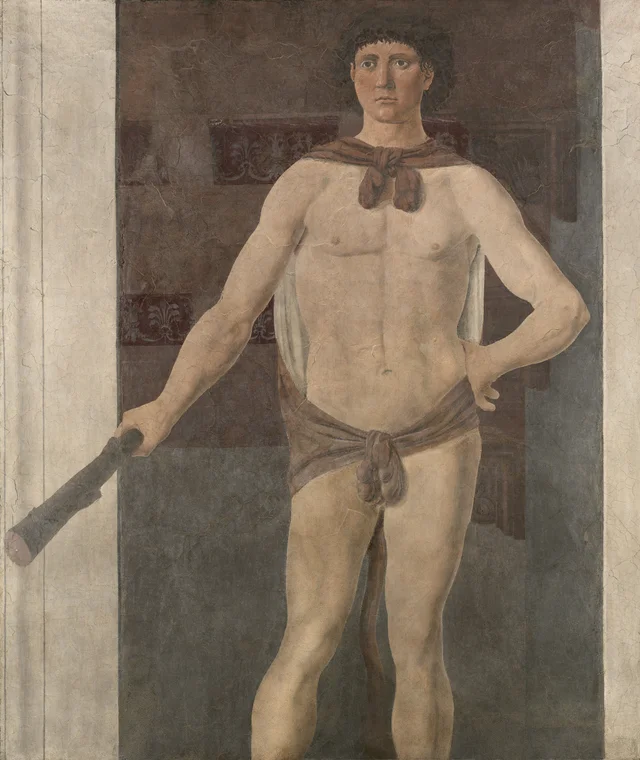 HerkulesPiero della Francesca, 1465
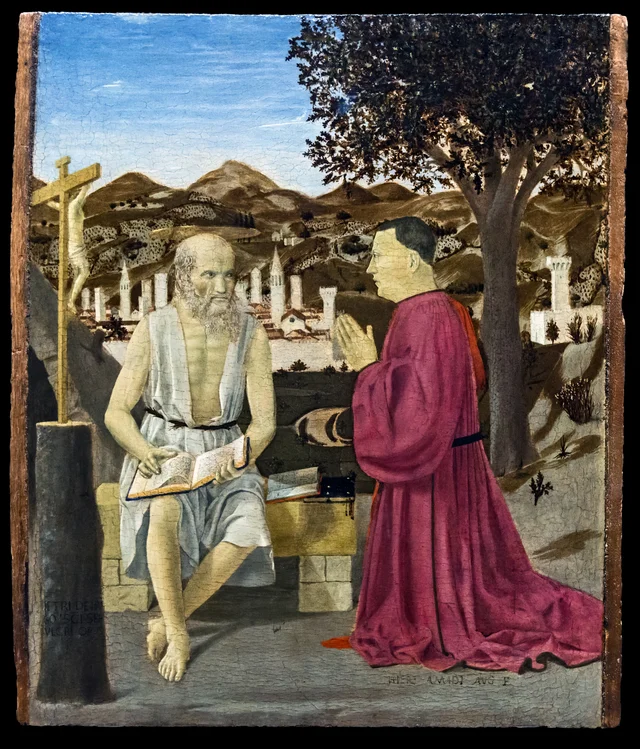 Der heilige Hieronymus und ein StifterPiero della Francesca, 1460
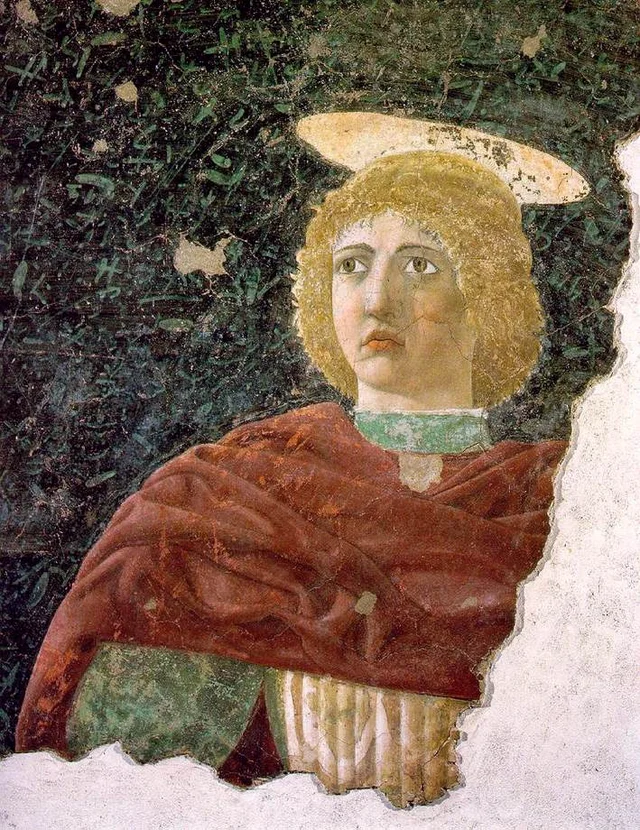 Der heilige Julian der GastfreiePiero della Francesca, 1454
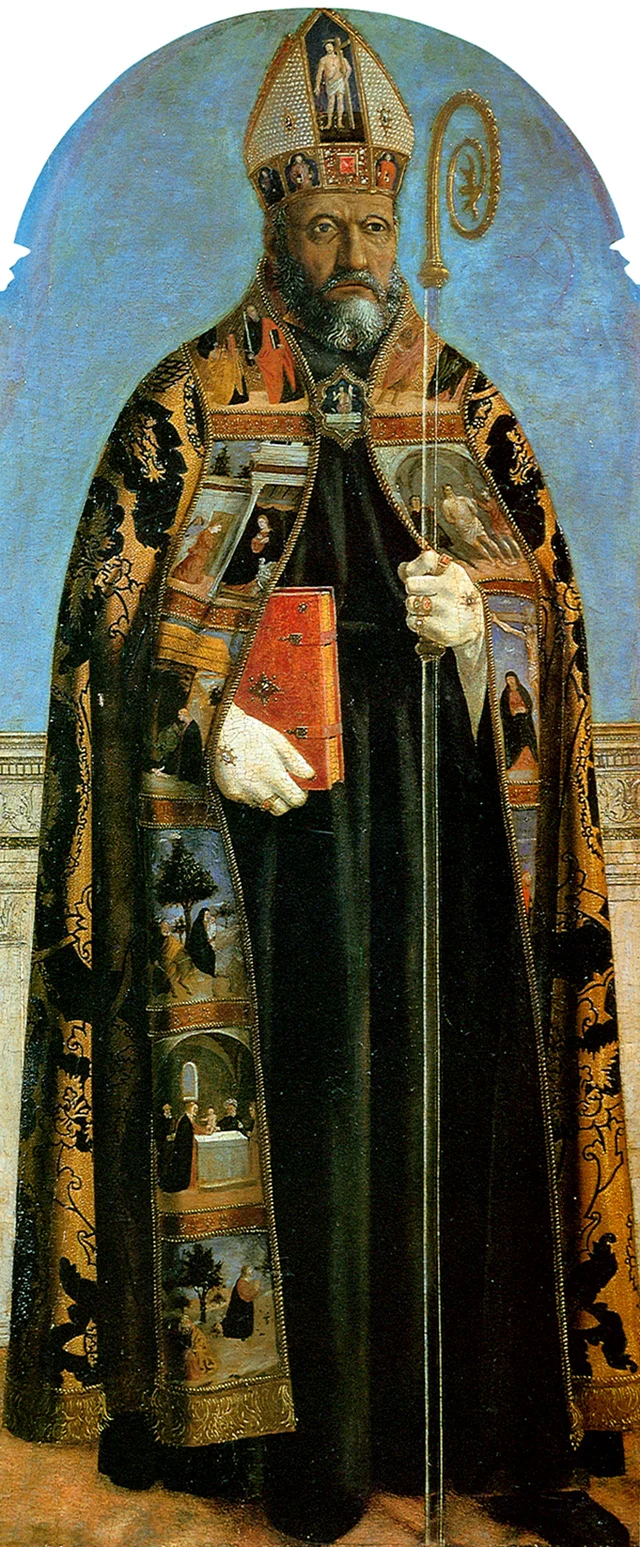 Der heilige AugustinusPiero della Francesca, 1454
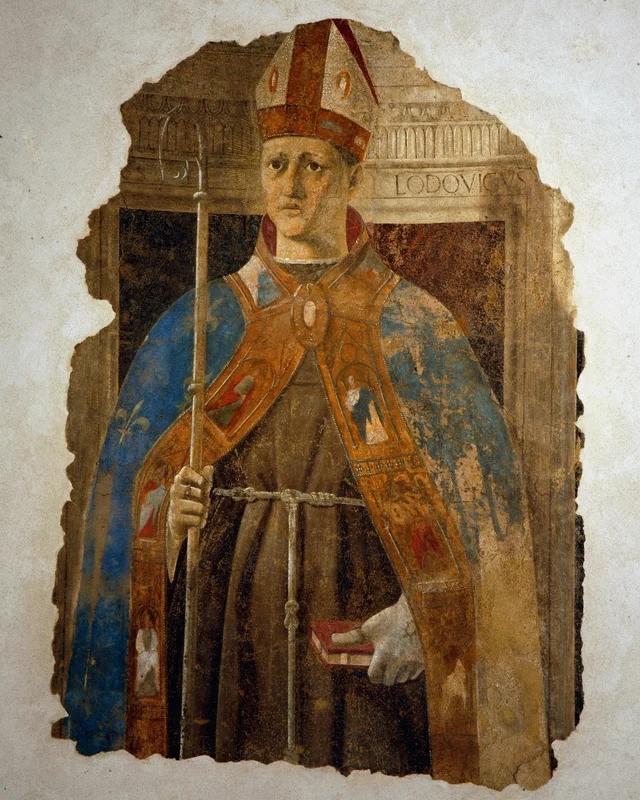 Der heilige Ludwig von ToulousePiero della Francesca, 1460
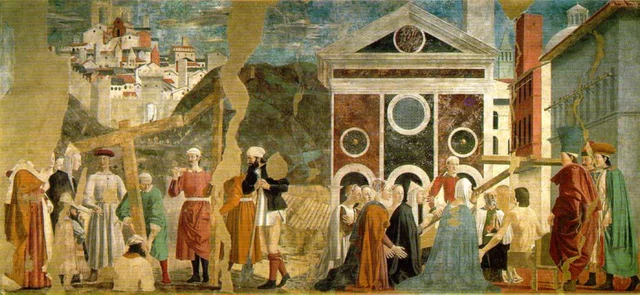 Auffindung und Prüfung des Wahren KreuzesPiero della Francesca, 1458
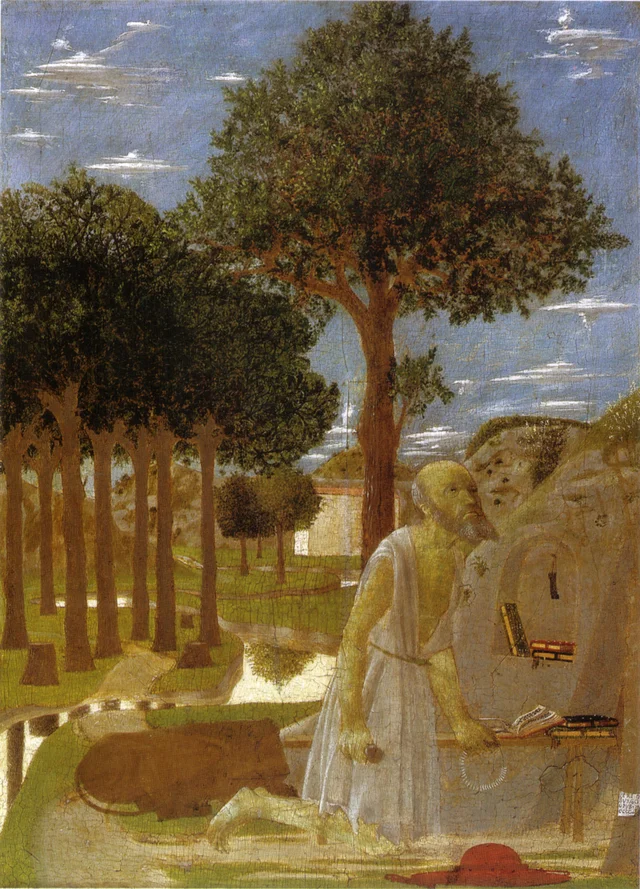 Der büßende HieronymusPiero della Francesca, 1450
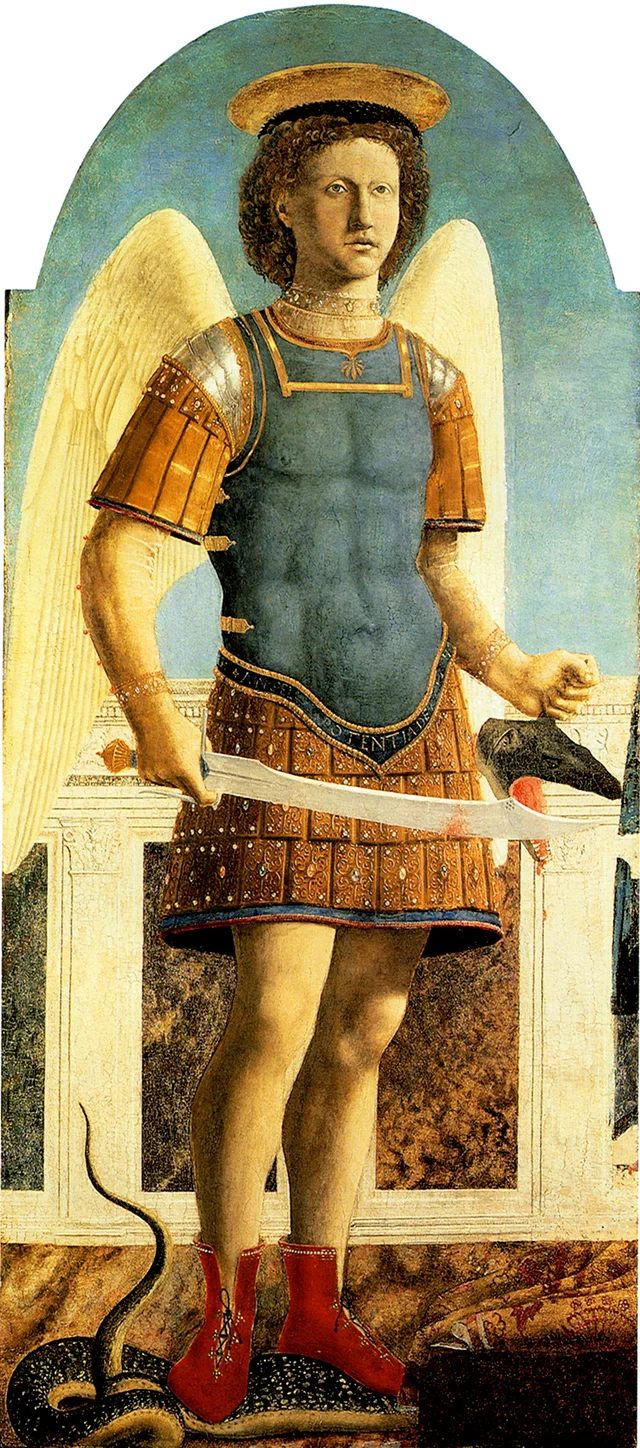 Der heilige MichaelPiero della Francesca, 1454
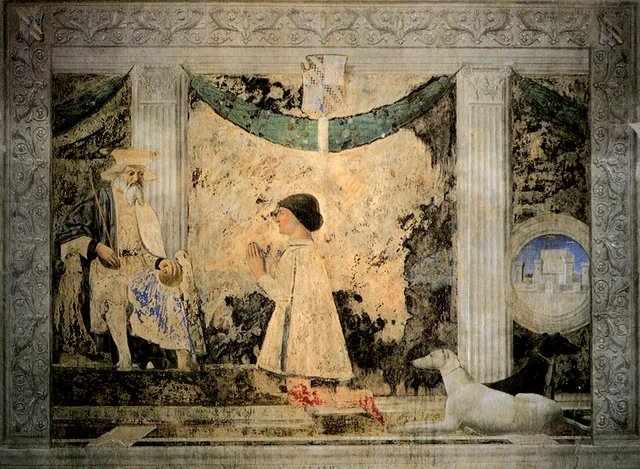 Sigismondo Pandolfo Malatesta im Gebet vor dem heiligen SigismundPiero della Francesca, 1451
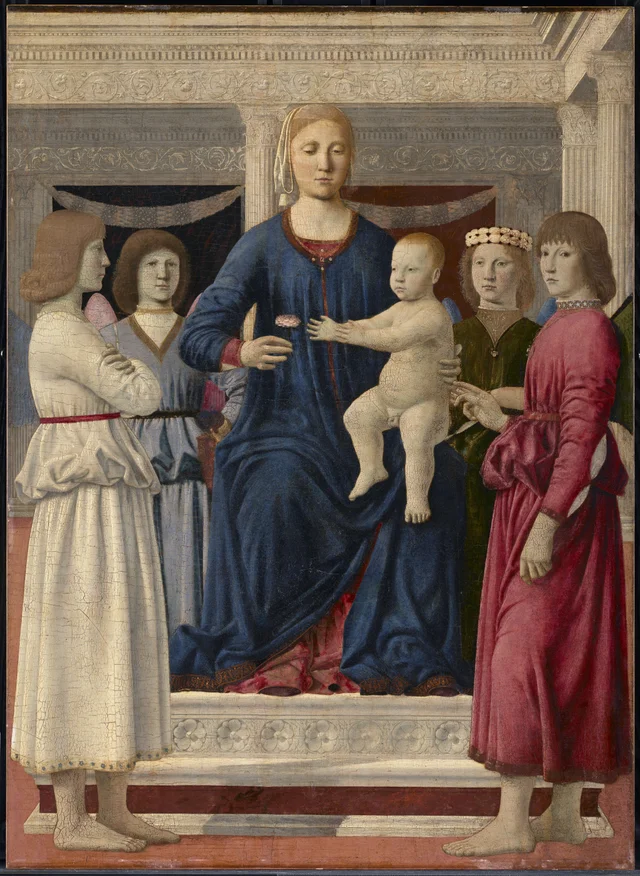 Thronende Madonna mit Kind und vier EngelnPiero della Francesca, 1475
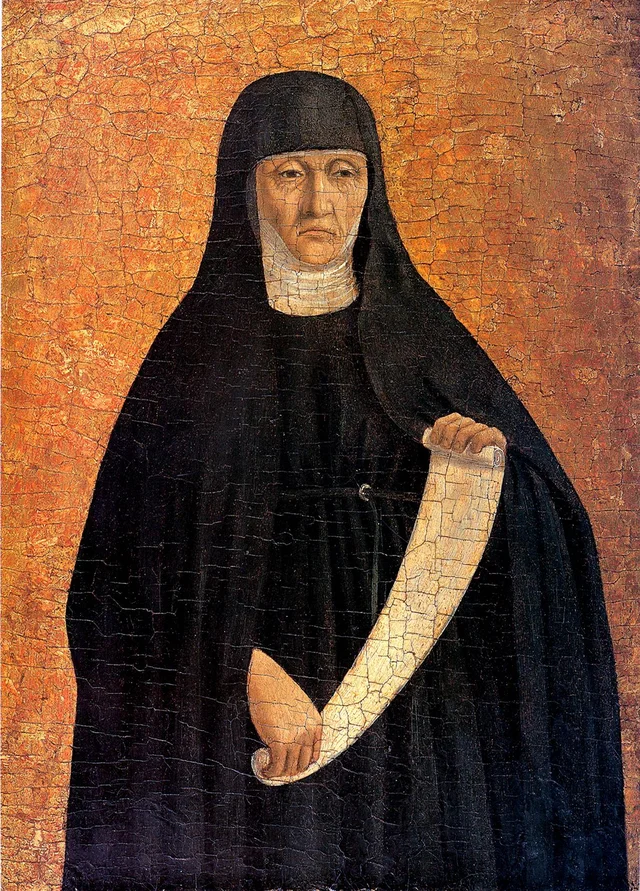 Eine Augustinernonne (Heilige Monika)Piero della Francesca, 1454
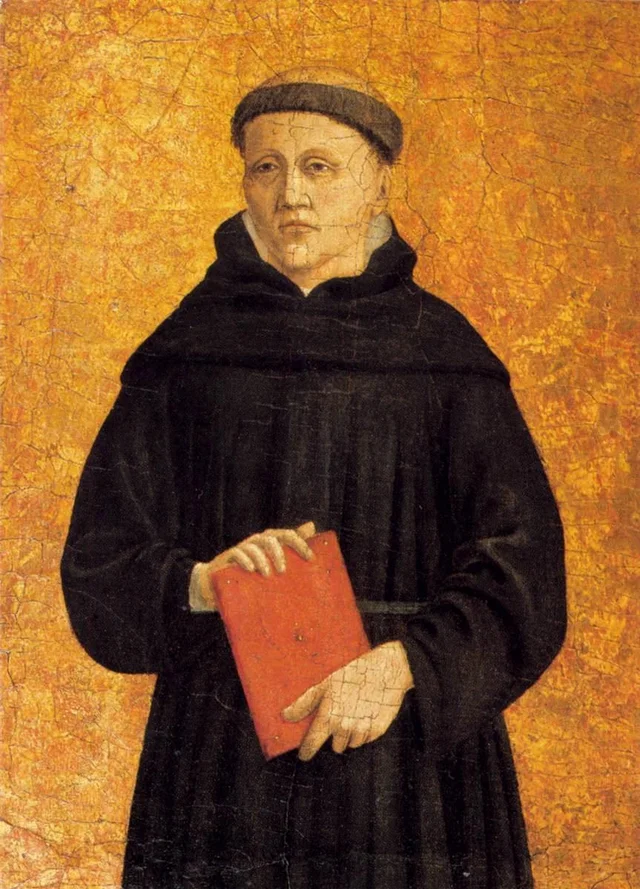 Augustiner-HeiligerPiero della Francesca, 1454
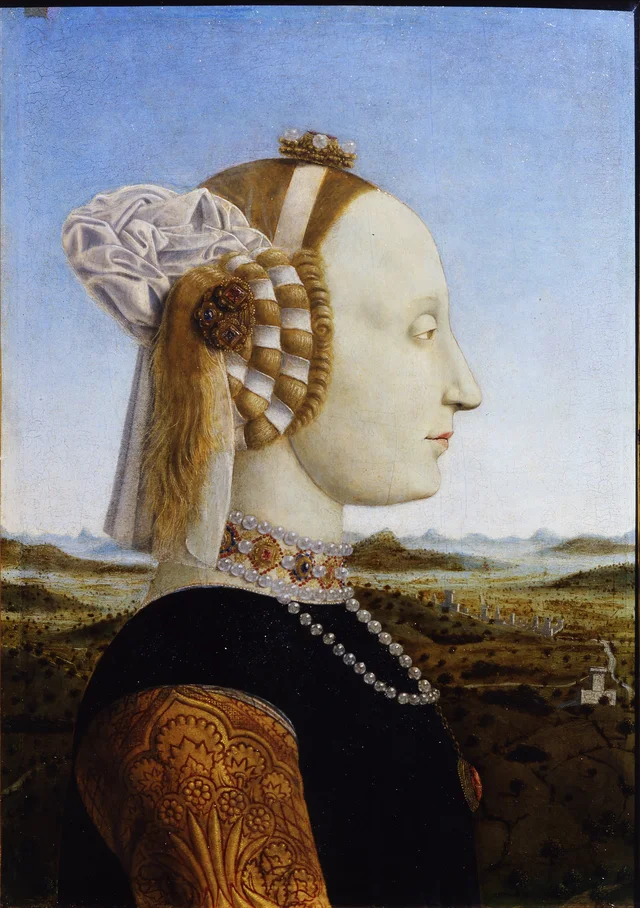 Porträt der Battista SforzaPiero della Francesca, 1474
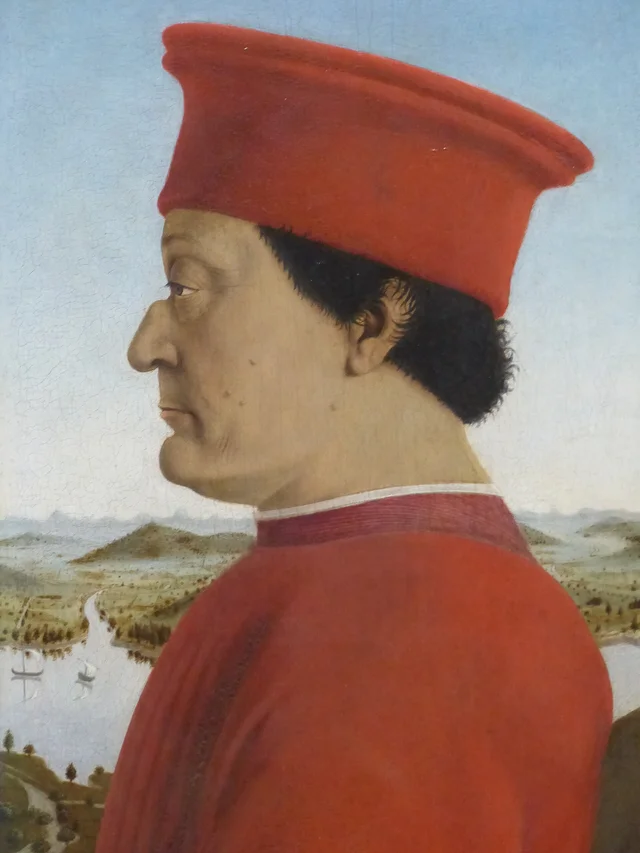 Porträt des Federico da MontefeltroPiero della Francesca, 1474
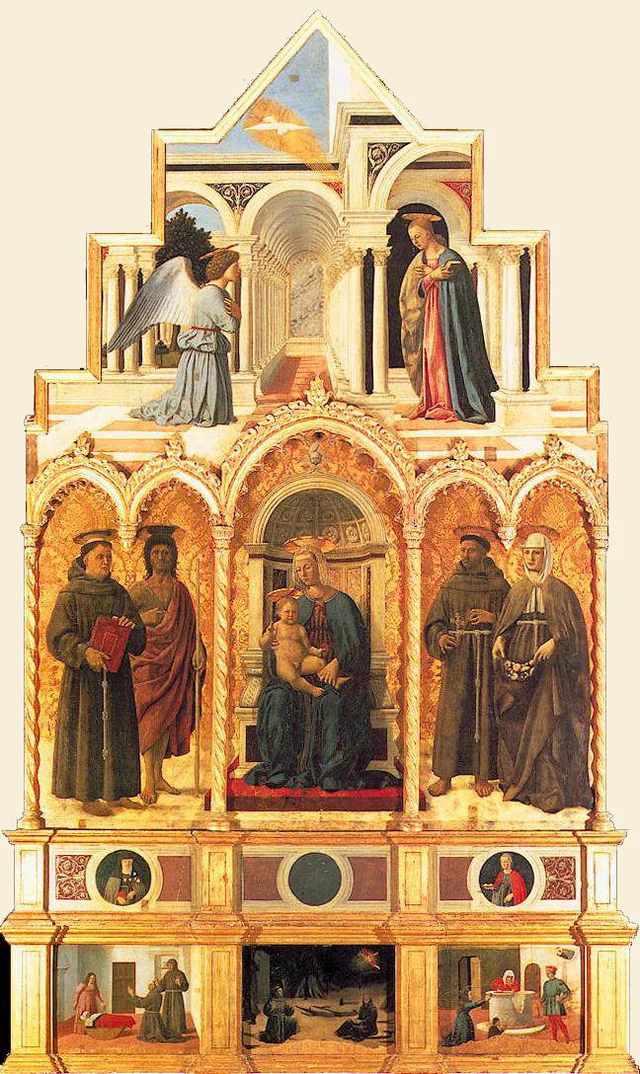 Sant'Antonio-PolyptychonPiero della Francesca, 1469
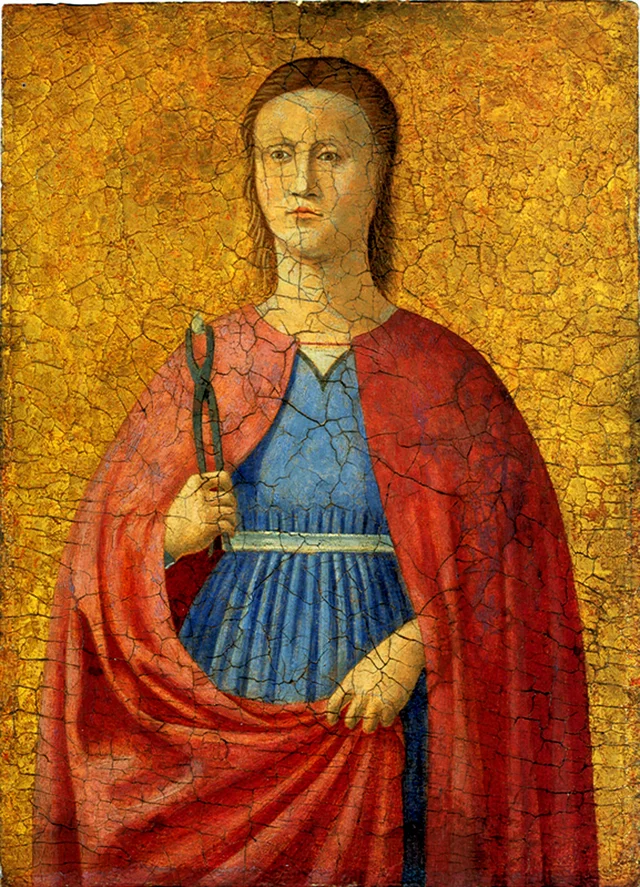 Heilige ApolloniaPiero della Francesca, 1454
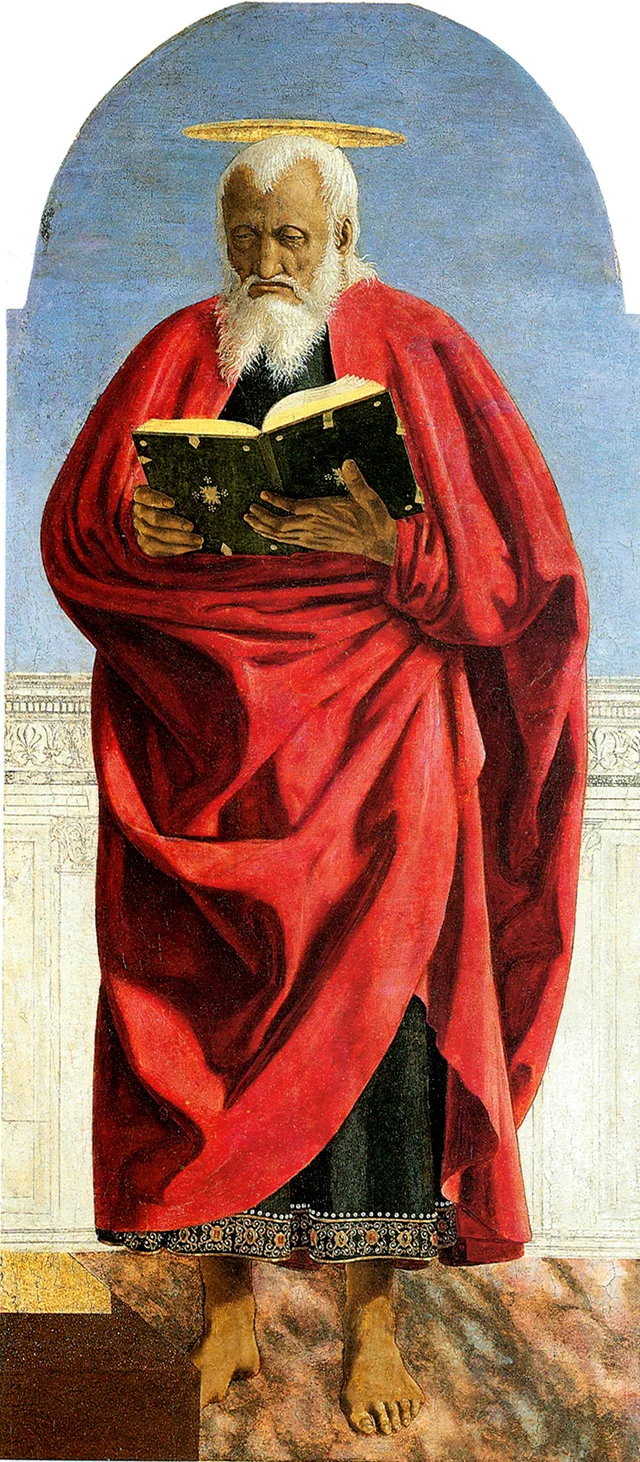 Der heilige Johannes der EvangelistPiero della Francesca, 1454