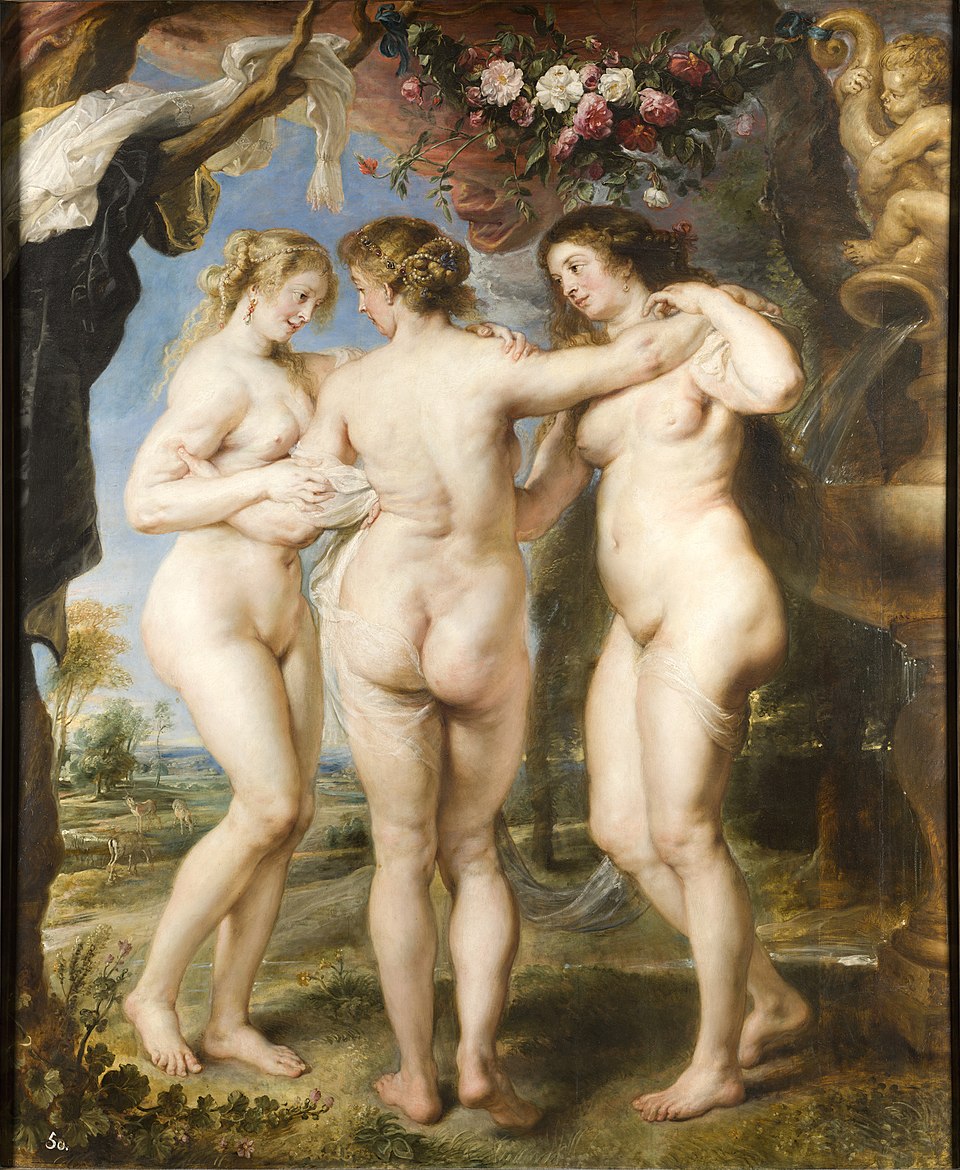
Peter Paul Rubens, The Three Graces, 1630. Wikimedia Commons. · PD
Die drei Grazien
Details
Die Geschichte
Rubens malte die drei Grazien um 1630 für sich selbst und behielt das Bild bis zu seinem Tod in seinem Haus. Die drei nackten Göttinnen der Anmut fassen sich um die Schultern, üppig und warm gemalt, mit der ganzen Lust am Fleisch, für die Rubens berühmt ist. In der linken Gestalt erkennen viele die Züge seiner jungen zweiten Frau Helene Fourment, die er mit 53 Jahren geheiratet hatte, als sie 16 war. Über ihnen hängt ein Blütenkranz, zu ihren Füßen weidet Vieh in einer weichen Landschaft. Nach Rubens' Tod kaufte der spanische König Philipp IV. das Bild für seine Sammlung.