Abanindranath Tagore
1871–1951 · British Raj · Bengal School of Art, Modern Indian art
The story
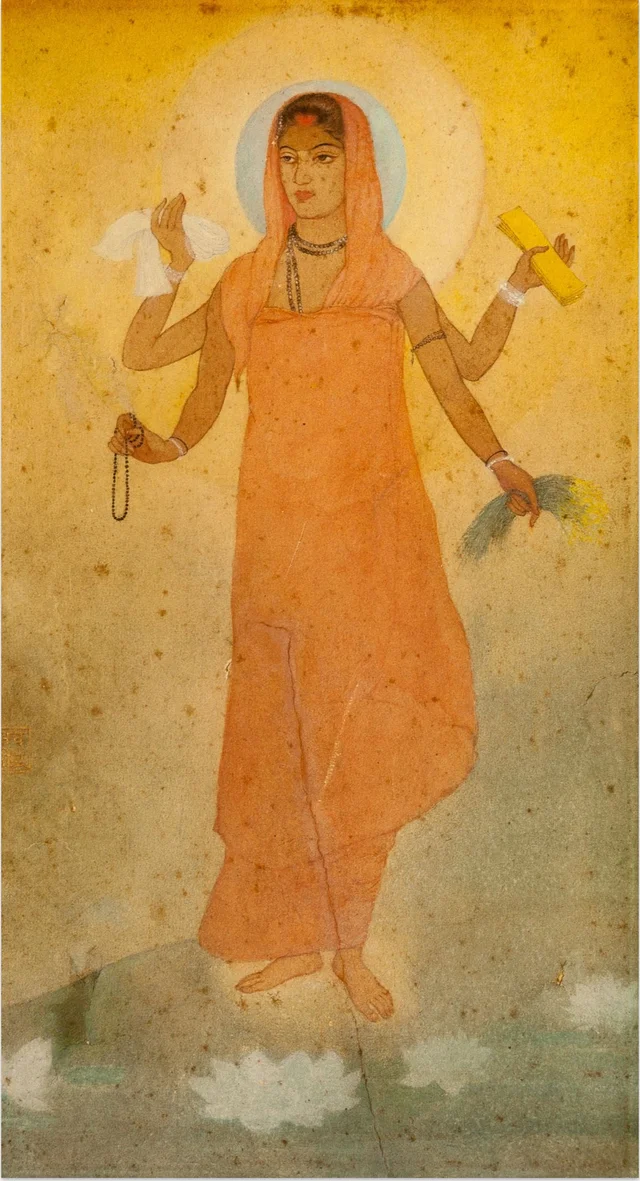
Around 1905, as Britain moved to partition Bengal, Abanindranath Tagore painted a slight four-armed woman in saffron robes and called her 'Bharat Mata', Mother India. Modest in size and done in soft watercolour washes, it became an emblem of the independence movement.
He set out deliberately to break with the Western academic style taught in colonial art schools, reaching instead toward Mughal miniature, Rajput painting and Japanese ink technique. Out of that came the Bengal School, the first self-conscious movement of modern Indian art, and he trained a generation of its painters in Calcutta.
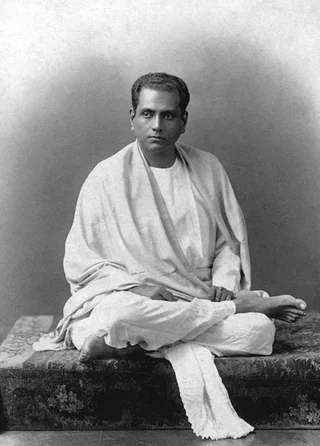
He was a nephew of the poet Rabindranath Tagore and grew up inside that remarkable family. He also wrote children's books and art theory in Bengali.