Abraham van Beijeren
1690 · Dutch Republic · Baroque, Dutch Golden Age
The story
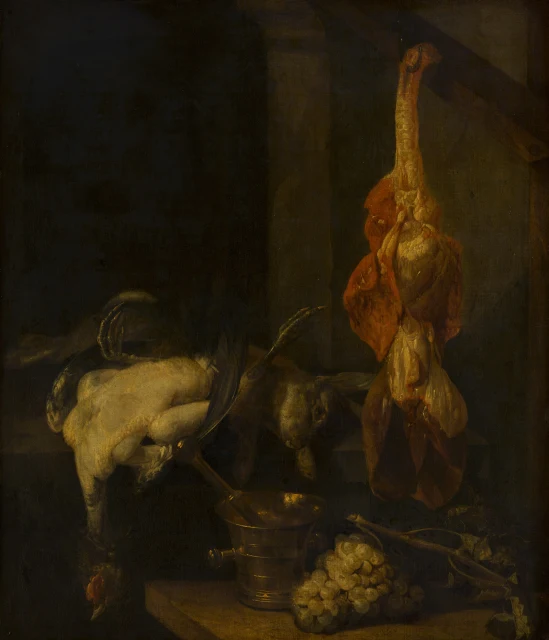
Abraham van Beijeren spent his life painting wealth he could not sell. In the middle of the 17th century, when the Dutch Republic was the richest trading nation in Europe, he laid out its luxuries on canvas: lobsters, half-peeled lemons, silver ewers, Venetian glass and a gold watch left open on the cloth. These lavish spreads even had a name at the time, pronkstilleven, ostentatious still lifes.
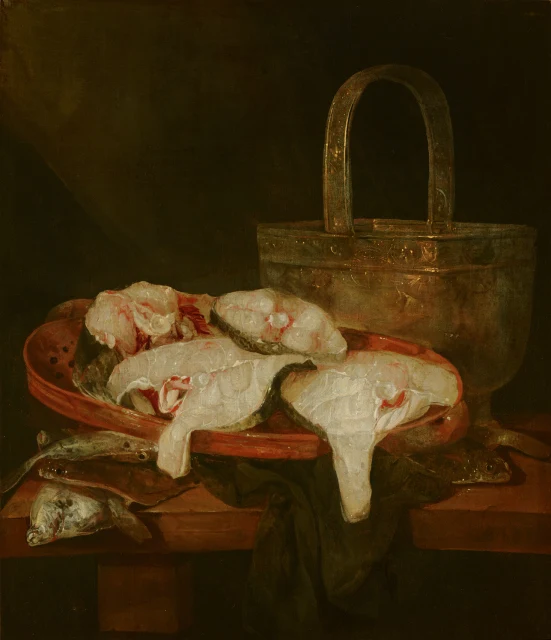
He had started lower down, painting fish, which paid little, and the money never really came. Records show him moving from town to town, The Hague, Delft, Amsterdam and others, apparently one step ahead of his debts. Late in life he managed to buy a house, most of it on a mortgage.
The reversal came long after he died near Rotterdam in 1690. Collectors and museums now rank him among the finest still-life painters of the Golden Age, and his pictures hang in major collections worldwide. Look for the small monogram, an A, V and B run together, that he often tucked into the folds of the tablecloth or the gleam of the silver.