Abraham van Calraet
1642–1722 · Dutch Republic · Dutch Golden Age, Still life, Baroque
The story
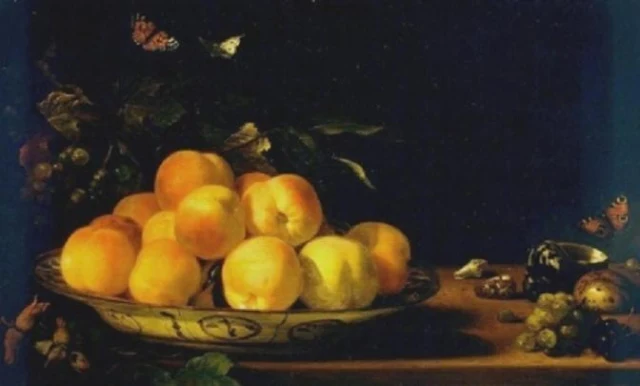
Abraham van Calraet spent his whole life in Dordrecht, one of the oldest towns in Holland, working through the last decades of the Dutch Golden Age. He came from a family of wood carvers and learned to sculpt before he ever picked up a brush, which is why his early pictures are careful, almost tactile still lifes: peaches piled in a porcelain bowl, a few grapes, sometimes a butterfly resting on the rim.
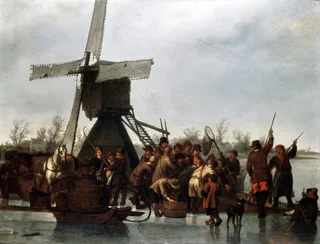
For a long time his best pictures were not sold under his own name at all. He signed with the monogram AC, and so did a more famous townsman, the landscape painter Aelbert Cuyp. Dealers who wanted the higher price simply read the initials as Cuyp's, and some even painted Cuyp's full signature over Calraet's. So for two centuries his horses and riverside views hung in galleries as the work of someone else. Only careful study in the 20th century began pulling the two hands apart again.
He also painted stable scenes and landscapes with horses, the animals Dordrecht's grain trade depended on. His younger brother Barent trained under him and became a landscape painter too. Several of the still lifes now firmly given back to Calraet hang in the Dordrechts Museum, in the town he never left.