Adalbert Stifter
1805–1868 · Austrian Empire · Biedermeier
The story
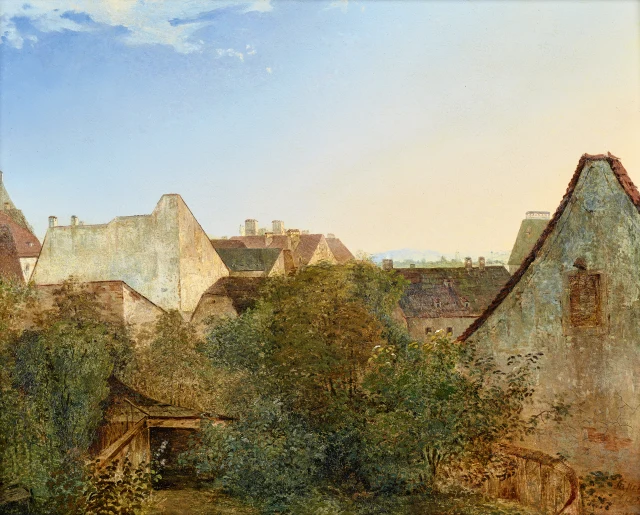
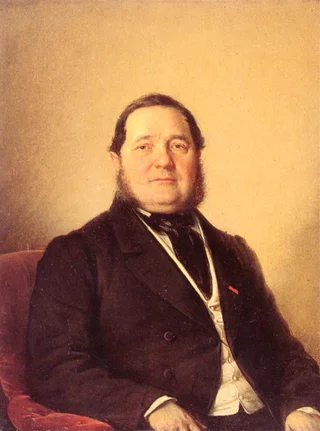
Adalbert Stifter is best known as a writer, the author of the novel Indian Summer and the story collection Colourful Stones. He was also a painter all his life, and in his last years he set himself a painting project his readers knew nothing about. From 1854 to 1867 he kept a meticulous diary of his work at the easel.
The diary follows a planned cycle of eight symbolic landscapes, each named after a state of mind. Cheerfulness was to show Greek temple ruins, a place he had never seen. Longing and Melancholy were both moonlit scenes, and Solemnity was meant to show the Grossglockner, Austria's highest mountain. Most of them survive only as titles. Movement, begun in 1858, was to show rushing water. In the smaller of its two versions only the sky is painted, and the larger one never got past the underdrawing, a web of flowing lines that later writers have compared to abstract art.
By then Stifter lived in Linz, where he worked as a school inspector and wrote regular art reviews. After moving there in 1848 he never exhibited his own pictures again. One of his moonlit views of the river meadows near Linz was finished by another hand in a far more conventional manner. His painting stayed almost unknown until 1901, when 16 of his pictures were reproduced for the first time in a critical edition of his collected works.