Adam Willaerts
1577–1664 · Dutch Republic · Dutch Golden Age
The story
In a small panel in the Rijksmuseum, two men wrestle over a golden staff. It stands for command of the seas, and whoever holds it controls the trade of the world. One man is the Dutch Republic, the other is Spain, and figures standing for England and Venice watch to see who wins. Behind them, Adam Willaerts painted the real event that settled the question for his countrymen, the Dutch victory over the Spanish fleet at Gibraltar in 1607.
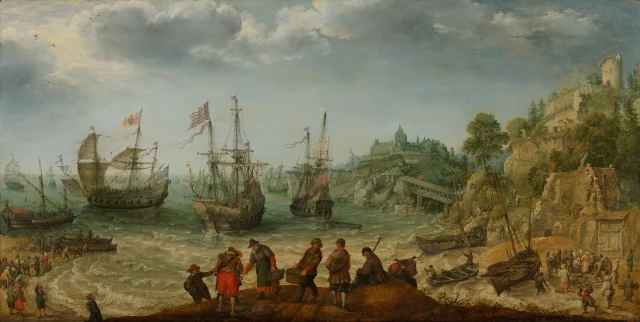
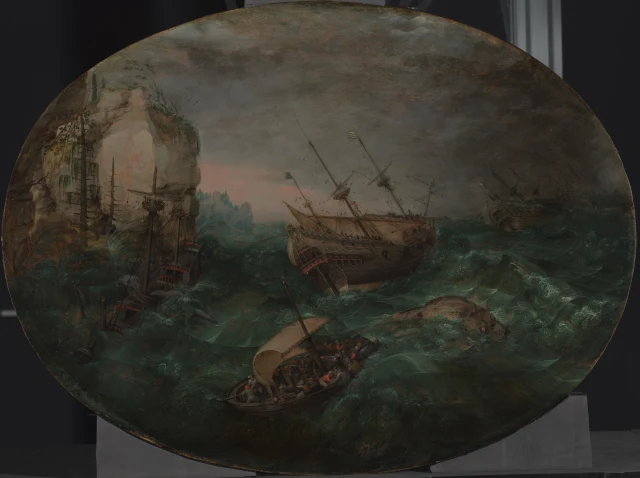
Willaerts was born in London in 1577, to Flemish parents who had fled Antwerp for reasons of religion. The family moved on to Leiden, and from 1597 he lived in Utrecht, where he became dean of the painters' guild in 1620. He painted coasts and beaches crowded with small figures, fish markets, storms and shipwrecks, and three of his sons became painters too.
He also painted royal occasions at sea. In April 1613 Elizabeth, daughter of King James I of England, sailed from Margate with her new husband Frederick, the Elector Palatine, a German prince. Willaerts made several versions of that embarkation, one of them now in the National Maritime Museum in Greenwich, and a larger one bought by Queen Victoria for the Royal Collection. He died in Utrecht in 1664, aged 86.