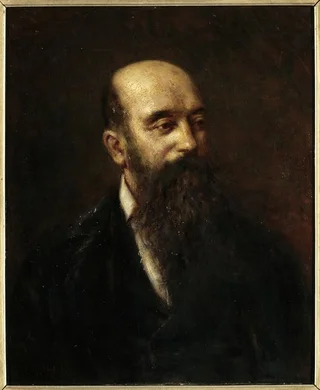
Adolphe Joseph Thomas Monticelli
1824–1886 · France · Romanticism, Baroque Revival, Academic art
The story
In the cafés of Marseille in the 1870s you might have seen a shabby, courtly man paying for his drinks with small painted panels. That was Adolphe Monticelli, who piled his oils on so thickly that flowers and figures seem to rise out of the surface like enamel or jewels. He had trained in Paris under the academic painter Paul Delaroche, but his real schooling happened in the Louvre, copying Watteau and the Venetians, and later beside Delacroix, whose colour he never forgot.
By the end he was working at furious speed, turning out bouquets and fête scenes for a few francs each, dismissed by respectable critics as a drunk who wasted his gift. One admirer changed that verdict after his death. Vincent van Gogh reached Paris in 1886, a few months too late to meet him, and fell hard for these glowing, loaded surfaces. He copied Monticelli's flower still lifes, wrote about him constantly to his brother Theo, and later said in Arles that he sometimes felt he was carrying on the dead man's work.
The thick daubs Van Gogh admired are still the first thing you notice: paint troweled into ridges that catch real light, so a vase of blossoms reads almost as relief rather than picture.
Works
10 works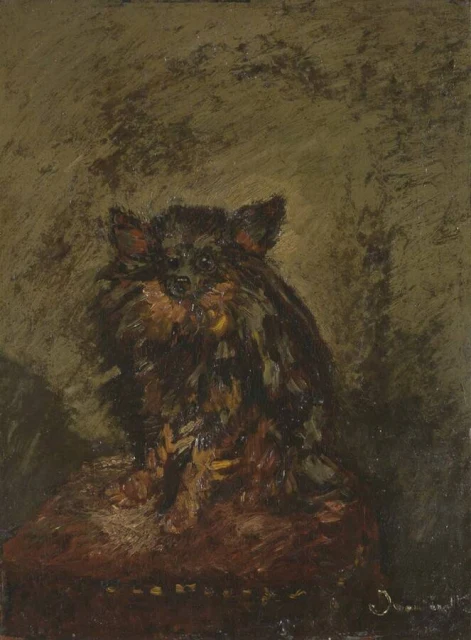 Dog on a ChairAdolphe Joseph Thomas Monticelli
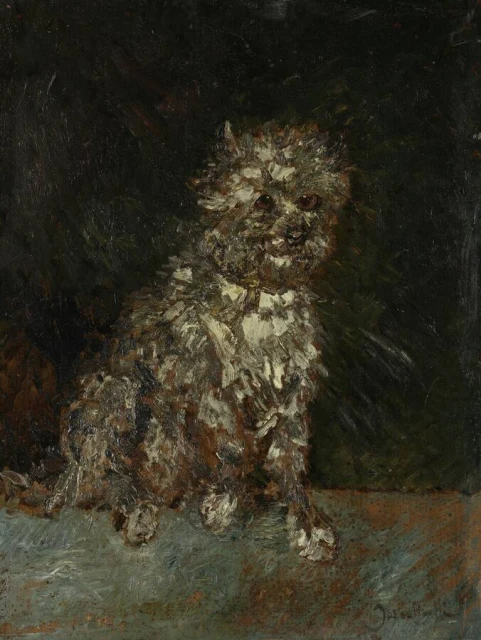 Griffon blancAdolphe Joseph Thomas Monticelli
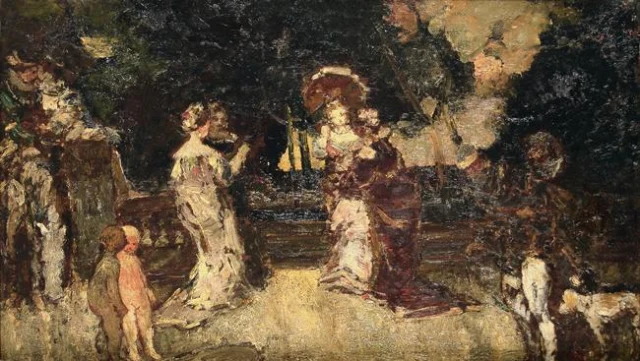 In the ParkAdolphe Joseph Thomas Monticelli
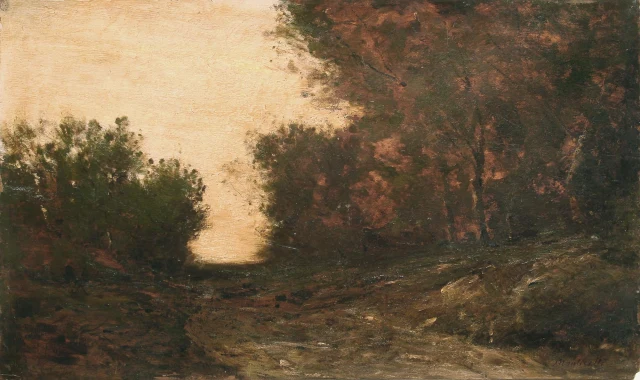 LandscapeAdolphe Joseph Thomas Monticelli
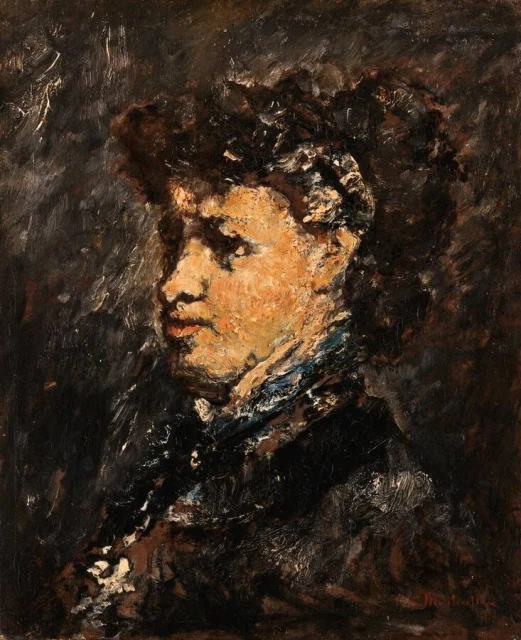 Portrait of a WomanAdolphe Joseph Thomas Monticelli, 1871
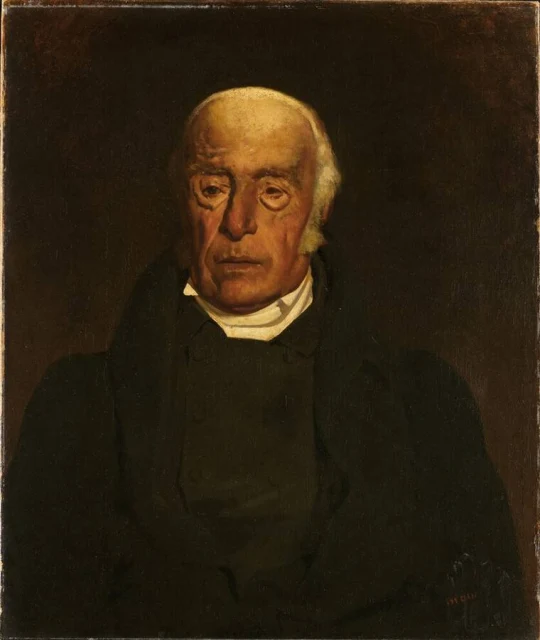 Portrait of Joseph Antoine MonticelliAdolphe Joseph Thomas Monticelli
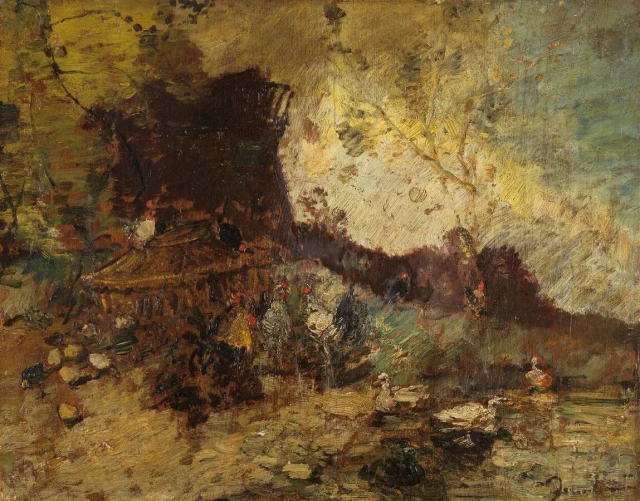 Poultry near the ruins of a millAdolphe Joseph Thomas Monticelli, 1872
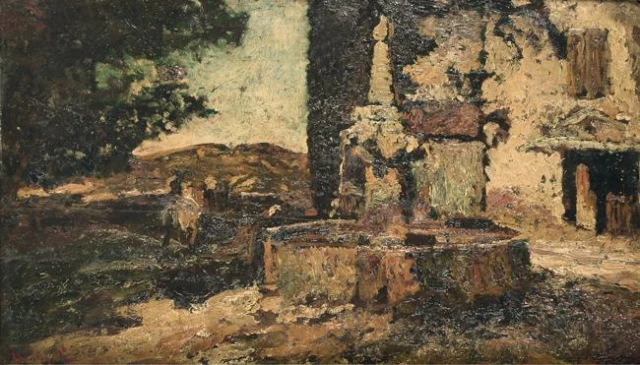 The FountainAdolphe Joseph Thomas Monticelli
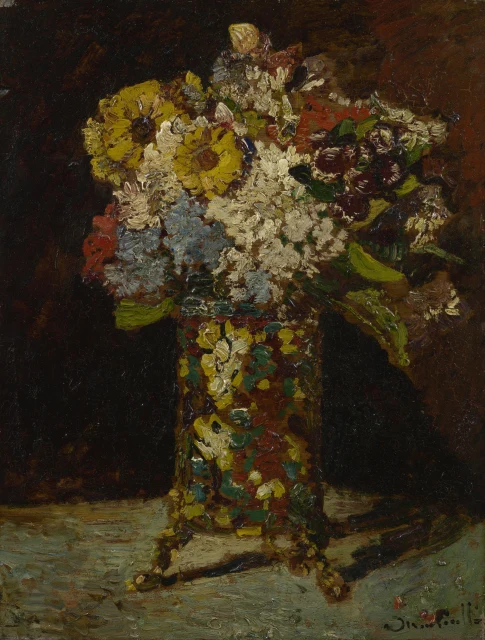 Vase of FlowersAdolphe Joseph Thomas Monticelli, 1875