Akseli Gallen-Kallela
1865–1931 · Finland · Romanticism
The story
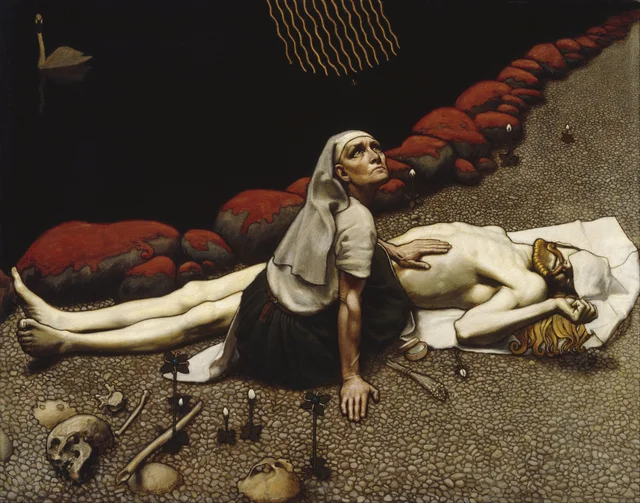
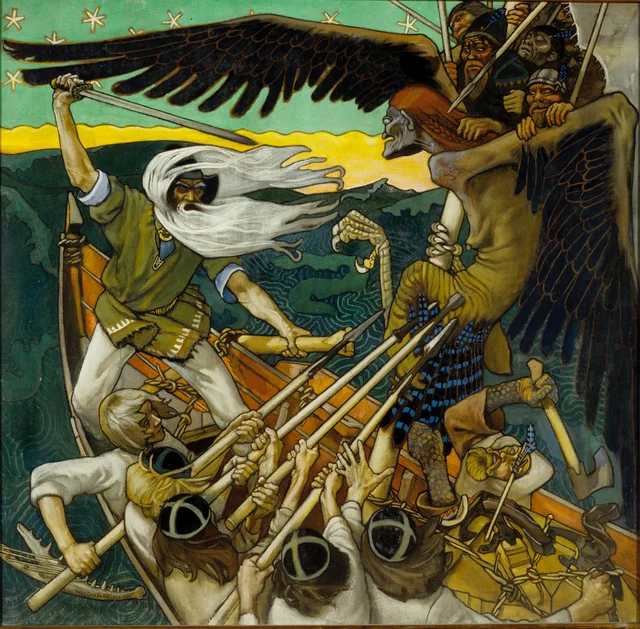
When Akseli Gallen-Kallela was working, Finland was a grand duchy of the Russian Empire, and around 1900 Tsar Nicholas II tightened his grip in a campaign Finns called Russification. Painters answered by digging into the Kalevala, the national epic stitched together from old Finnish folk songs, and no one did it more powerfully than Gallen-Kallela.
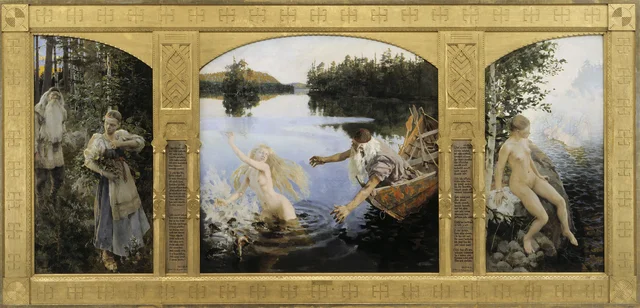
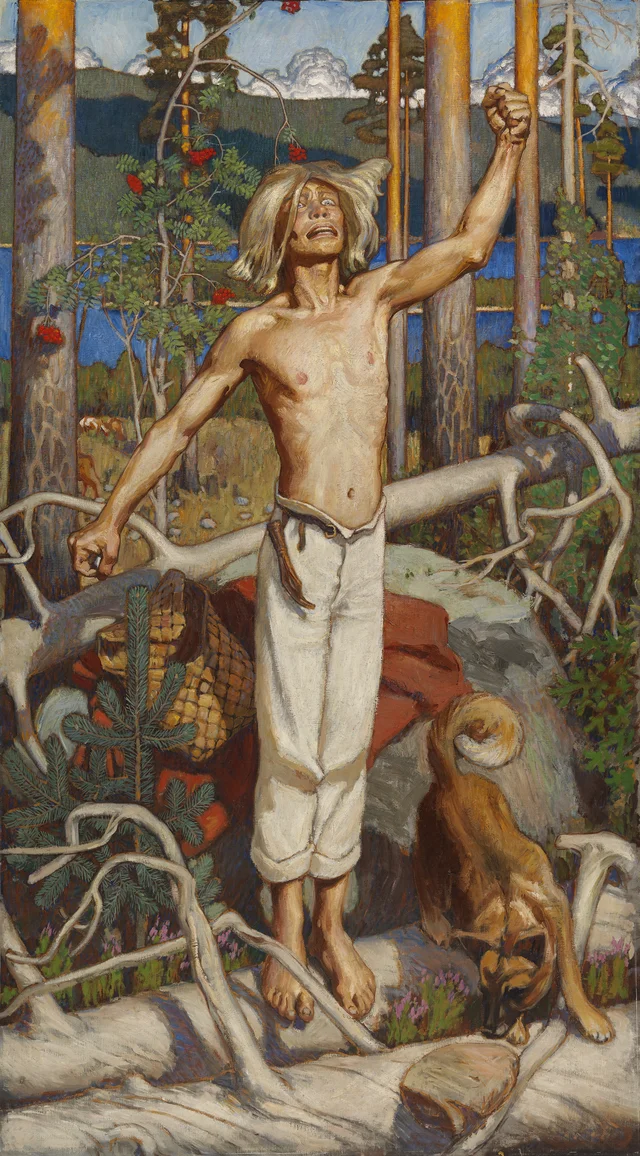
He built his art out of its stories. His Aino triptych shows the young woman of the epic drowning herself rather than marry the ancient sage Väinämöinen, and he returned again and again to the epic's heroes, painting them in a hard, clear style drawn from the forests and lakes of Karelia, the region on the Russian border he treated as the soul of the country.
His moment on the world stage came at the Paris World's Fair of 1900, where he covered the ceiling of the Finnish pavilion with Kalevala frescoes and brought a small, then little-known nation to international attention. He kept working to the end, and died in 1931 after catching pneumonia, having recently returned from years in the United States. The project left unfinished on his death was a vast set of Kalevala illustrations he called the Great Kalevala.