Albert Marquet
1875–1947 · French · Fauvism
The story
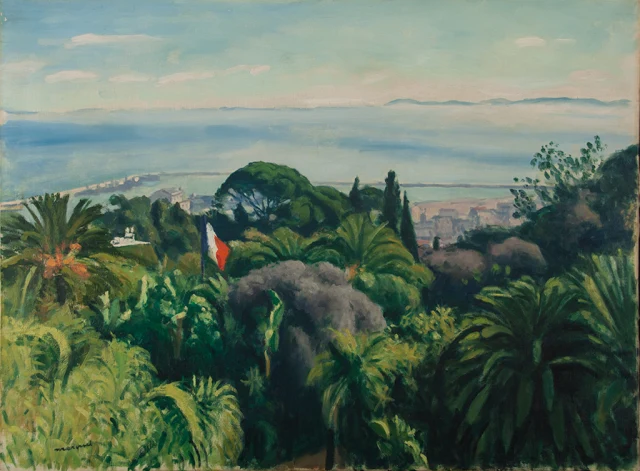
In the autumn of 1905, a room at the Salon d'Automne in Paris held so many violent, unmixed colours that a critic called the painters in it fauves, or wild beasts, and the name stuck to a whole movement. Albert Marquet was one of them, yet anyone hunting for wildness in his canvases came away puzzled, because his colour stayed low and grey and his brush calm even while the friends around him set the walls alight.
He had met Henri Matisse years before as a student in the studio of Gustave Moreau, the Symbolist painter who taught much of that generation. The two stayed close for the rest of Marquet's life, poor together in their early years, sharing rooms and painting the same street corners side by side. When Fauvism burned out, Matisse went on reinventing colour, and Marquet turned quietly to the one subject that held him: water.
For 40 years he painted harbours and rivers, the Seine seen from his Paris windows, the bright ports of Algiers and Naples, the Norman coast, often looking straight down at a quay from a room above it. He would come back to the same stretch of water in every weather, reducing boats and bridges to a few flat strokes. Through the Second World War he waited in Algiers, on the far shore of the Mediterranean, and came back to his Paris windows and the grey Seine only after the fighting was over.