Aleksander Gierymski
1850–1901 · Congress Poland · Impressionism
The story
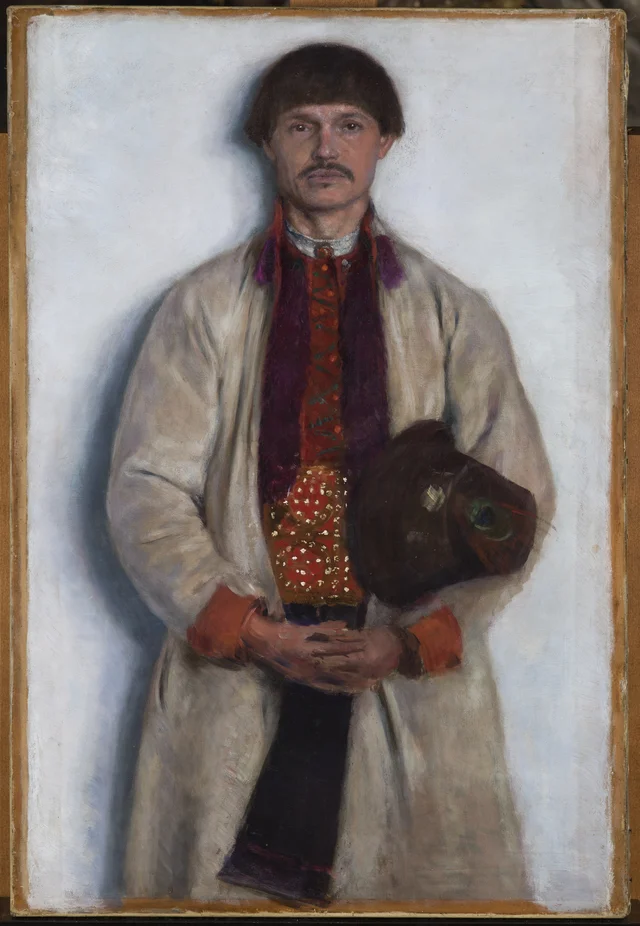
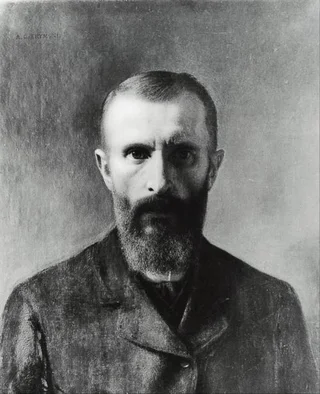
Aleksander Gierymski spent much of his life as the other Gierymski. His older brother Maksymilian was a celebrated painter, and only after Maksymilian died young in 1874 did Aleksander feel free to become his own kind of artist.
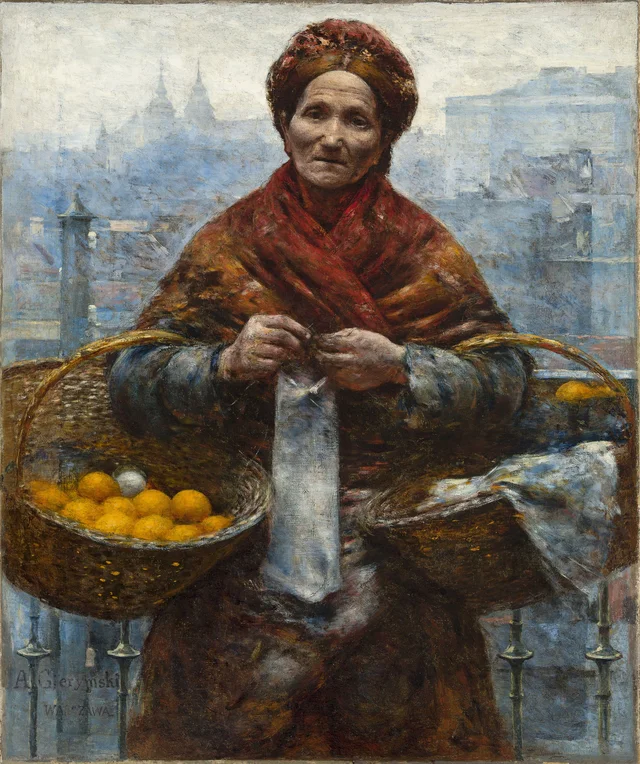
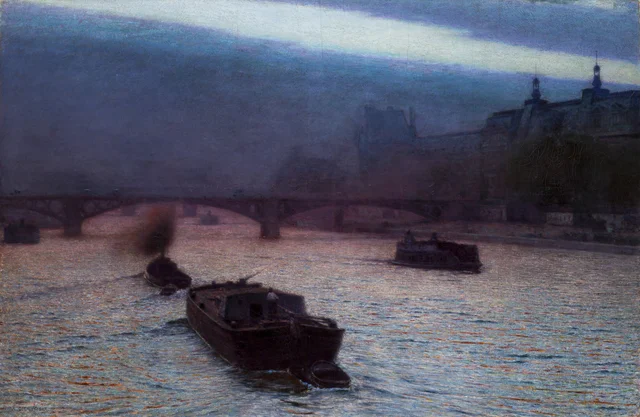
What he became was a painter of Warsaw's poor and of light itself. He liked to work at night, under gas lamps and moonlight, painting the riverside district of Powiśle and the sand-haulers and traders of the old town. His best-known canvas, finished in 1881, shows an elderly Jewish woman on a Warsaw street selling oranges, her face and shawl caught in cold daylight. It hangs today in the National Museum in Warsaw.
That painting carries its own hard history. The Germans looted it during the Second World War, and for decades it was simply gone, until it surfaced at a small antiques market in the German town of Buxtehude in 2010 and was returned to Warsaw the next year. Gierymski himself found little peace. He struggled with mental illness and with money, moved restlessly around Europe, and died in Rome in 1901, largely forgotten by the public that would later line up to see his orange-seller.