Alessandro Algardi
1598–1654 · Papal States · Baroque, Classicism
The story
In 1630 an ancient marble torso on the Capitoline Hill was made into a statue of Carlo Barberini, brother of Pope Urban VIII. The head was carved by Gian Lorenzo Bernini, already the leading sculptor in Rome. The arms and legs were left to Alessandro Algardi, a sculptor from Bologna who had arrived five years earlier with a letter of introduction from the Duke of Mantua to Cardinal Ludovico Ludovisi, a passionate collector of ancient statues. For the cardinal he repaired antiquities, and for goldsmiths he made small models of putti, crucifixes and ornaments.
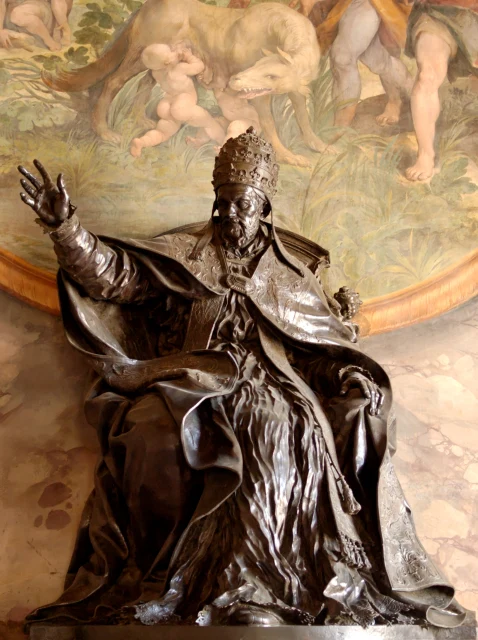
Recognition came slowly. His first great success in marble was a group of Saint Philip Neri with an angel for the sacristy of Santa Maria in Vallicella, and in 1644 he completed the tomb of Pope Leo XI in St Peter's. That same year Innocent X Pamphilj was elected pope, the Barberini circle broke up, and Bernini fell from favour for a time. The new pope's family turned to Algardi. He decorated the Villa Belrespiro, today's Villa Doria Pamphilj, for the cardinal nephew Camillo Pamphilj, and for an altar in St Peter's he carved a huge marble relief of Pope Leo the Great turning Attila away from Rome, a model that altar sculptors followed well into the 18th century.
Contemporaries saw him as Bernini's chief rival, the voice of a calmer, classical manner, and his portrait busts of popes, cardinals and Roman patricians were much sought after. He died in Rome on 10 June 1654 and was buried in Santi Giovanni e Petronio, the church of the Bolognese community in the city.