Alessandro Turchi
1578–1649 · Republic of Venice · Veronese school
The story
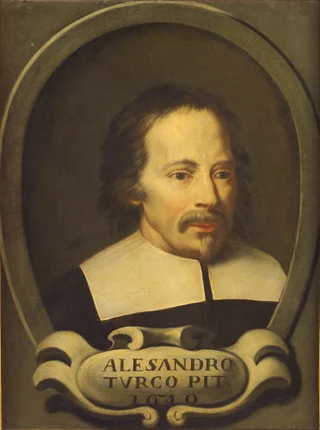
In the 1595 tax census of Verona, Alessandro Turchi's father is described as blind, living on alms, and once a sword-maker. The boy, then about 17, accompanied him about the city, and that is probably where he got the nickname he kept all his life, l'Orbetto, roughly "the little blind one".
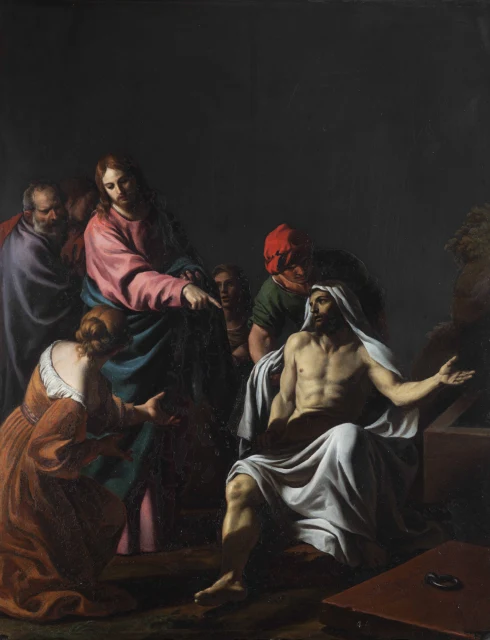
He trained with Felice Brusasorci, a leading Veronese painter fond of unusual supports, and learned from him to paint on slate, stone and copper. By 1616 he was in Rome, painting frescoes in the Quirinal Palace, the papal residence, and working for Cardinal Scipione Borghese, the pope's nephew and a passionate collector. In 1617 the cardinal signed several payments to him, and three small scenes of Christ in the Galleria Borghese, among them the Raising of Lazarus, are thought to belong to that commission. The Lazarus is painted on polished black stone, which old inventories call Lydian stone, a support Turchi favoured for his night scenes.
Turchi stayed in Rome for the rest of his life. In 1637, backed by Cardinal Francesco Barberini, he became principe, the elected head, of the Accademia di San Luca, the painters' academy of Rome. He died in Rome in January 1649.