Alexander Kanoldt
1881–1939 · German Reich · New Objectivity
The story
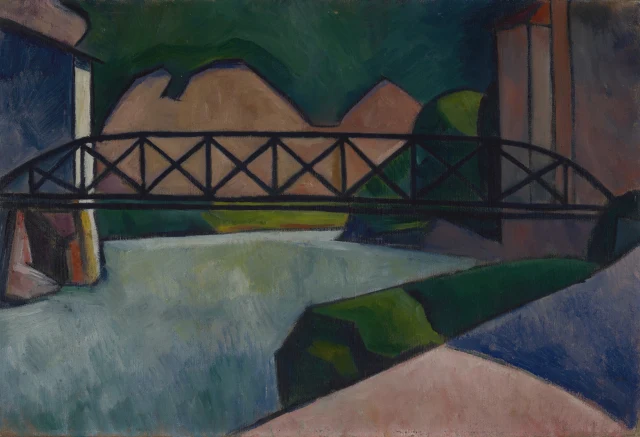
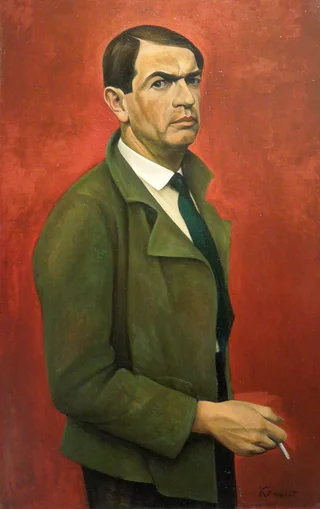
In 1933, the year Hitler came to power, Alexander Kanoldt was handed a plum post, the directorship of a state art school in Berlin. He had spent the 1920s as one of the cool, exact hands of New Objectivity, the German movement that answered Expressionist heat with hard edges and still, almost frozen scenes. His still lifes and his angular Italian hill towns look scrubbed clean, every object set down with a draughtsman's precision.
Kanoldt tried to bend himself to the new regime. He softened his manner toward the warm, romantic style the authorities preferred, and he held the post until he resigned in 1936. It spared him nothing. In 1937 the Nazi purge of "degenerate art" swept up his work along with the modernists he had once exhibited beside, among them Kandinsky and Paul Klee, painters he had known in Munich before the First World War.
He died in Berlin in early 1939, at 57. The paintings that hold up best are the quiet ones from the 1920s: a jug, a folded cloth, a row of rooftops in the Italian town of Olevano, each set down in the hard, clear light he had trusted since his New Objectivity years.