Alexander Roslin
1718–1793 · Sweden · Rococo
The story
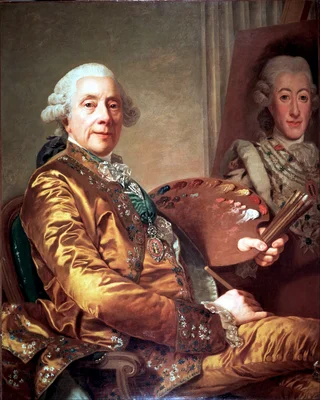
In 1752 a Swedish portrait painter arrived in Paris and stayed for the rest of his life, becoming one of the most sought-after portraitists of Europe's courts. Alexander Roslin worked for aristocrats in Scania, Bayreuth, Warsaw and Saint Petersburg, where Catherine the Great sat for him, though it was Paris that made his name and admitted him to the Royal Academy.
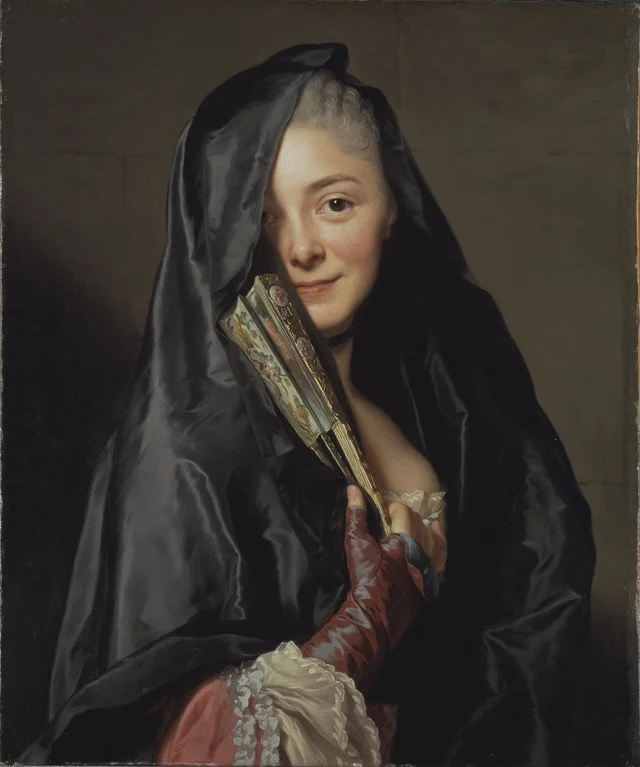
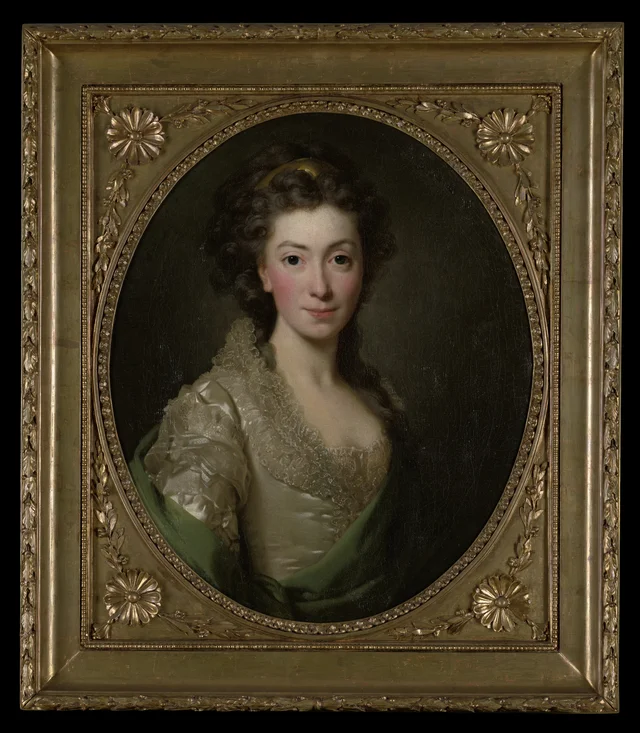
His signature was fabric. Silk, satin, lace and fur come off his canvases with a shine that clients paid well for, and beneath the finery the faces stay alert and particular. The picture people remember is from 1768, a portrait of his wife, the pastel painter Marie-Suzanne Giroust. He dressed her in Bolognese costume and set a black lace veil across her face, so she seems to glance out mid-turn. Denis Diderot, the philosopher and famously sharp Salon critic, called it "très piquante".
Roslin married Giroust in 1759 and lost her in 1772. She was one of the few women admitted to the French Academy in her own right. He kept painting into old age, working through the first years of the French Revolution, and died in Paris in 1793, with the court world he had flattered already coming apart.