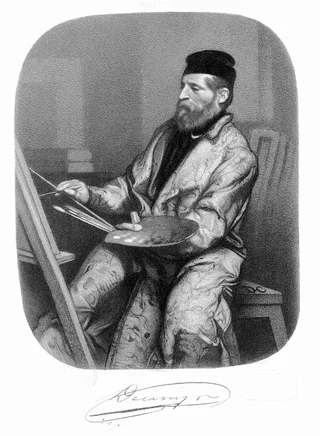
Alexandre-Gabriel Decamps
1803–1860 · France · Romanticism
The story
In 1828 a young Parisian painter sailed to Smyrna, the Ottoman port now called Izmir, and came home with something French art had not seen: streets, markets and light rendered directly from life. At the Salon of 1831 Alexandre-Gabriel Decamps showed those Eastern scenes, and critics scrambled to place them. Within a few years he was spoken of alongside Delacroix and Ingres, the leading names of the day, as the head of a new Orientalist school.
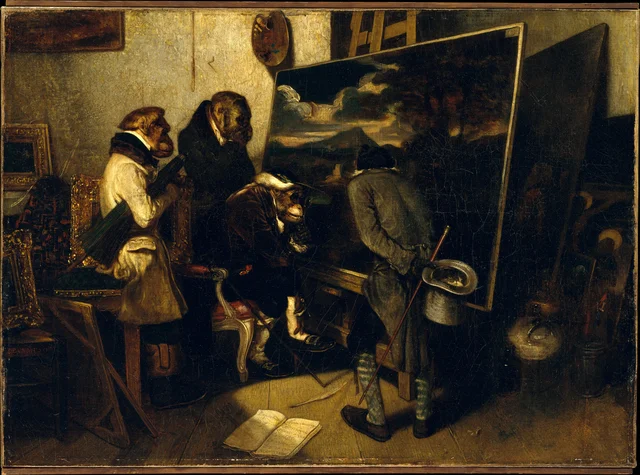
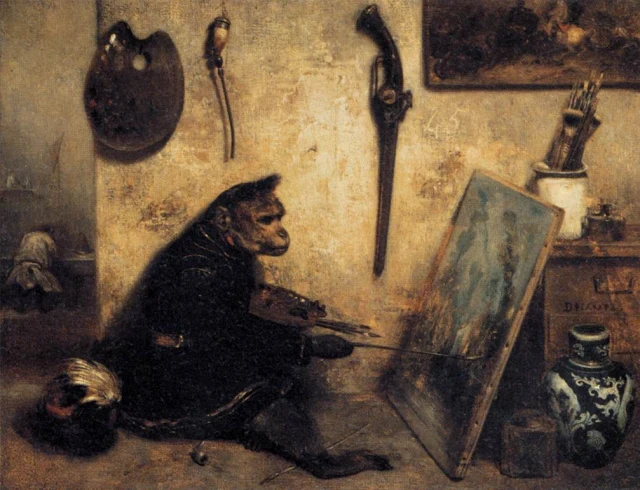
His trademark was contrast. Heavy, worked paint and a hard fall of sunlight made a wall or a crowd feel physically hot. He did not only paint the East. When the Salon jury bruised him, he answered with satire, filling canvases with monkeys posed as solemn connoisseurs studying a picture, a joke at the experts' expense that people still enjoy.
Recognition came fully at the Paris exhibition of 1855, where he took the top medal. Five years later, out hunting near Fontainebleau, he was thrown from his horse and died of the fall, at 57.