Alexey Venetsianov
1780–1847 · Russian Empire · Romanticism
The story
For most of his working life Alexey Venetsianov was a civil servant in St Petersburg, drawing maps and land surveys, and painting portraits on the side. In 1819 he gave up the post, bought a small estate called Safonkovo, and did something Russian painting had barely done before: he made the peasants who worked the land the actual subject of serious pictures.
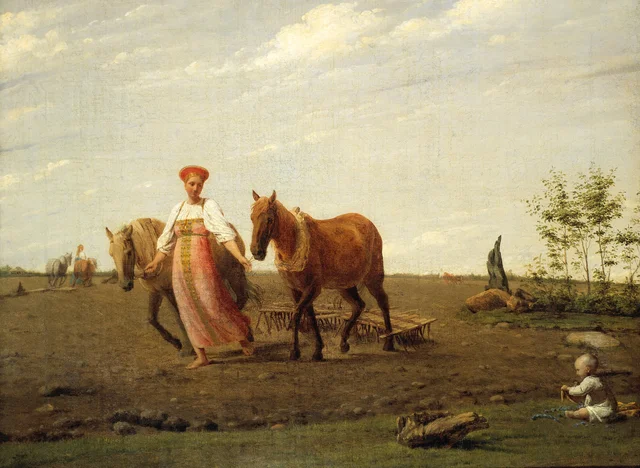
His farm women stand in real morning light, dignified and unhurried, at the threshing floor or out on the spring ploughland with a child at their feet. Nobody had painted Russian country labour this way, without turning it into a costume or a joke, and the canvases he showed in 1824 were praised for it.
What he did next mattered as much as the paintings. He opened a school on his estate for talented boys from poor and serf families, taught them himself, and paid to buy several of them out of serfdom so they could work as free artists. One of them, Grigory Soroka, remained legally bound to his own landlord and never gained the freedom Venetsianov tried to win for him.