Alphonse de Neuville
1835–1885 · France · Academic art
The story
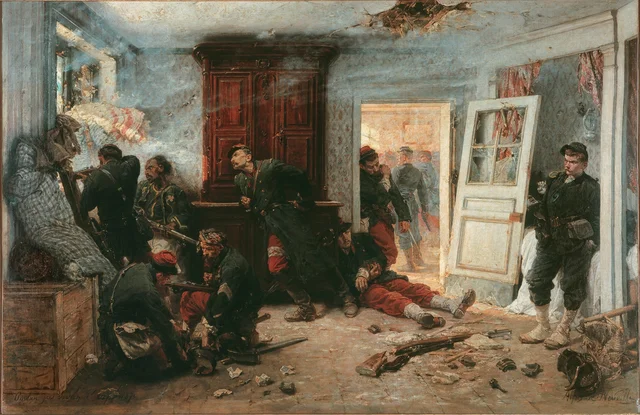
France lost the war of 1870 badly, and for years afterward the public wanted paintings that faced the defeat squarely. Alphonse de Neuville gave it to them. His best-known canvas, The Last Cartridges of 1873, shows a knot of French infantry making a final stand in a wrecked house at Bazeilles, firing off their last rounds as the Bavarians close in. It became one of the most reproduced images in France for the next 40 years.
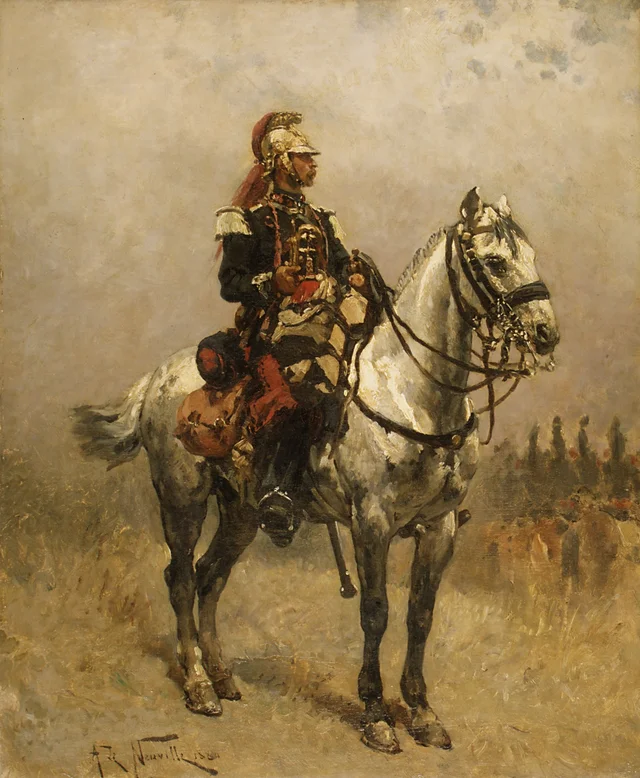
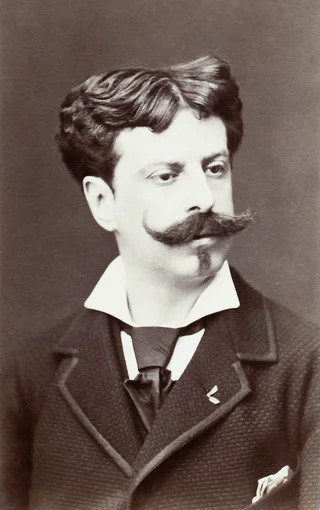
De Neuville knew the material at first hand. Born in Saint-Omer in 1835, he had trained under the painters Delacroix and Picot, then served in the National Guard around Paris during the war. Afterward he painted little else: skirmishes on railway lines, houses defended room by room, and The Defence of Rorke's Drift, the British stand against the Zulus, which drew some 50,000 paying visitors when it was shown.
With Édouard Detaille, a fellow military painter, he built vast panoramas of the battles of Champigny and Rezonville, wraparound canvases the public queued to walk inside. He also illustrated Jules Verne, including Twenty Thousand Leagues Under the Seas. De Neuville was made a chevalier of the Légion d'honneur in 1881 and died in Paris four years later, at 49.