Ambrosius Bosschaert
1573–1621 · Habsburg Netherlands · Still life, Flemish art, Dutch Golden Age
The story
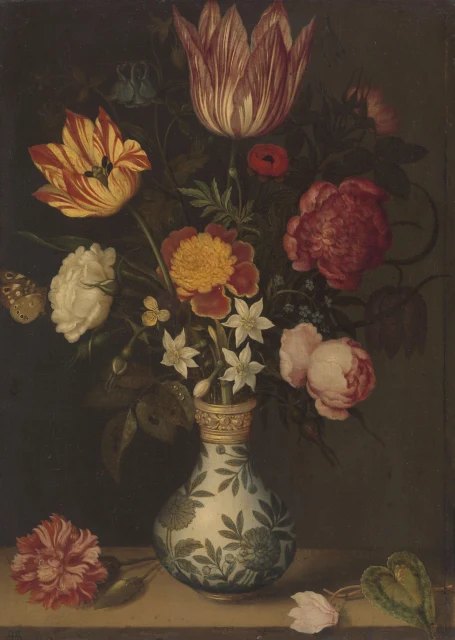
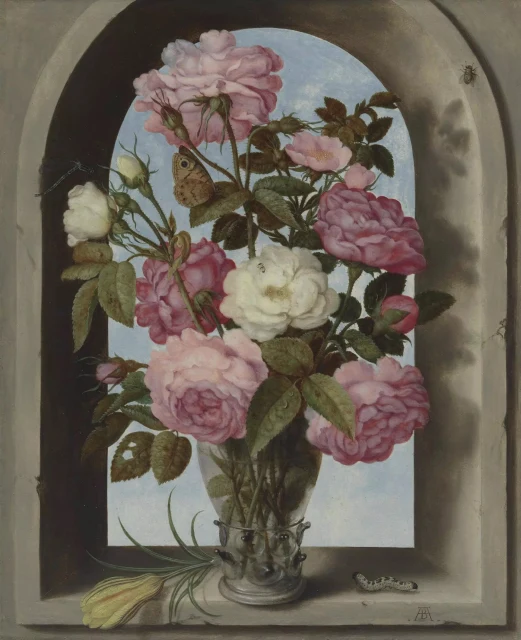
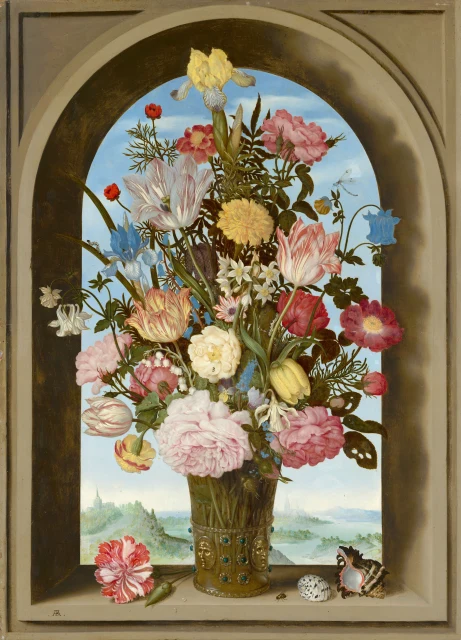
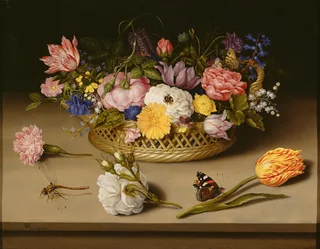
Look closely at one of Ambrosius Bosschaert's flower pieces and you notice something strange, the tulip, the rose and the cyclamen crammed into one glass vase never bloomed in the same month. He painted each flower from life across a whole year, then assembled a bouquet that could not exist, set in a stone window niche with a fly or a seashell for company.
Bosschaert was born in Antwerp in 1573 and, like many Protestants, left the Catholic south as a boy when his family fled north to Middelburg in the province of Zeeland. There he turned flower painting into a subject in its own right, as exact as botanical drawing yet balanced like a portrait. It was the era of tulip fever in the young Dutch Republic, when a rare bulb changed hands for the price of a house, and a painted bouquet let a collector keep the costliest blooms forever.
He founded a small dynasty of flower painters, three sons and his brother-in-law Balthasar van der Ast among them. In 1621 Bosschaert died in The Hague, where he had gone to deliver a flower piece commissioned by a high court official, said to have been the most expensive work of his life.