Amico Aspertini
1475–1552 · Lordship of Bologna, Papal States · Renaissance, Mannerism, Bolognese School
The story
Giorgio Vasari, who wrote the lives of the Renaissance artists, could not quite decide what to make of Amico Aspertini. He called him a man of extravagant brain whose figures, scattered across Italy but mostly in his native Bologna, were as eccentric and half-mad as their maker. Vasari even claimed that Aspertini painted with both hands at once, one loaded with the light colour and one with the dark.
The tale of the two hands may be a legend, but the restless mind behind it was real, and it left one thing of lasting value. During a stay in Rome around 1500 to 1503, Aspertini filled sketchbooks with drawings of ancient statues, reliefs and ruins. One of them, now called the Wolfegg Codex, is a prime record of what a Renaissance artist could actually see of classical antiquity, much of it since lost or damaged.
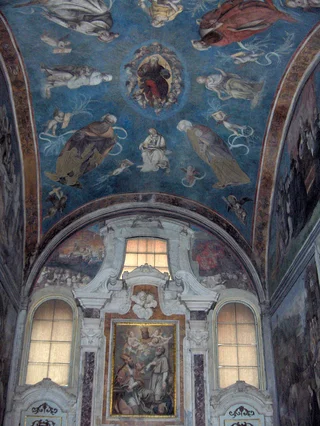
His painted work is uneven and strange by the standards of his day. His frescoes survive in the oratory of Santa Cecilia in Bologna and in the church of San Frediano in Lucca, where in the early 1500s he crowded a chapel with agitated, restless scenes.