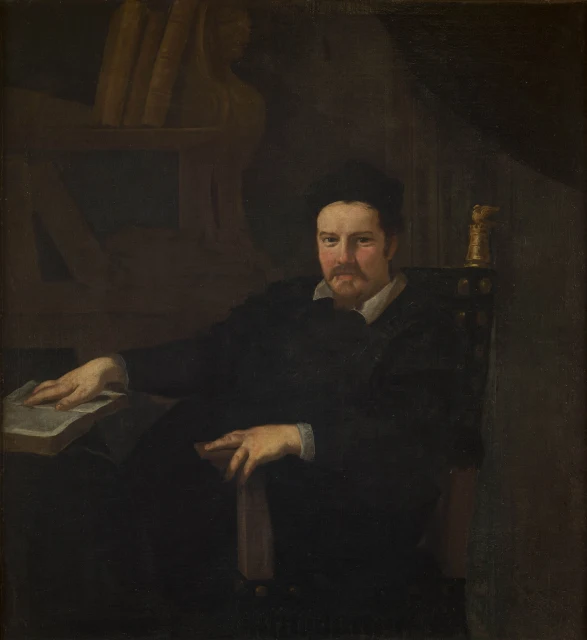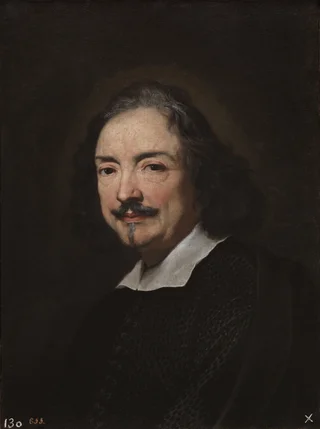
Andrea Sacchi
1599–1661 · Papal States · Baroque
The story
Around 1636, in the painters' academy of Rome, Andrea Sacchi argued a case that still shapes how we look at Baroque painting. A history picture, he held, should contain only a few figures, each clearly drawn and doing something necessary. Crowd the scene and you lose the sense of it. His opponent was Pietro da Cortona, who wanted the opposite: great throngs of bodies, movement everywhere, the eye swept along.
You can see the quarrel on the ceilings themselves. In the Palazzo Barberini, the Roman palace of the reigning pope's family, Cortona filled an enormous vault with a swirling Triumph of Divine Providence, while in a nearby room Sacchi set his calmer Allegory of Divine Wisdom, spacious and close to Raphael, with room to breathe between the figures.
A pupil of Francesco Albani, Sacchi never worked fast or made much noise, and the fashion of the age ran toward Cortona's abundance. His most important student, Carlo Maratta, carried the restrained manner forward and went on to dominate Roman painting for the rest of the century.