Angelo Morbelli
1853–1919 · Kingdom of Italy · Divisionism, Realism
The story
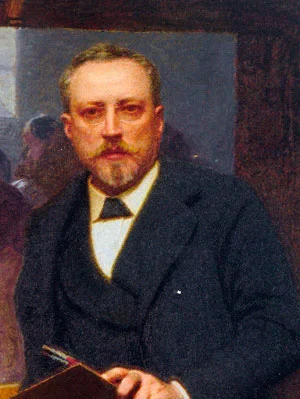
In 1883 a painter of 30 began working at the Pio Albergo Trivulzio, the great Milan almshouse where the city's poor old men and women lived out their last years. Angelo Morbelli kept going back for nearly 30 years. He was given a room of his own in the building, and he drew and photographed the residents at their long refectory tables and in the half-empty halls in winter. The first of these pictures, Giorni... ultimi!, Last Days, won a prize in Milan that same year.
Morbelli came from Alessandria, in Piedmont, and as a boy he was meant for music, until an ear infection caught at school left him slowly going deaf and his family steered him toward painting. He studied at the Brera academy in Milan and later took up Divisionism, the Italian method of building colour out of small separate touches of pure pigment. He once remarked that the business of the dots was practical exercise for him, like scales on the piano.
He painted other hard lives too. For Eighty Cents!, shown at the first Venice Biennale in 1895, takes its title from the day's wage of the women weeding the flooded rice fields. In 1903 he persuaded the Biennale to let him show six canvases instead of the usual limit of two, a whole cycle on old age set in the Trivulzio, with titles such as Old Stockings and The Empty Chair. A holiday scene from the same almshouse, painted in 1892, hangs in the Musée d'Orsay in Paris.