Antimenes Painter
Ancient Greece · Archaic Greek art
The story
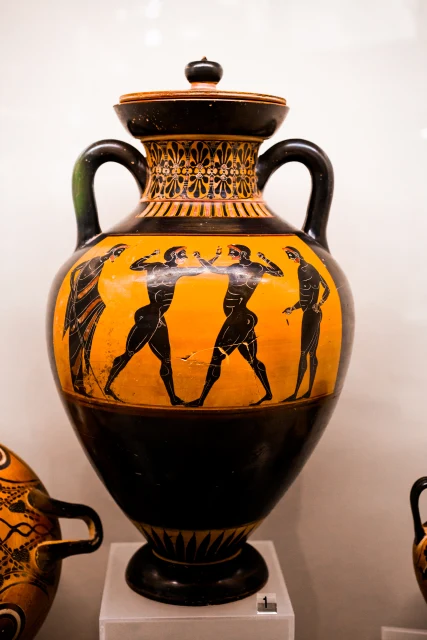
Around 530 BC, painters in Athens began to reverse their method. They left the figures in the orange colour of the clay and painted the background black around them, the technique now called red-figure. The painter known as the Antimenes Painter worked through exactly those years, from about 530 to 510 BC, and as far as we know he stayed with the older black-figure, dark silhouettes with the details scratched through to the clay.
His real name is lost. Modern scholars named him after a word of praise painted on one of his water jars, now in Leiden in the Netherlands, "Antimenes is handsome", Antimenes being some admired youth of the city. That jar shows men washing under the spouts of a public fountain house. About 150 vases are attributed to him, mostly water jars and storage jars, and most of them were found in Etruria, in the tombs of wealthy Etruscan families north of Rome.
He painted the usual heroes and gods, Herakles and Dionysos among them, and chariots setting out, and he also liked scenes of everyday life. His drawing is close to that of Psiax, a contemporary who painted in both techniques, and his later vases show a finer, more expressive line.