Antoine Caron
1521–1599 · France · School of Fontainebleau
The story
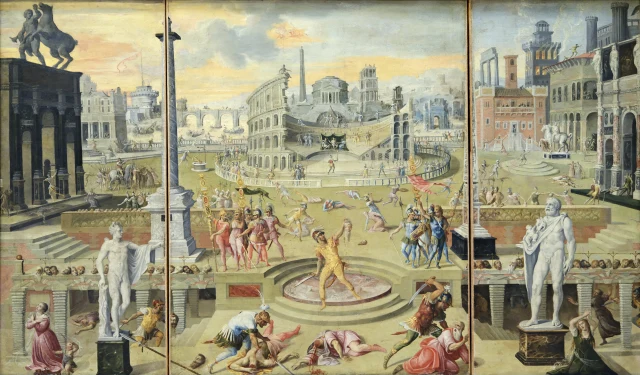
Only one of Antoine Caron's paintings carries his signature and a date, and it is a scene of slaughter. The Massacres of the Triumvirate, finished in 1566, sets Roman soldiers killing their enemies in a square, the Colosseum rising behind them. The subject is ancient Rome, though Caron was really painting France. He worked through the Wars of Religion, the decades when Catholic and Protestant Frenchmen killed one another in the streets, and the classical massacre on his canvas let him show his own time without naming it.
Catherine de' Medici, the Italian-born queen who held power through the reigns of three of her sons, made him her court painter around 1561. For her he designed the great Valois festivals, the jousts, tournaments and staged sea battles meant to make a shaky monarchy look magnificent. His drawings are now the main record of those events, later worked up into tapestries.
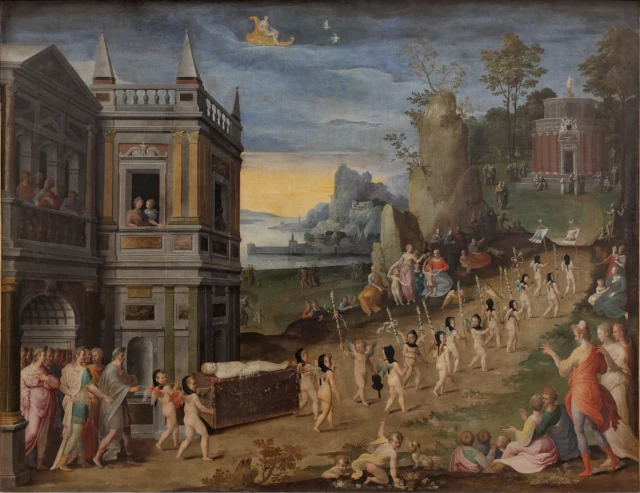
Caron's world looks strange to modern eyes, with tall thin figures moving through wide squares lined with antique columns under an even, cold light. He had trained at Fontainebleau, the royal palace where Italian mannerists taught French painters their elongated, elegant manner. He died in Paris in 1599, still known mainly to the court he had served.