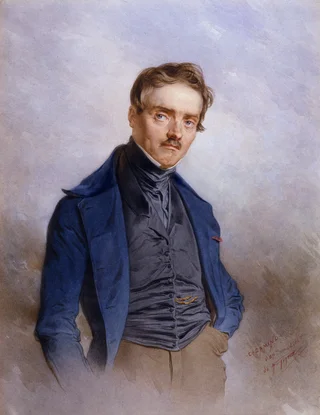
Antoine-Louis Barye
1795–1875 · France · Romanticism, Animalier
The story
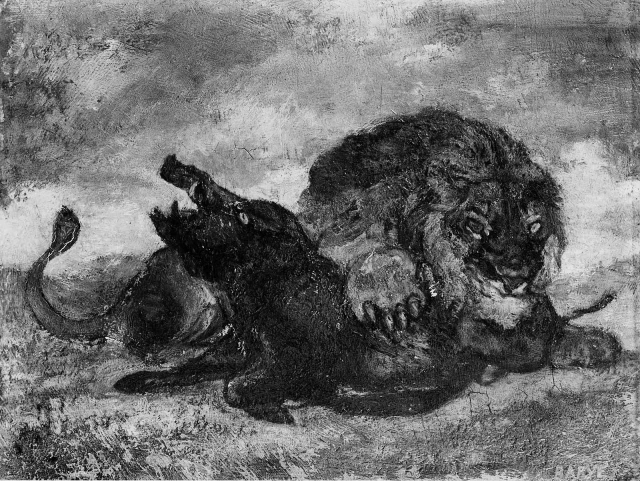
Antoine-Louis Barye spent hours at the Jardin des Plantes in Paris, the city's menagerie, sketching lions and tigers as they paced and fed, and, when one died, following the carcass to study the muscle beneath the skin. That anatomical hunger is why his small bronzes of animals still feel alive.
He came to sculpture the long way. The son of a jeweller, apprenticed young to an engraver of military metalwork, he learned to model and finish metal with a goldsmith's precision before he ever thought of art. When he turned that skill on wild animals he more or less invented a genre: the small collectible bronze of a beast, often caught mid-struggle with its prey. Artists who followed him in it became known as animaliers, and he is counted their father.
Recognition did not bring ease. For years he struggled financially and pawned models to stay afloat. Late honours came anyway. In 1854 he was made professor of drawing at the natural history museum, teaching from the animals themselves, and in 1868 he was elected to the Académie des Beaux-Arts. His son Alfred trained under him and cast animal bronzes too, which is why the Barye signature turns up on more hands than one.