Antonio Gisbert
1834–1901 · Spain · Realism, Romanticism, Spanish Eclecticism
The story
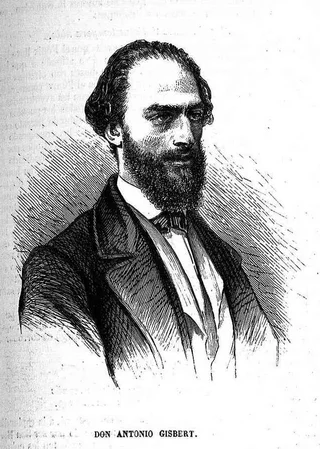
In 1868 a revolution drove Queen Isabel II out of Spain, and the incoming government handed the directorship of the Museo del Prado to a 33-year-old history painter from Alcoy. Antonio Gisbert ran the museum for five years and resigned in 1873, out of sympathy with the republic that had just been declared, then moved to Paris for good.
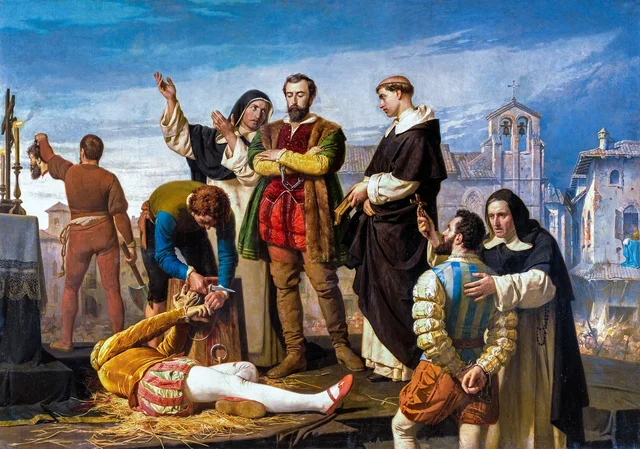
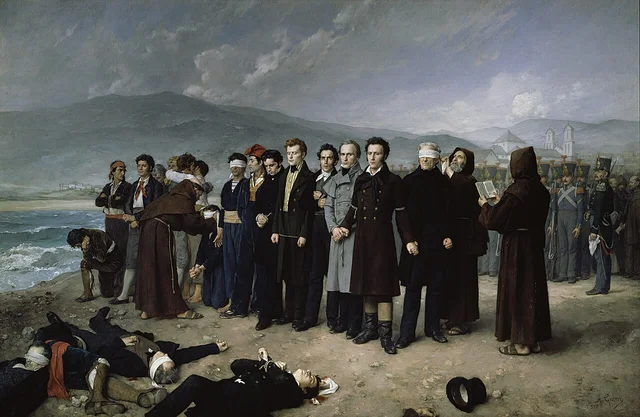
His politics were the whole of his painting. In 1860 he won the national exhibition with the execution of the Comuneros, the Castilian townsmen put to death in 1521 after rising against the emperor Charles V. Then in 1886, by royal decree under the liberal government of Práxedes Mateo Sagasta, the Spanish state commissioned him to paint a scene of Spanish liberty for the Prado. He chose the morning of 11 December 1831, when General José María Torrijos and 48 companions were shot without trial on a beach at Málaga for conspiring against the absolutist king Fernando VII.
He delivered it in 1888, a canvas about 6 metres across, the condemned men roped together in white shirts on wet sand. It went into the museum he had run 20 years earlier. Gisbert stayed in Paris and died there in 1901.