Antonio Mancini
1852–1930 · Kingdom of Italy · Verismo, Realism
The story
Visitors to Antonio Mancini's studio in Rome often found something standing between the painter and his sitter, a wooden frame strung with a grid of threads. A matching frame lay against the canvas, and Mancini worked square by square, copying what he saw through each opening. The device is known as the graticola, Italian for a grill, and other painters found it baffling. In his portrait of the Marquis del Grillo, painted in 1889 and now in the National Gallery in London, a thin horizontal line across the upper part still gives the strings away. He also pressed bits of glass, metal and flattened paint tubes into his thick paint so that it caught the light.
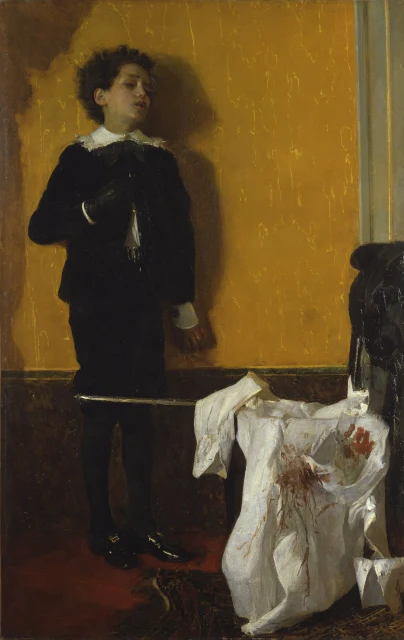
He was born in Rome in 1852 and was admitted at 12 to the art academy in Naples, where he painted the city's street children, young acrobats and musicians. In 1872 he showed two paintings at the Paris Salon. The American portraitist John Singer Sargent met him in Naples in the late 1870s and later called him the greatest living painter.
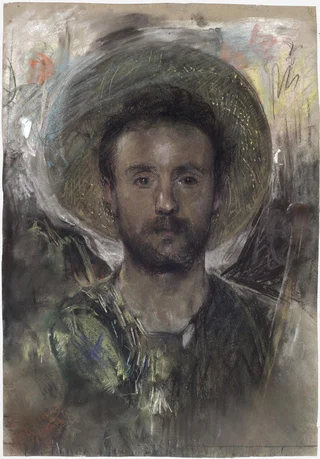
In 1881 a mental illness broke his career in two. He settled in Rome and later in Frascati, in the hills outside the city, often without money and kept going by friends and buyers. Sargent brought him to London more than once, and the Irish collector Hugh Lane had his own portrait painted by him in Rome in 1906. Mancini died in Rome in 1930 and was buried in the basilica of Santi Bonifacio e Alessio on the Aventine Hill.