Apcar Baltazar
1880–1909 · Romania · Realism, Impressionism, Post-impressionism, Symbolism, Art Nouveau, Tinerimea artistică
The story
In 1907 Apcar Baltazar hung 126 works in the Romanian Athenaeum, the domed concert hall of Bucharest. It was the only solo exhibition of his life, and it showed how widely he worked, with paintings and drawings beside designs for ceramics, posters, theatre sets and costumes.
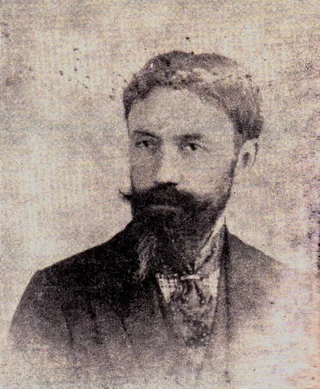
He came from an Armenian family of modest means in Bucharest and trained at the city's School of Fine Arts under George Demetrescu Mirea, an academic painter. The art historian Alexandru Tzigara-Samurcaș, who taught him there, turned him toward Romanian folk art. From 1904 he also wrote criticism, at first under the pen name Ioan Grozea. He complained that young painters kept imitating Nicolae Grigorescu, the revered painter of rural scenes, and argued for Romanian ceramics built on folk models. He showed regularly with Tinerimea artistică, or Artistic Youth, the exhibiting society co-founded by the painter Ștefan Luchian.
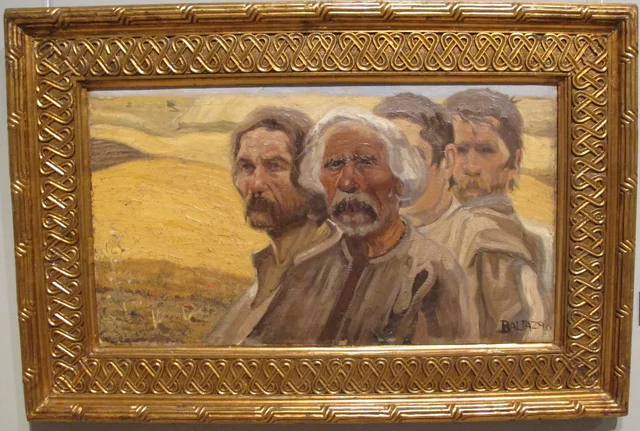
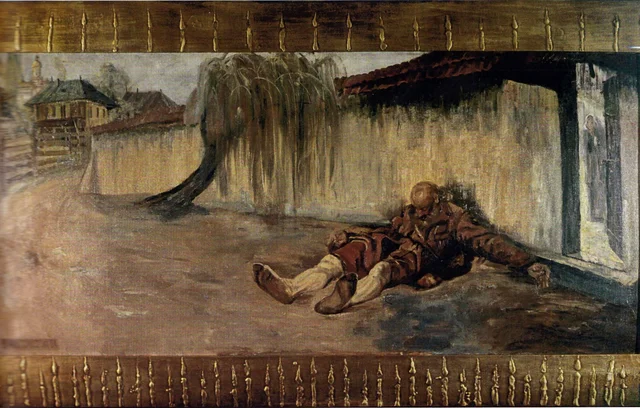
His two best-known canvases are in the National Museum of Art of Romania. The Death of Lumânărică, from 1906, lays out the body of a 19th-century beggar remembered in Moldavia for collecting money to buy candles for poor churches. Peasants, from 1907, shows heavy, hard-faced country people and was painted in the year of the great peasant revolt.
When he competed for a post teaching decorative arts at his old school, the works he submitted disappeared from the competition show, and the post went to the painter Costin Petrescu. Baltazar died of a heart ailment in September 1909, at 29, while preparing a trip to Paris to study the restoration of old paintings.