Asensio Juliá
1760–1832 · Spain · Neoclassicism
The story
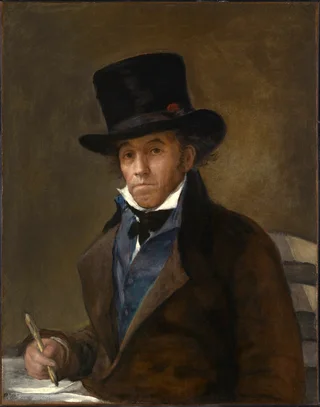
In 1798 Goya painted the dome of San Antonio de la Florida, a small church on the edge of Madrid, filling it with ordinary Madrid people leaning over a painted railing. The assistant working beside him on the scaffolding was Asensio Juliá, a Valencian a generation younger, known as El Pescadoret, the little fisherman, after his family's trade on the shore at Cañamelar. Goya painted his portrait at least twice.
The two had met around 1790. Juliá is said to have spent nearly two years at sea against the corsairs of North Africa and to have come home deaf after an illness, and Goya was losing his own hearing in those same years. Juliá taught drawing in Madrid and was directing a royal drawing school by 1818.
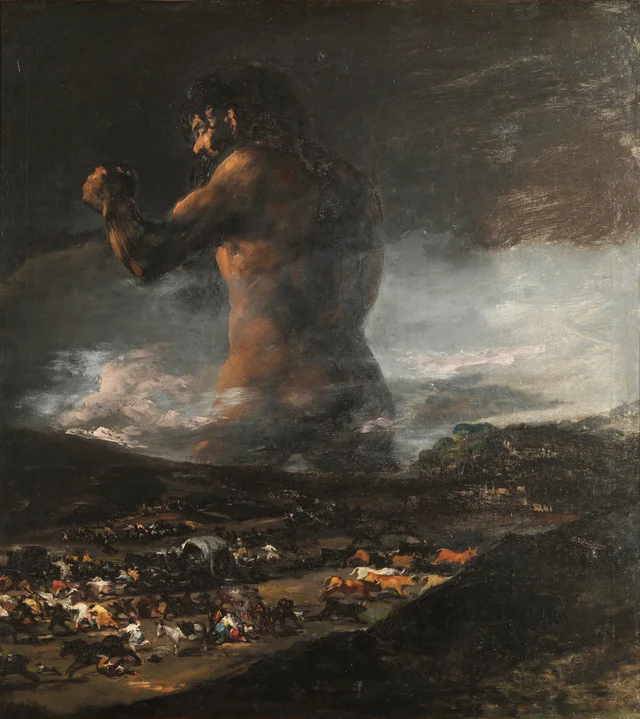
Few paintings are securely his, which is why his name keeps surfacing in arguments about Goya's. In 2008 the Prado's curator of 18th-century painting proposed that the Colossus, the giant rising behind a crowd fleeing across a plain, was Juliá's work rather than Goya's, reading two brushmarks in a corner as his initials. Other specialists read the same marks as an old inventory number. In July 2021 the museum put Goya's name back on the label.