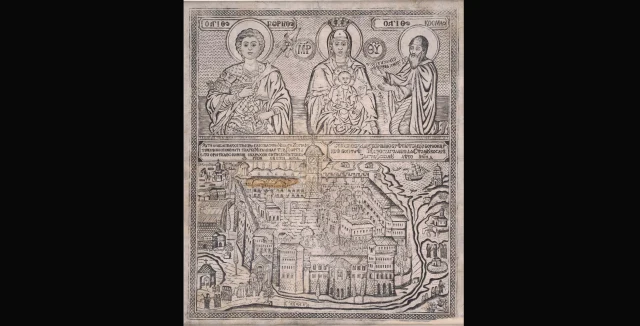
Athonite Engraver
Ottoman Empire · Post-Byzantine art
The story
Athonite Engraver is the name the National Art Gallery in Sofia gives to the unknown craftsman who cut a copper plate in 1834 for the Zograf Monastery, the Bulgarian house on Mount Athos, the monastic peninsula in today's northern Greece. The sheet shows Saint George, the monastery's patron, together with the Virgin and Child, Saint Cosmas of Zograf and a panorama of the monastery itself.
In the 18th century the monasteries of Athos ordered such engraved images from workshops in cities such as Moscow, Vienna and Venice. From the late 18th century monks on the Holy Mountain set up presses and began cutting and printing plates themselves. Pilgrims carried the sheets home across the Balkans as paper icons, affordable for households that could not pay for a painted one.