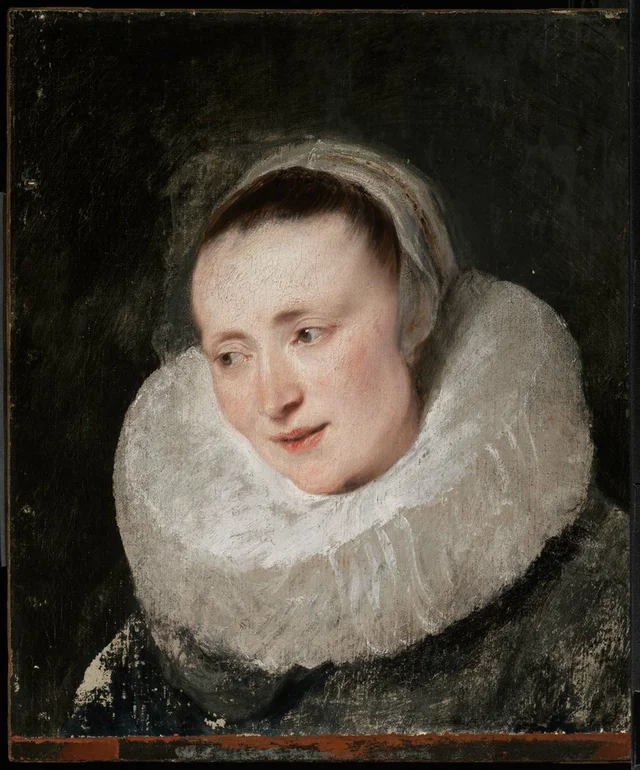
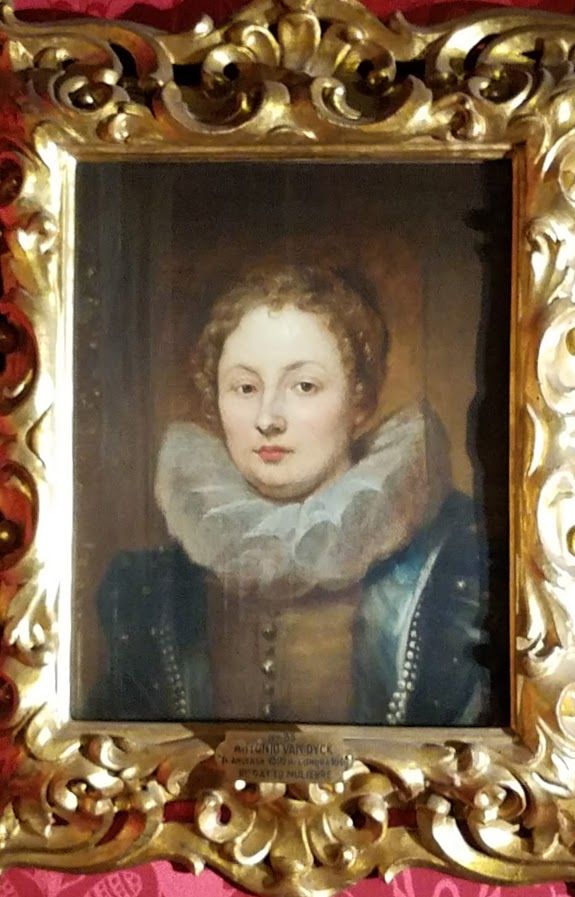
Attributed to Anthony van Dyck
Baroque painting
The story
Off the main run of the Galleria Palatina, in the chapel of the Royal Apartments at Palazzo Pitti, hangs a bust-length portrait of a woman. The record identifies her as Battina Balbi, from a Genoese banking family, married to Marcello Durazzo, and gives the painter as van Dyck with a qualifier in front of the name.
The qualifier is doing precise work. It says the picture looks to specialists like his, and that the evidence which would close the question is missing. No signature, no surviving contract, no unbroken line of ownership running back to the studio. The word describes the state of the paperwork around the canvas. A document turning up in a family archive, or an examination under the paint surface, can move it in either direction.
Van Dyck was 22 when he reached Genoa in 1621 and about 28 when he left for Antwerp, and in those years he worked for the families who ran the city's banks, the Balbi and the Durazzo among them. Where a portrait of this kind stayed with its family and can be followed through its inventories, it hangs today under his name with nothing in front of it. His Caterina Balbi Durazzo, painted in 1624, is still in Genoa, in the Palazzo Reale, the house her cousin Stefano Balbi built on the street the family had laid out.