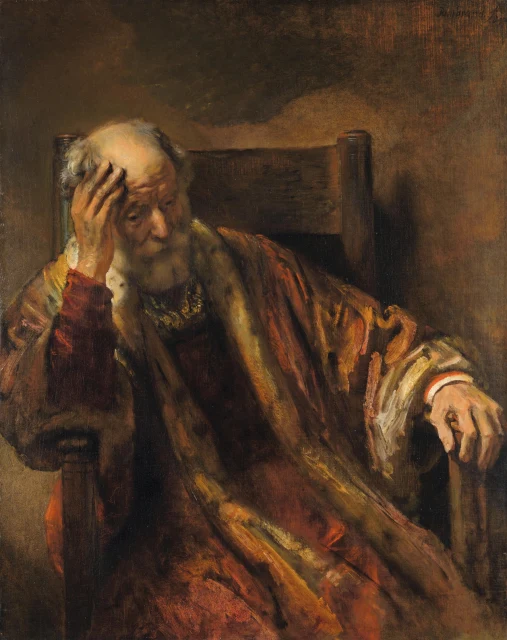
Attributed to Rembrandt
Dutch Republic · Dutch Golden Age painting
The story
Few painters have had their work sorted as hard as Rembrandt. In 1968 a group of Dutch scholars set up the Rembrandt Research Project to decide, painting by painting, what he had made himself, and over the following decades many pictures long sold under his name went to pupils, followers and imitators. Attributed to Rembrandt is the heading for the ones left in between, where serious opinion leans towards him but will not commit.
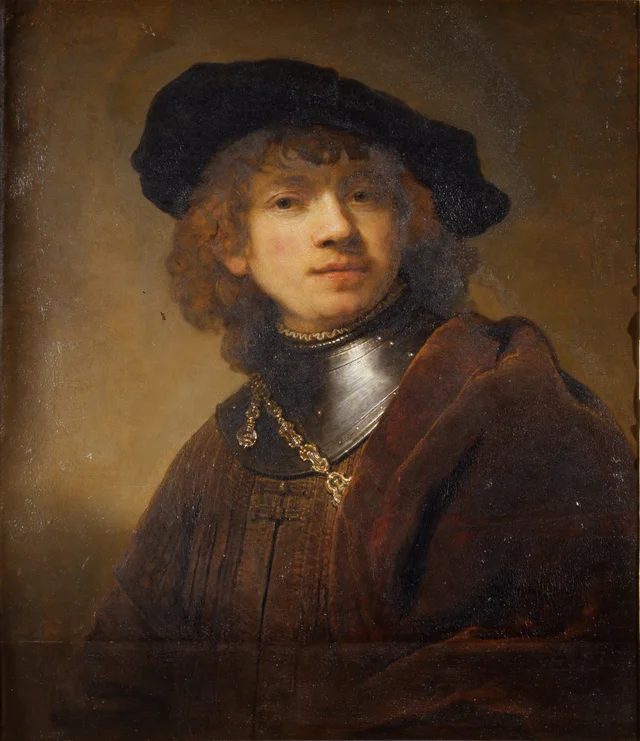
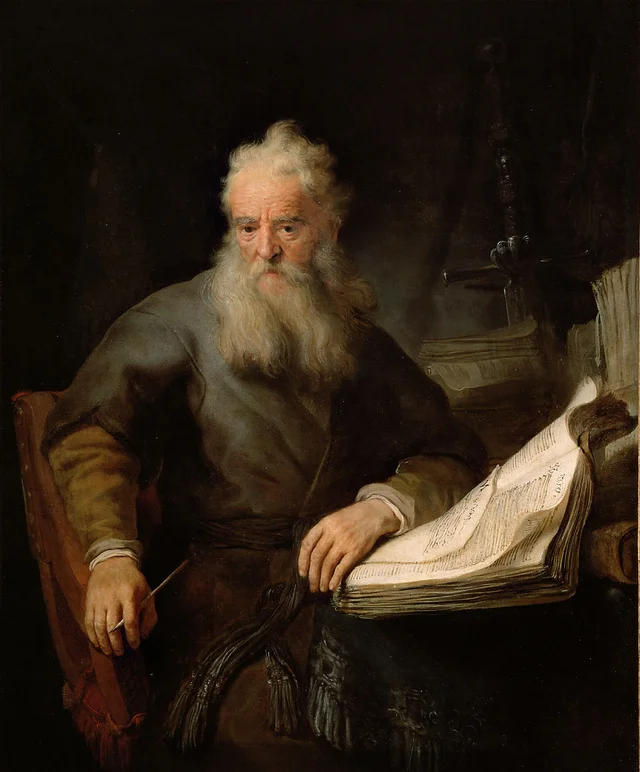
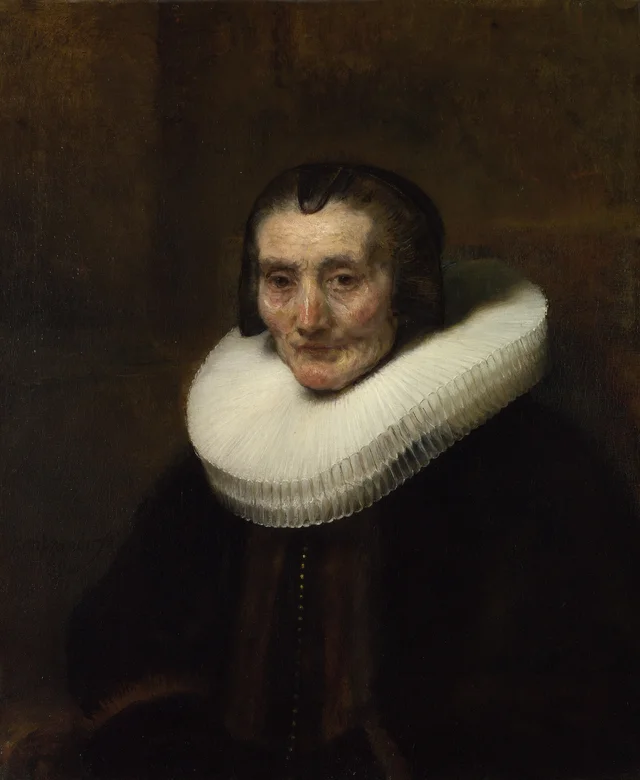
The works here show different kinds of doubt. In London a small bust of Margaretha de Geer, wife of the rich arms dealer Jacob Trip, carries his signature and the date 1661, but the signature proved not to be authentic and the ground beneath the paint is unlike the one he normally used. The National Gallery calls it probably by Rembrandt. In Vienna the Kunsthistorisches Museum lists an Apostle Paul from about 1633 as his, while noting that several scholars give it to his pupil Govaert Flinck. At the Uffizi in Florence a tronie, a study of a type rather than a portrait of anyone, shows a young man in a steel gorget and a beret, and the Research Project doubted that he painted much of it.
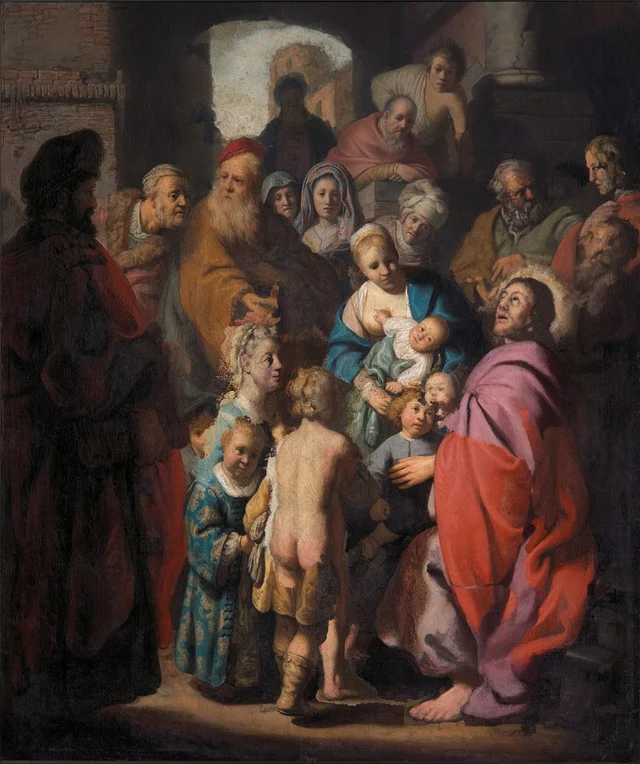
The newest case is a large biblical scene, Suffer Little Children to Come unto Me. It sold at auction in Cologne in 2014 as an anonymous Netherlandish picture, and the Amsterdam dealer Jan Six then argued it was an early work from Leiden, painted around 1627.