Aurora Painter
Ager Faliscus
The story
In the early 4th century BC, potters at Falerii, the chief town of the Faliscans in the Tiber valley north of Rome, began making red-figure vases of their own, closely modelled on Athenian work. The Faliscans lived between the Etruscans and Rome and spoke a language closely related to Latin.
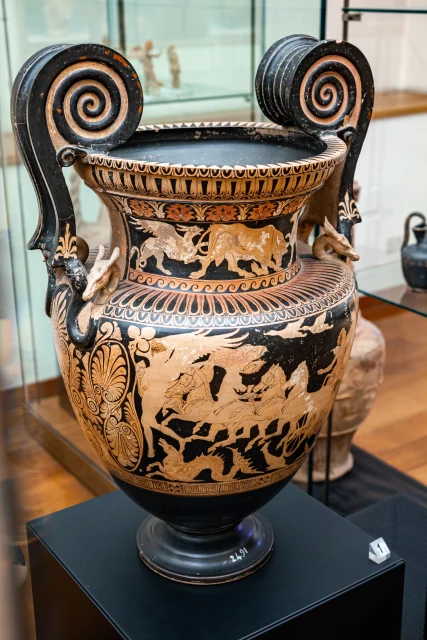
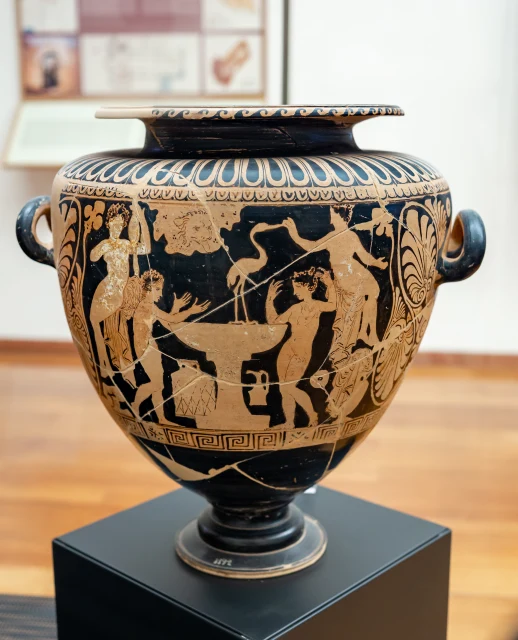
The Aurora Painter worked in this early phase, in the second quarter of the century. His real name is lost. The modern one comes from a large wine-mixing bowl found in a tomb at Falerii and now in the Villa Giulia, on which the dawn goddess drives her chariot. Aurora is her Latin name, Eos her Greek one. Other vases attributed to him include one now in Copenhagen.