Bartolomeo Montagna
1450–1523 · Republic of Venice · Renaissance, Italian Renaissance
The story
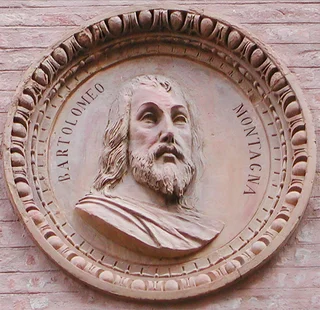
Bartolomeo Montagna trained in Venice, most likely close to Giovanni Bellini, the painter who taught a whole generation how to fill a picture with soft, even light. Around 1470 Montagna may have worked in Bellini's busy workshop. Then he did something less usual, taking that Venetian manner inland and settling in Vicenza, a smaller city on the mainland, where he became the leading painter for the rest of his life.
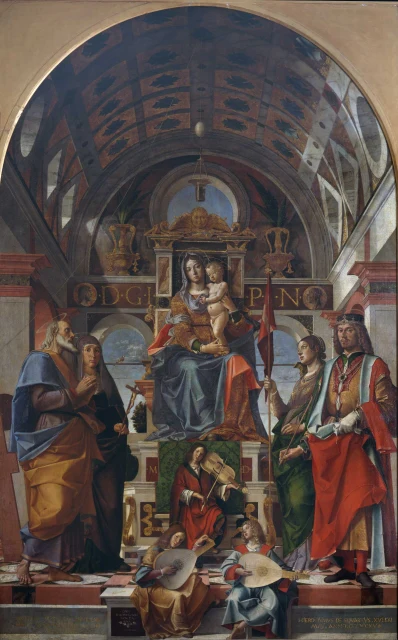
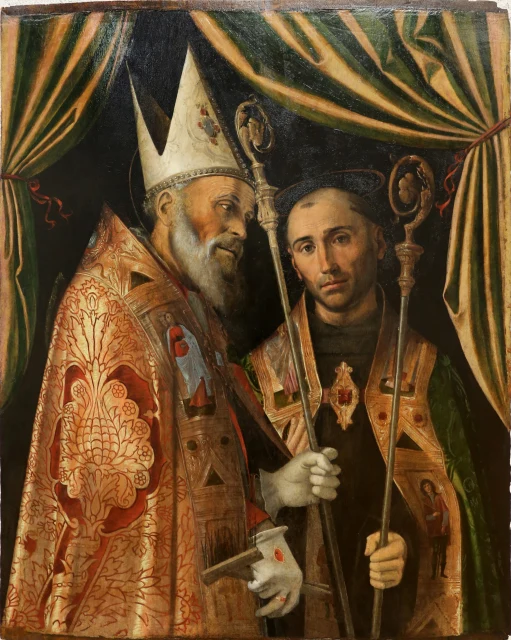
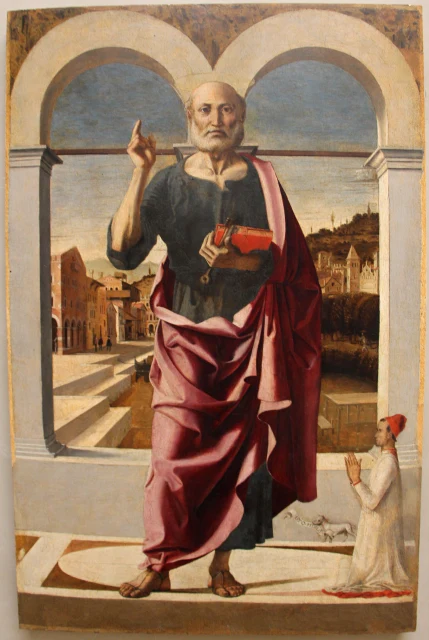
His pictures carry Bellini's calm light but add a firmer, more sculptural weight to the figures, an echo of Antonello da Messina, the Sicilian who had shown Venice how to model faces in light and shade. Montagna spent his most productive years, roughly 1490 to 1505, filling the churches of Vicenza and the towns around it with altarpieces of enthroned Madonnas and saints standing in quiet, stone-built spaces.
The largest of those altarpieces was finished in 1499 for the Squarzi family's chapel in the church of San Michele in Vicenza. That church was closed in 1810 and pulled down two years later, and the painting went to Milan, into the gallery Napoleon's administration was filling with art taken from suppressed churches across northern Italy. It is still there, in the Pinacoteca di Brera. Vicenza keeps plenty of him all the same, including the altarpiece he painted in 1485 for the church of San Bartolomeo, now in the city museum at Palazzo Chiericati.