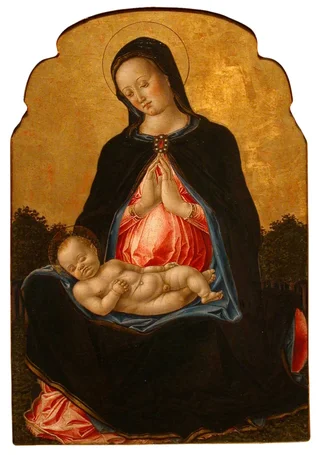
Bartolomeo Vivarini
Republic of Venice · Italian Renaissance
The story
Bartolomeo Vivarini worked in Venice in the second half of the 15th century, when the city still loved gold grounds and Gothic saints and most painting was done in tempera, its colors bound with egg. His family had come from Murano, the island of Venetian glassmakers, and turned to pictures instead. His older brother Antonio trained him, and his nephew Alvise would carry the workshop into the next generation.
The turn in his career came from two outside contacts. The hard, sculptural manner of Padua, around the teacher Squarcione and the young Andrea Mantegna, gave his figures a new firmness. From Antonello da Messina, the Sicilian who brought oil painting north, he learned the new medium: the altarpiece he signed in 1473 for the Venetian church of Santi Giovanni e Paolo is often called the first oil picture made in the city. He kept signing and dating his panels for decades, a habit that lets us follow him almost year by year to 1491.
Works
6 works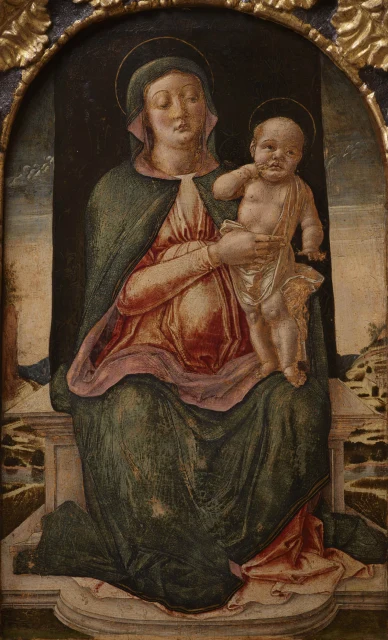 Madonna and ChildBartolomeo Vivarini, 1477
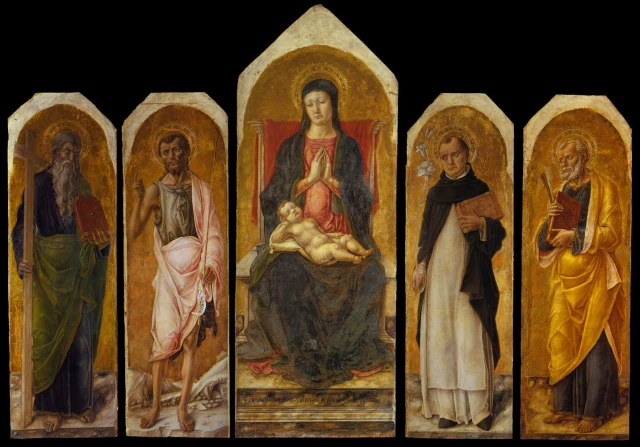 Polyptych with saintsBartolomeo Vivarini, 1464
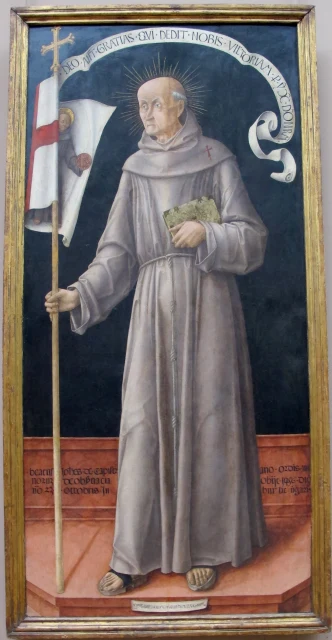 Saint John of CapistranoBartolomeo Vivarini, 1459
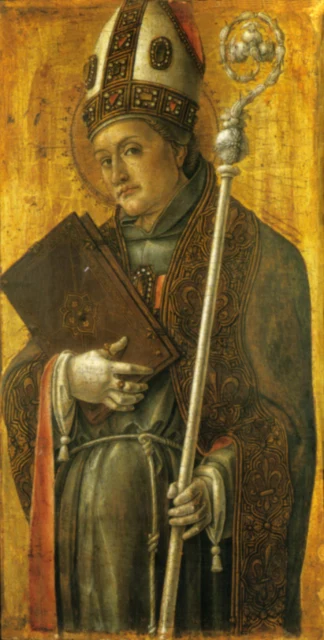 Saint Louis of ToulouseBartolomeo Vivarini, 1465
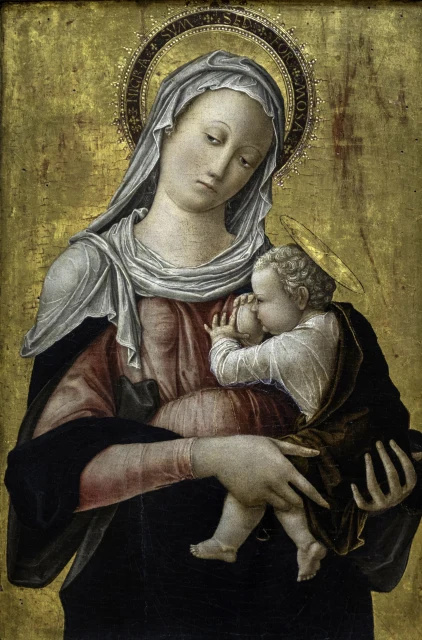 The Virgin Nursing the ChildBartolomeo Vivarini, 1450
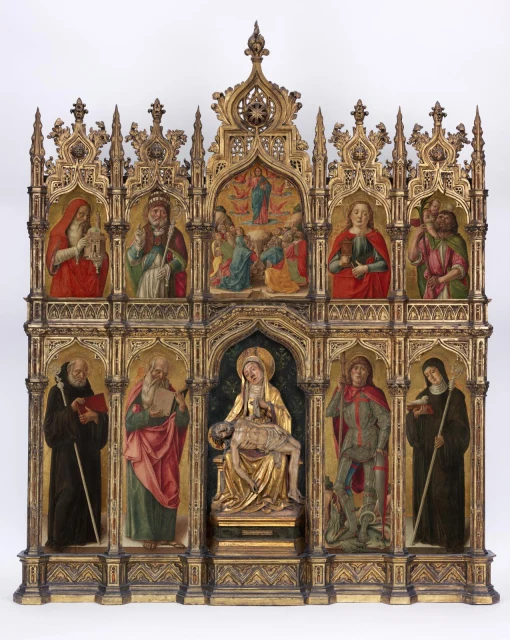 Virgin and the Dead Christ with the Ascension and SaintsBartolomeo Vivarini, 1485