Bénigne Gagneraux
1756–1795 · France · Neoclassicism
The story
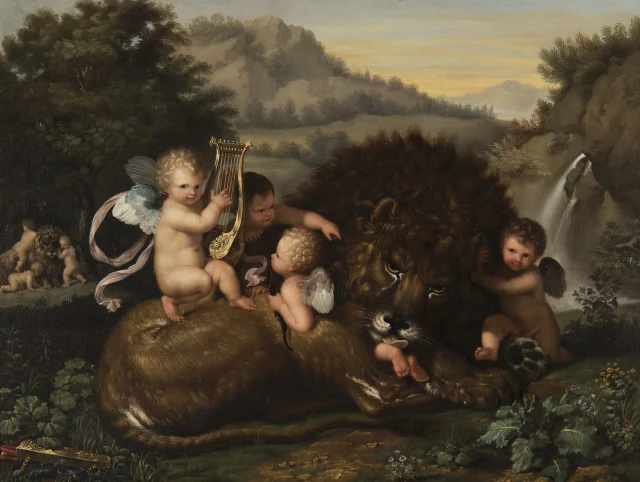
On the first day of 1784, the king of Sweden, Gustav III, travelling through Italy as the Count of Haga, was received by Pope Pius VI in the Vatican's new museum of ancient sculpture, the Pio-Clementino. A young French painter living in Rome, Bénigne Gagneraux, turned the visit into a picture for the king and finished it in March 1785. Before it was shipped to Sweden, where it is now in the Nationalmuseum in Stockholm, the pope ordered a replica for himself. That second canvas passed into the hands of Austrian imperial troops in Italy at the end of the 1790s and today hangs in the National Gallery in Prague.
Gagneraux was born in Dijon in 1756 and trained at the academy of his home town under François Devosge. In 1776 he won the first Rome prize founded by the States of Burgundy, a four-year stay in Rome, and he stayed on afterwards, painting battles, mythologies and history scenes for Swedish, French and Italian patrons.
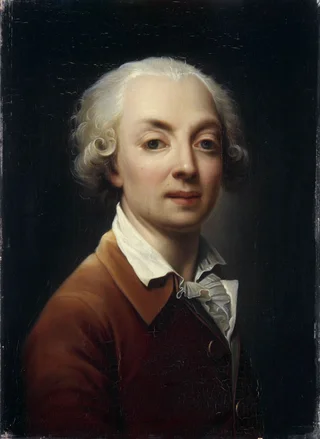
In 1793, when anger against the French boiled over in Rome, he moved to Florence. He died there in August 1795, at 38, after a fall from a window, and the Uffizi in the same city keeps his self-portrait.