Bernardino Butinone
1450–1510 · Duchy of Milan · Renaissance
The story
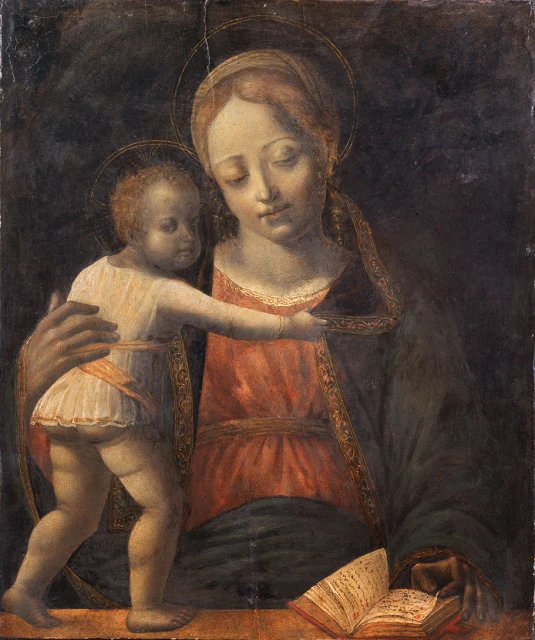
In 1485 two painters from Treviglio, a town east of Milan, contracted to build and paint the high altarpiece of their own parish church. Bernardino Butinone was one of them and Bernardo Zenale the other, and the polyptych of San Martino occupied them, on and off, for the better part of 20 years.
Butinone first appears in the records in 1484, in Milan, with a workshop of his own in the Porta Vercellina quarter and pupils in it. Those were the years when Ludovico Sforza ruled the duchy and Leonardo was at his court, and the steady church commissions in the city went to local masters like these two. In the early 1490s Butinone and Zenale frescoed the Grifi Chapel in San Pietro in Gessate, in Milan, with the life of Saint Ambrose, the city's patron bishop.
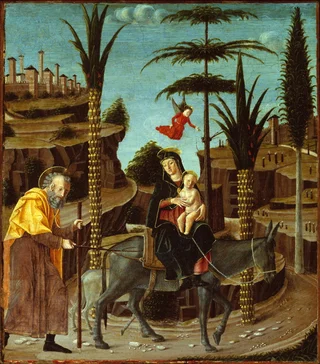
Collectors have since prized his small panels of the life of Christ, scattered now between London, Chicago and other collections, crowded with squat figures foreshortened so sharply that they seem to be shouldering their way out of the scene. Tradition makes him a pupil of Vincenzo Foppa, the leading Lombard painter of the generation before, and the master of Bramantino. The last document that mentions him alive is from 1507.