Bertalan Székely
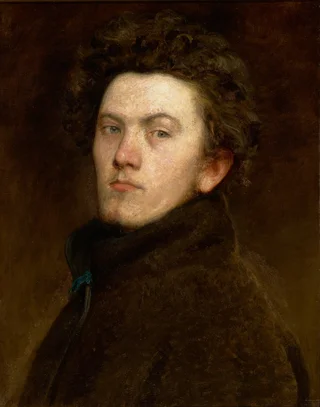
1835–1910 · Hungary · Academic art, Romanticism
The story
In 1552 the fortress of Eger in northern Hungary held out against an Ottoman army many times its size, and the women of the town joined the fight, pouring hot pitch and boiling water down on the attackers and carrying stones to the walls. Three centuries later, in 1867, Bertalan Székely painted that siege, a woman at its centre with the castle burning behind her, and gave 19th-century Hungarians a picture of their own defiance.
The timing mattered. 1867 was the year Hungary won a measure of self-rule inside the Austrian empire, and history paintings like this one fed a hungry national feeling. Székely, born in Kolozsvár in 1835, had trained in Munich and Vienna and made the Hungarian past his great subject.
He returned to it again and again, painting the discovery of the drowned King Louis the Second after the disaster at Mohács and the farewell of the condemned László Hunyadi. He spent his last decades teaching in Budapest and died there in 1910.