Boccaccio Boccaccino
1460–1525 · Duchy of Milan · Early Italian Renaissance, Emilian school
The story
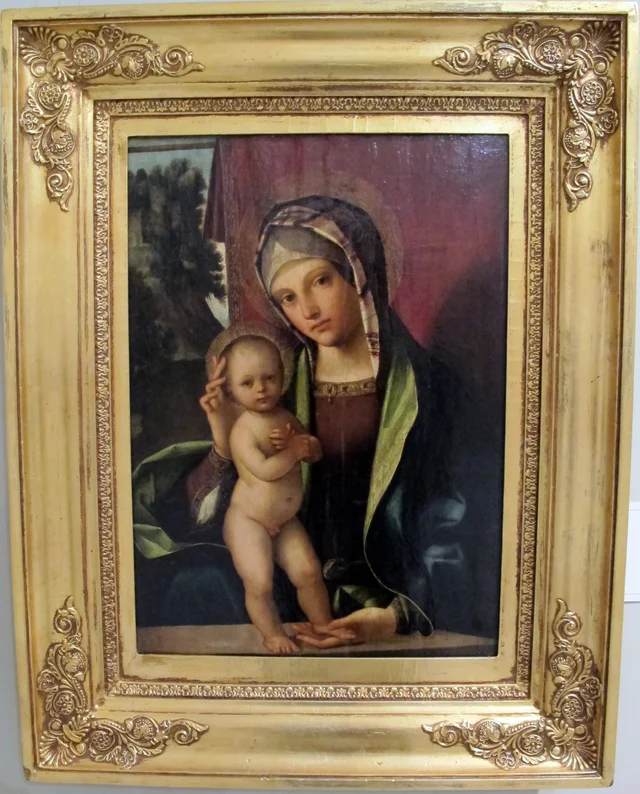
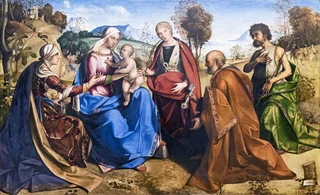
Boccaccio Boccaccino made his name in Cremona, the Lombard city on the river Po, where in 1506 he began a great fresco cycle across the walls of the cathedral nave. Over the next decade he painted scenes from the life of the Virgin and of Christ, the left wall given to their childhood, the right to the Passion, a project that drew the leading painters of the region in after him.
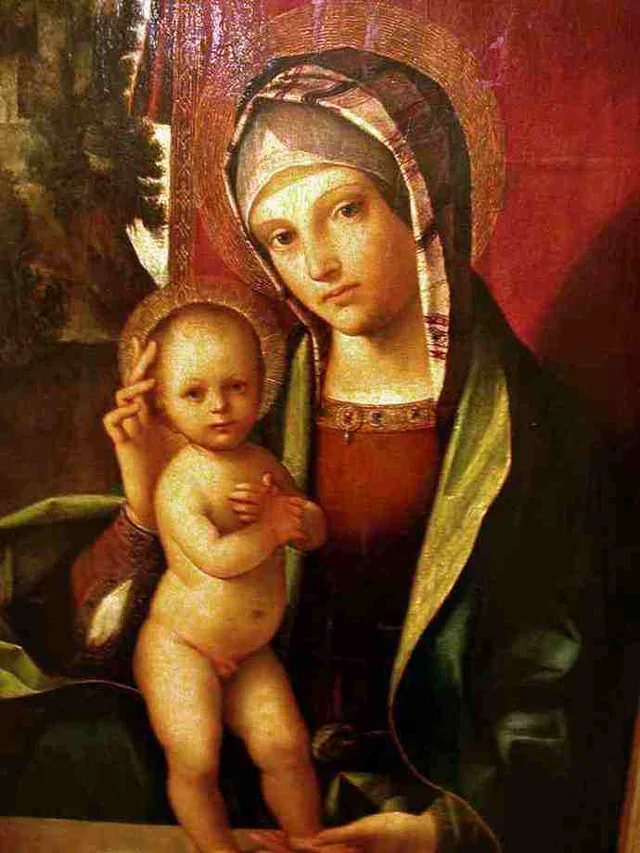
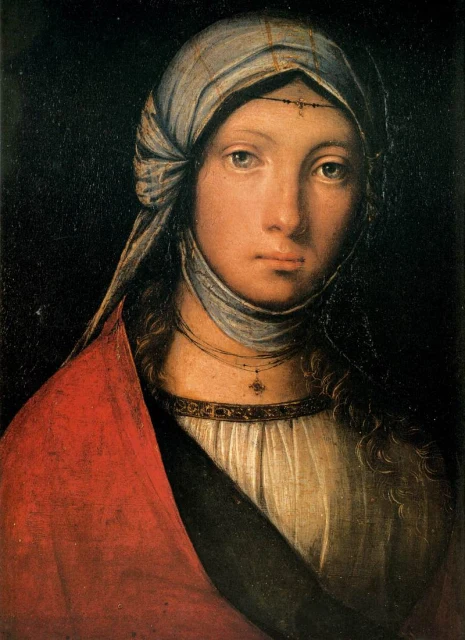
He had trained his eye in Venice, and it shows. During his years there he took up the warm colour and soft light of Venetian painting, seen most famously in the small panel known as the Zingarella, the 'Gypsy Girl', now in the Uffizi in Florence, a young woman in a striped headscarf painted around 1504.
His career carried him through Ferrara and Venice before he settled back in Cremona, where he ran a busy workshop. His son Camillo Boccaccino took up the trade and became a notable painter in his own right.