Bohumil Kubišta
1884–1918 · Austria–Hungary · Expressionism, Cubism
The story
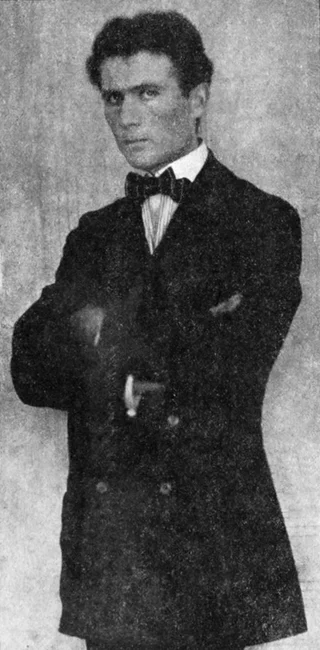
Bohumil Kubišta helped invent modern Czech painting and then spent his last years in an army uniform, too poor to keep painting. He was one of the sharpest minds of his generation in Prague, and also one of the poorest.
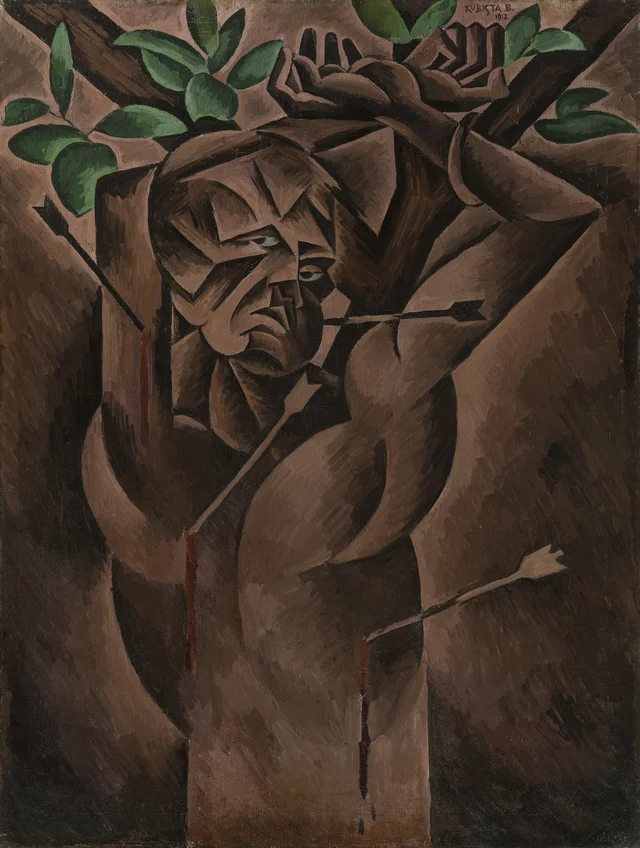
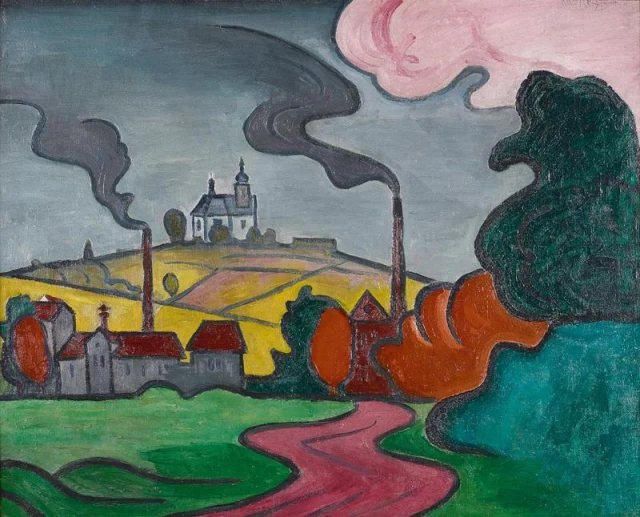
Around 1907 he joined seven other young artists to form a group they called Osma, 'The Eight', pushing Czech art past its comfortable habits toward van Gogh, Cézanne and the new painting coming out of Paris. Kubišta was the group's theorist as much as its painter, arguing its case in essays and exhibition reviews. He went to Paris himself in 1909 and studied the early Cubist pictures of Picasso and Braque, then bent Cubism to his own ends, keeping the symbolic and spiritual charge that most Cubists had dropped, in tense works like Saint Sebastian and The Kiss of Death.
Poverty finally forced his hand. In 1913 he took a commission as an artillery officer, posted to the naval base at Pula on the Adriatic, which left him almost no time for art. He survived the war only to die in Prague in November 1918, aged 34, in the influenza pandemic that killed more people than the fighting had.